Paper cups range from 4 oz (about 118 mL) to 32 oz (about 946 mL). In EcoLeaderPack's current wholesale paper cups range, 8 oz uses an 80 mm rim, 10–24 oz cups use a 90 mm rim, and 32 oz uses a 105 mm rim. The rim narrows your lid choice, but the exact cup-and-lid pair still needs a sample fit check before you order.
Use the calculator below to convert ounces and milliliters, or to find the cup that fits a drink. The chart after it puts every size, rim diameter, cup dimension and lid family in one table.
Paper Cup oz ↔ mL Converter & Cup Size Finder
1 U.S. fl oz = 29.5735 mL; 1 imperial fl oz = 28.4131 mL. Cup sizes, rims and lid families are EcoLeaderPack's current 4–32 oz range. Results update as you type.
12 fl oz ≈ 355 mL
- Fluid ounces
- —
- Milliliters
- —
- Liters
- —
- Nearest cup in our range
- —
Paper cup sizes are named in U.S. fluid ounces. This is the brim-full conversion of the size name, not the usable fill: leave room for ice, foam and the lid.
—
- Volume needed
- —
- Cup capacity (brim)
- —
- Rim diameter
- —
- Cup size (top × bottom × height)
- —
- Lid family to check
- —
The headspace options are planning estimates, not a standard. Confirm the final cup with your real recipe, ice and lid. For cup carriers, check the cup's bottom diameter and height, not the rim.

Paper Cup Size Chart: 4–32 oz in mL and Millimeters
Paper cup sizes are named in U.S. fluid ounces, and one U.S. fluid ounce is about 29.57 mL (NIST). To convert any other size, use our oz to mL converter. The mL column is a rounded conversion of the size name, not a promise of usable fill. Rim and cup dimensions are current EcoLeaderPack product references; final tolerances belong on the approved SKU drawing. "Typical use" is common menu practice and varies by brand. You can browse these sizes on the paper cup range page.
Swipe horizontally to compare all columns.
| Size | Approx. mL | Rim | Cup size (top × bottom × height) | Typical use | Lid family to check |
|---|---|---|---|---|---|
| 4 oz | 118 mL | 63 mm | 63 × 46 × 63 mm | Espresso, tasting, samples | Not in the 80/90/105 mm lid families; confirm a lid SKU |
| 5 oz | 148 mL | 65 mm | 65 × 45 × 72 mm | Small hot drinks, tasting | Confirm a lid SKU |
| 6 oz | 177 mL | 73 mm | 73 × 48 × 82 mm | Small hot drinks, tea | Confirm a lid SKU |
| 8 oz | 237 mL | 80 mm | 80 × 56 × 90 mm | Small coffee, tea, hot chocolate | 80 mm |
| 9 oz | 266 mL | 76 mm | 76 × 53 × 93 mm | Small hot or cold drinks | Not 80 or 90 mm; confirm a lid SKU |
| 10 oz | 296 mL | 90 mm | 90 × 61 × 96 mm | Small to regular coffee | 90 mm |
| 12 oz | 355 mL | 90 mm | 90 × 60 × 112 mm | Regular hot coffee | 90 mm |
| 16 oz | 473 mL | 90 mm | 90 × 58 × 137 mm | Large coffee, iced drinks | 90 mm |
| 20 oz | 591 mL | 90 mm | 90 × 63 × 152 mm | Large iced drinks | 90 mm |
| 22 oz | 651 mL | 90 mm | 90 × 62 × 168 mm | Large iced drinks, tea | 90 mm |
| 24 oz | 710 mL | 90 mm | 90 × 60 × 176 mm | Extra-large iced drinks | 90 mm |
| 32 oz | 946 mL | 105 mm | 105 × 72 × 175 mm | Extra-large cold drinks | 105 mm (PET cold lid) |
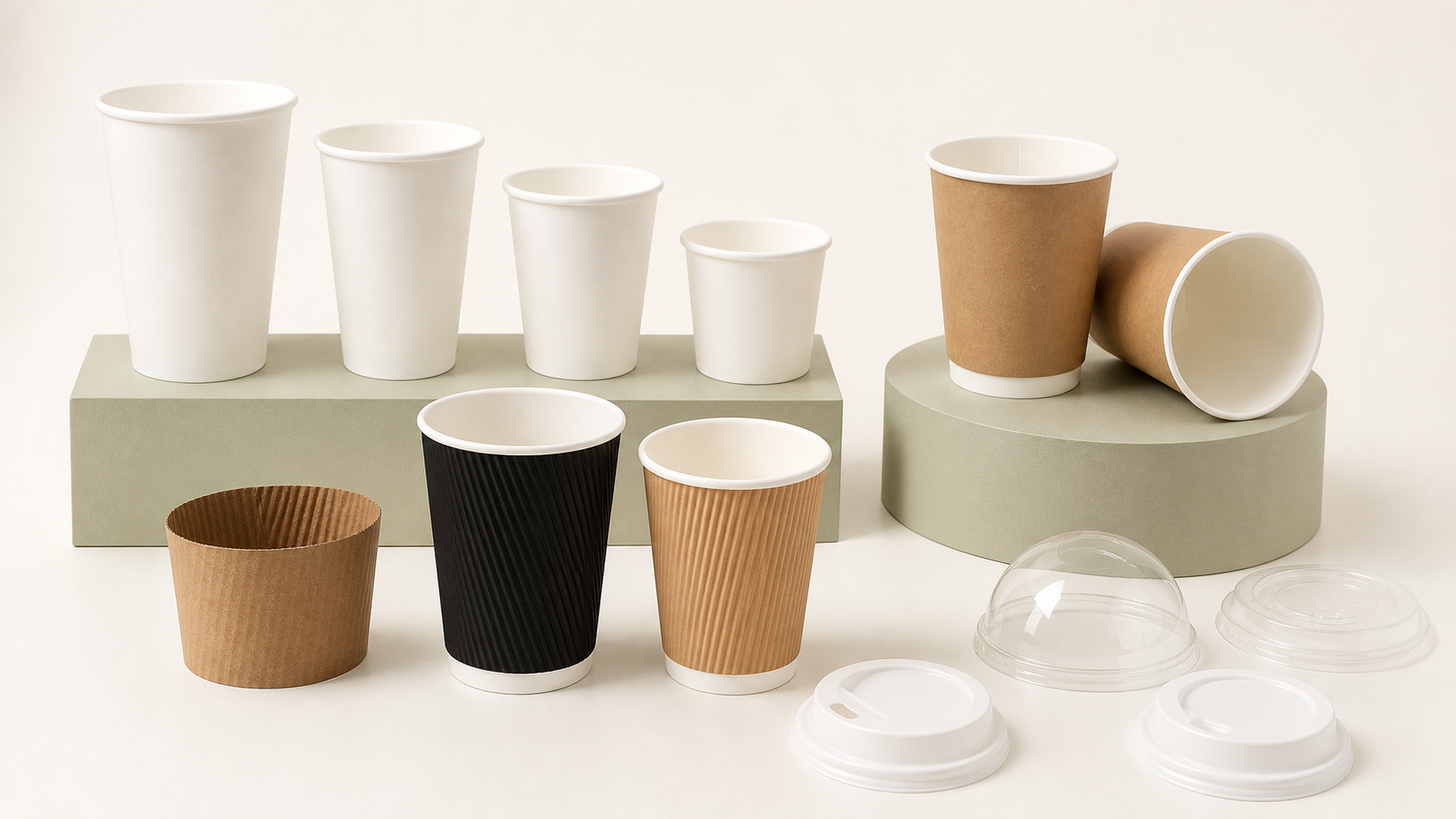
Two patterns help with stock planning. The 8 oz and 9 oz cups do not share a rim (80 mm versus 76 mm), so they cannot share a lid. The 10, 12, 16, 20, 22 and 24 oz cups all use a 90 mm rim, so one validated 90 mm lid can cover several sizes within one coordinated range. For broader food portioning, programs pairing drinks with take-out fried chicken, popcorn, or family meals can also check our heavy-duty paper food buckets.
What Paper Cup Size Should You Choose for Each Drink?
Start from the drink and the recipe volume, not from the longest size list. Menus differ, but the sizes below are where most programs begin.
| Drink | Sizes to look at | Why |
|---|---|---|
| Espresso, tasting, samples | 4–6 oz | Small volume; these sizes sit outside the 80/90 mm lid families |
| Small hot coffee, tea | 8–10 oz | 8 oz is 80 mm; 10 oz moves to 90 mm |
| Regular hot coffee | 12 oz | 90 mm rim, one lid family with the larger sizes |
| Large coffee, iced coffee | 16–20 oz | Extra height leaves room for ice and foam |
| Large iced drinks, tea | 22–24 oz | Same 90 mm rim as 12 oz, taller body |
| Extra-large cold drinks | 32 oz | 105 mm rim, PET cold lid route |
A hot-drink program that also needs a sleeve or a double-wall cup should choose the wall construction at the same time; see the section on wall options below. When planning your multi-category procurement, review how eco-friendly packaging fits your menu to align paper cups, soup containers, and tableware into a cohesive takeout service.
How Do You Convert a Menu in mL to a Paper Cup Size?
Many menus outside the U.S. are written in milliliters, while cups are named in U.S. fluid ounces. Divide the menu volume by 29.57 to get ounces, then pick the cup that leaves room for ice, foam and the lid. The cup size finder in the calculator above does this for you, and our oz to mL converter handles any other volume.
| Menu serving | Approx. U.S. fl oz | Cup sizes to test | Note |
|---|---|---|---|
| 250 mL | 8.5 oz | 9 oz or 10 oz | An 8 oz cup (237 mL) is too small to brim |
| 300 mL | 10.1 oz | 12 oz | A 10 oz cup (296 mL) leaves no headspace |
| 350 mL | 11.8 oz | 12 oz or 16 oz | 12 oz (355 mL) only works without ice or foam |
| 400 mL | 13.5 oz | 16 oz | Leaves room for ice or foam |
| 500 mL | 16.9 oz | 20 oz | A 16 oz cup (473 mL) is smaller than the serving |
A cup that only just holds the serving at the brim is the wrong choice for takeaway. Confirm the final pick with the working-fill test below. Note also that U.K. recipes may use the imperial fluid ounce, which is smaller than the U.S. one, so check which ounce a supplier or recipe means. When evaluating portion conversions across larger liquids or takeout soups, see our volumetric study on 700 mL vs 750 mL vs 24 oz food containers.
How Can One 90 mm Lid Cover Several Cup Sizes?
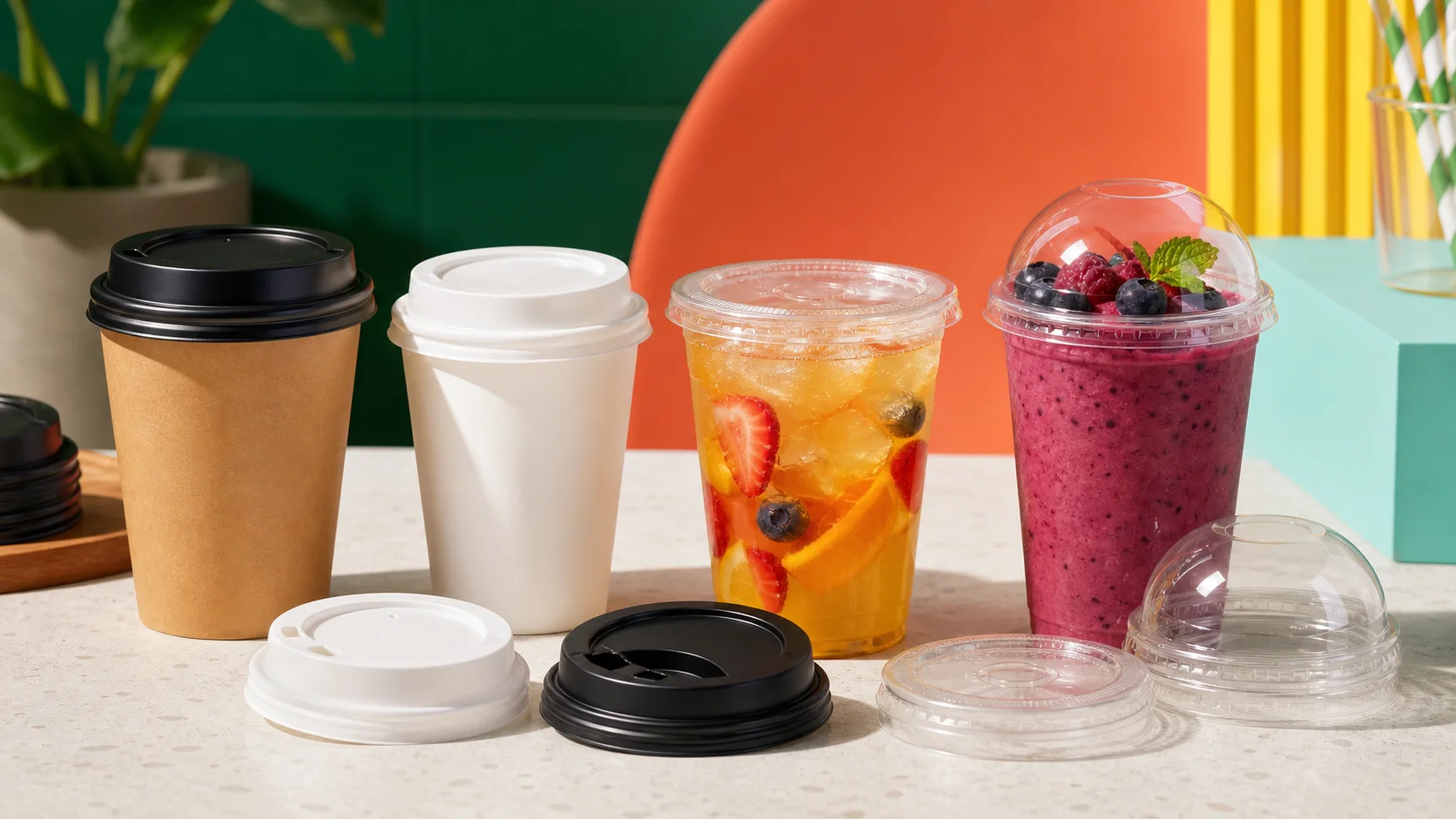
Because the 10, 12, 16, 20, 22 and 24 oz cups in this range all use a 90 mm rim, a menu built on those sizes can run on one lid family. For example, a café serving 12 oz regular, 16 oz large and 20 oz iced drinks can stock one 90 mm hot lid and one 90 mm cold lid instead of a separate lid for every cup. Fewer lid SKUs means less stock to count, fewer mix-ups at the counter, and a simpler reorder.
Adding an 8 oz small cup brings in a second lid size (80 mm), and a 32 oz cup brings in a third (105 mm). That is not a reason to drop those sizes, but it is worth deciding on purpose. When you plan the range, list each cup size with its rim, then count how many lid sizes the menu needs before you confirm quantities.
Sharing a lid family still depends on fit: approve each cup-and-lid pair, as described in the sample checklist below. See the full lid range on the paper cup lids page.
Does the Rim Diameter Decide Which Lid Fits?
It narrows the choice but does not prove fit. EcoLeaderPack's paper cup lid range lists these routes, which are product-family starting points:
| Lid route | Diameter | Used for |
|---|---|---|
| PS or PP lid | 80 mm | Hot or cold drinks, 8 oz cups |
| PS or PP lid | 90 mm | Hot or cold drinks, 10–24 oz cups |
| PET cold lid | 90 mm | Cold drinks where a clear lid is wanted |
| PET cold lid | 105 mm | Cold drinks, 32 oz cups |
A lid can match the nominal diameter and still sit loosely, need too much force, or pop off in handling. The rolled rim, the bead shape, the lid groove, the skirt depth and the material stiffness all affect the snap. For the full lid view, see matching paper cup lids.
The material name also does not settle food safety. The FDA states that the regulatory status of a food-contact article depends on each component it is made from (FDA). Cup, coating and lid documents should therefore cover the exact set and the destination market, including EU rules such as those in our PPWR 2026 guide. For the coating side, read the paper cup coating guide. If your service involves reheating hot drinks or side soups, review whether disposable paper containers and lids are microwave safe.
Which Cup Carriers Fit Which Paper Cup Sizes?
Carrier fit follows the cup body, not the rim. A carrier pocket grips the cup wall and holds the base, so the bottom diameter and the cup height decide whether the cup sits upright. The rim only matters for the lid. In the chart above, the 90 mm cups from 10 to 24 oz have bottom diameters of 58–63 mm, and heights from 96 to 176 mm. A tall 24 oz cup (176 mm) with a lid on top stands much higher in a carrier than a 10 oz cup (96 mm), even though both use a 90 mm lid.
That gives three practical rules:
- Do not assume that cups sharing a 90 mm rim share a carrier. Check the carrier against each cup's bottom diameter and height.
- Allow for the lid. A dome lid adds height, and a flat or sip lid sits differently, so test the carrier with the lid on and the cup filled.
- Pick the carrier format for the order: 2-cup and 4-cup carriers suit different delivery volumes, and molded pulp and folding kraft grip differently. Single-drink carriers suit walk-in takeaway.
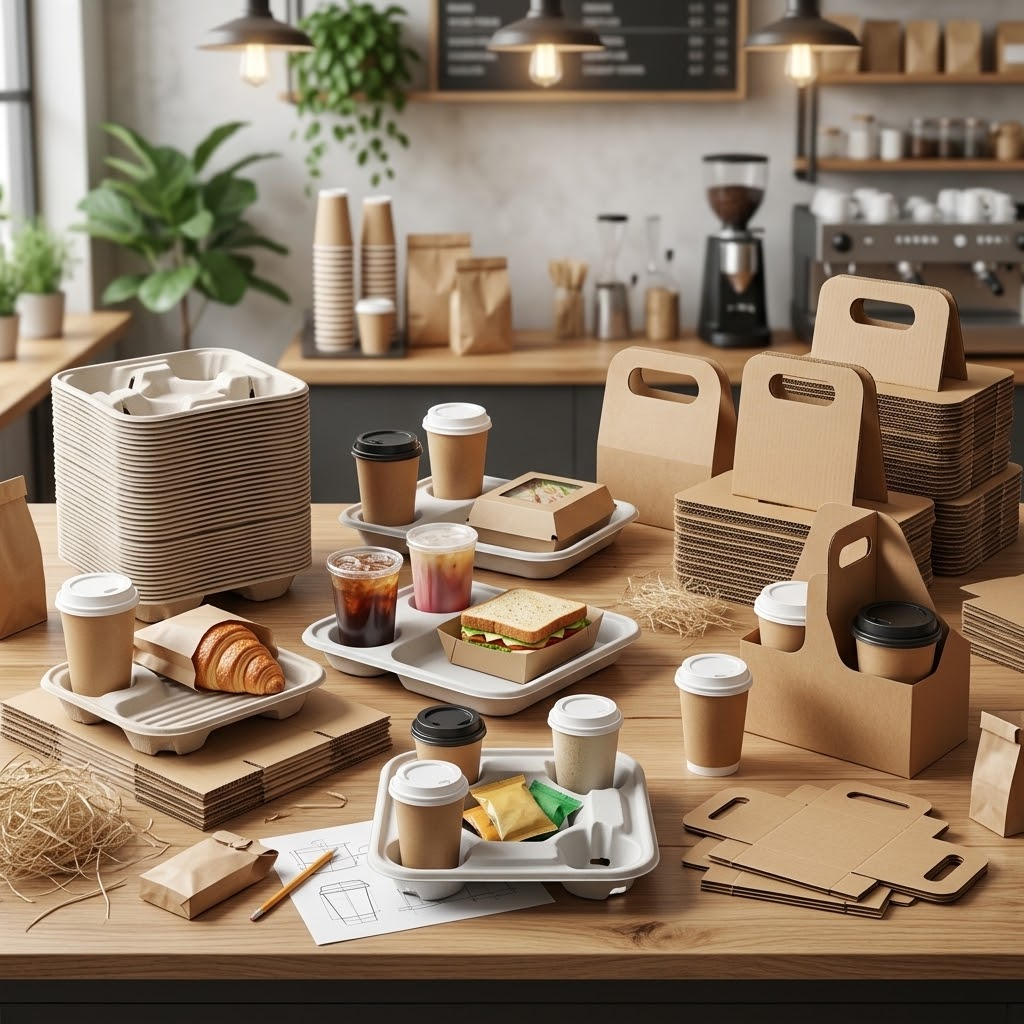
Hot and iced drinks also load a carrier differently. Condensation on an iced cup softens paperboard, and a full hot cup is heavier than an empty one, so test with the real drink. Browse disposable cup carriers to match a carrier to your cup size, and send the cup code when you ask for a quote so the pair can be checked together. When integrating carryout drink orders with meal boxes, explore our integrated sustainable paper food packaging products.
Height and bottom diameter matter for more than carriers. They also decide dispenser fit, sleeve and cup-holder fit, carton volume and the print area.
Nominal Capacity and Working Fill Are Different
A 16 oz menu recipe does not always belong in a cup labelled 16 oz. Foam rises above the liquid, ice displaces drink volume, whipped toppings need clearance, and carrying the cup moves liquid toward the lid seam and sip opening.
Approve the working fill with the actual drink and lid. Record the volume at which staff can fit the lid cleanly and carry the cup without routine contact at the seam. That measured level is more useful than the catalogue ounces. A 32 oz cup, for example, holds about 946 mL to the brim but will never serve 946 mL once ice and a lid are added.
A simple way to set the working fill is to pour the real recipe into the cup, add the ice or foam you normally use, and fit the lid. If liquid touches the lid seam when the cup is tilted slightly, the cup is too small for that recipe, or the fill line needs to come down. Write the agreed fill level into staff training and the cup specification, so that a new batch of cups or a new lid is checked against the same line. Repeat the check for hot and iced versions of the same drink, because ice changes how full the cup looks.
What Are the Different Types of Paper Cups? Single-Wall, Double-Wall and Ripple-Wall
Paper cups are usually grouped by wall construction. Wall structure changes hand feel, insulation, nesting, carton volume and artwork, but it does not necessarily change the rim family, so a size name and a rim diameter can stay the same across types. EcoLeaderPack supplies selected single-wall, double-wall and ripple-wall constructions:
- Single-wall cups cover the widest listed size range on our wholesale paper cups collection, and hot-drink projects may add an embossed paper sleeve.
- Double-wall cups add an outer insulating paperboard layer for hot coffee without burning fingers or requiring a sleeve.
- Ripple-wall cups use a corrugated kraft exterior for superior heat insulation and an upscale tactile grip.
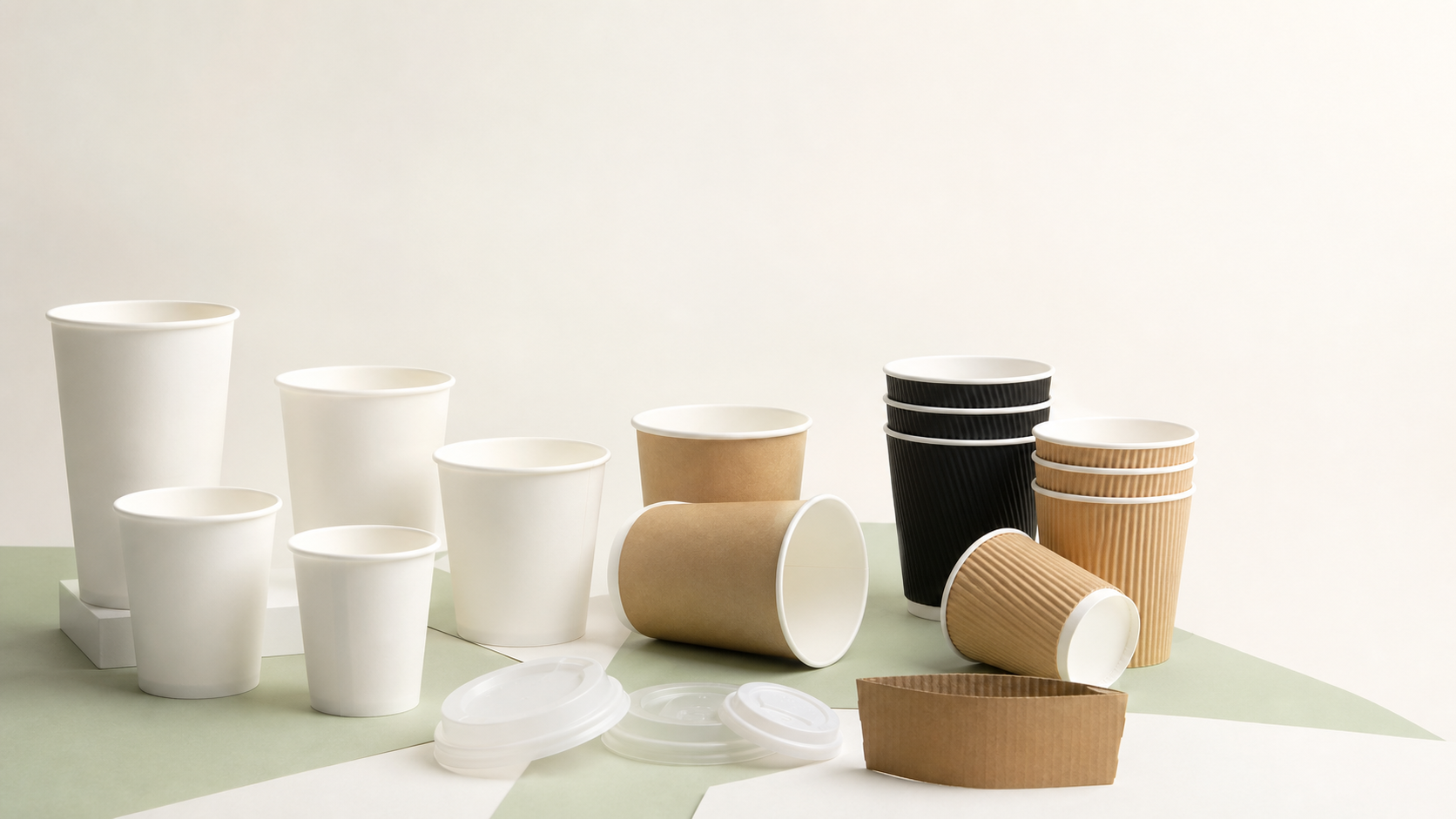
Even when 10 oz and 24 oz cups share a 90 mm rim, their height, dispenser fit and carton size differ. Artwork must follow the chosen die line, because scaling one design from a short cup to a tall cup distorts graphics around the taper and seam. To evaluate barrier coatings across these formats, see our analysis on PE vs PLA vs water-based coatings.
What Should You Check on Cup-and-Lid Samples?
Approve production-representative samples of the exact SKUs, not a generic cup with the same ounce and rim labels.
- Identify: record the cup code, lid code, nominal size, rim, wall construction and artwork version.
- Fit the lid around the full rim: look for even engagement without cup deformation or excessive force.
- Use the intended drink: repeat the fit with the approved working fill and service temperature.
- Simulate handling: carry the cup with its tray, carrier or bag. A sip lid is not a sealed transport closure.
- Check operations: confirm dispenser, sleeve, cup-holder, nesting and storage fit.
- Check the carrier: if the order ships in cup carriers, test the filled, lidded cup in the exact carrier.
- Freeze the approved pair: put cup and lid SKU codes (and the carrier code, if used), pack counts and document scope into the order specification.
If the cup source, forming tooling, lid source or construction changes, recheck the pairing. "A 90 mm lid" should not replace the approved cup and lid codes on repeat orders.
Frequently Asked Questions
What is a standard paper cup size?
There is no single standard, but most coffee programs sit between 8 and 16 oz. A regular hot coffee is commonly 12 oz rather than 8 oz, 16 oz is a common large, and 20 oz usually appears as a large iced drink. Menus differ by brand, so check the size against your own recipe. In EcoLeaderPack's range, 8 oz cups use an 80 mm rim and 10–16 oz cups use a 90 mm rim.
What is the biggest size paper cup?
In EcoLeaderPack's listed 4–32 oz range, the largest is 32 oz, about 946 mL, with a 105 mm rim. It is not one liter, and the usable fill is lower once ice, toppings and the lid are included.
What size is a 250 mL paper cup?
A 250 mL metric cup is about 8.5 U.S. fluid ounces, between the listed 8 oz (237 mL) and 9 oz (266 mL) cups. If a menu is written in 250 mL servings, test the 9 oz cup for headspace and lid clearance, or check other sizes with the oz to mL converter. Note that the two share no rim size: 8 oz is 80 mm and 9 oz is 76 mm.
Do all 12 oz paper cups use 90 mm lids?
No. A 12 oz cup converts to about 355 mL, and EcoLeaderPack's listed 12 oz reference uses a 90 mm rim, but dimensions differ between factories and product families. Within one tested product family, the 10, 12 and 16 oz cups share a 90 mm rim and can share a lid, but approve the exact cup drawing, lid SKU and physical fit.
Will a cup carrier fit any paper cup with the same rim size?
Not necessarily. A carrier grips the cup body and base, so it depends on the cup's bottom diameter and height, not the rim. Test the carrier with the exact cup, lid and drink.
Request Matched Paper Cup and Lid Samples
EcoLeaderPack can review cup size, working fill, wall construction, coating, lid profile, printing and packing as one beverage-packaging project. Browse the paper cup range, matching lids and cup carriers, or send your menu, service condition, quantity by size and destination market. If you already have a cup, lid or carrier reference, include the SKU, drawing or sample details.
To convert other sizes, use the oz to mL converter. For complete packaging programs across drinks and hot meals, explore our related guides and collections:
- Disposable cup, bowl and container size guide: oz, mL and cup capacities
- PE vs PLA vs water-based coatings for paper cups
- PPWR 2026 packaging compliance preparation guide
- Restaurant and café beverage & food packaging solutions
Request a Paper Cup & Lid Quotation
Factory-direct supply for single-wall, double-wall, and ripple paper cups with matching lids and carriers. Submit your project specifications below.