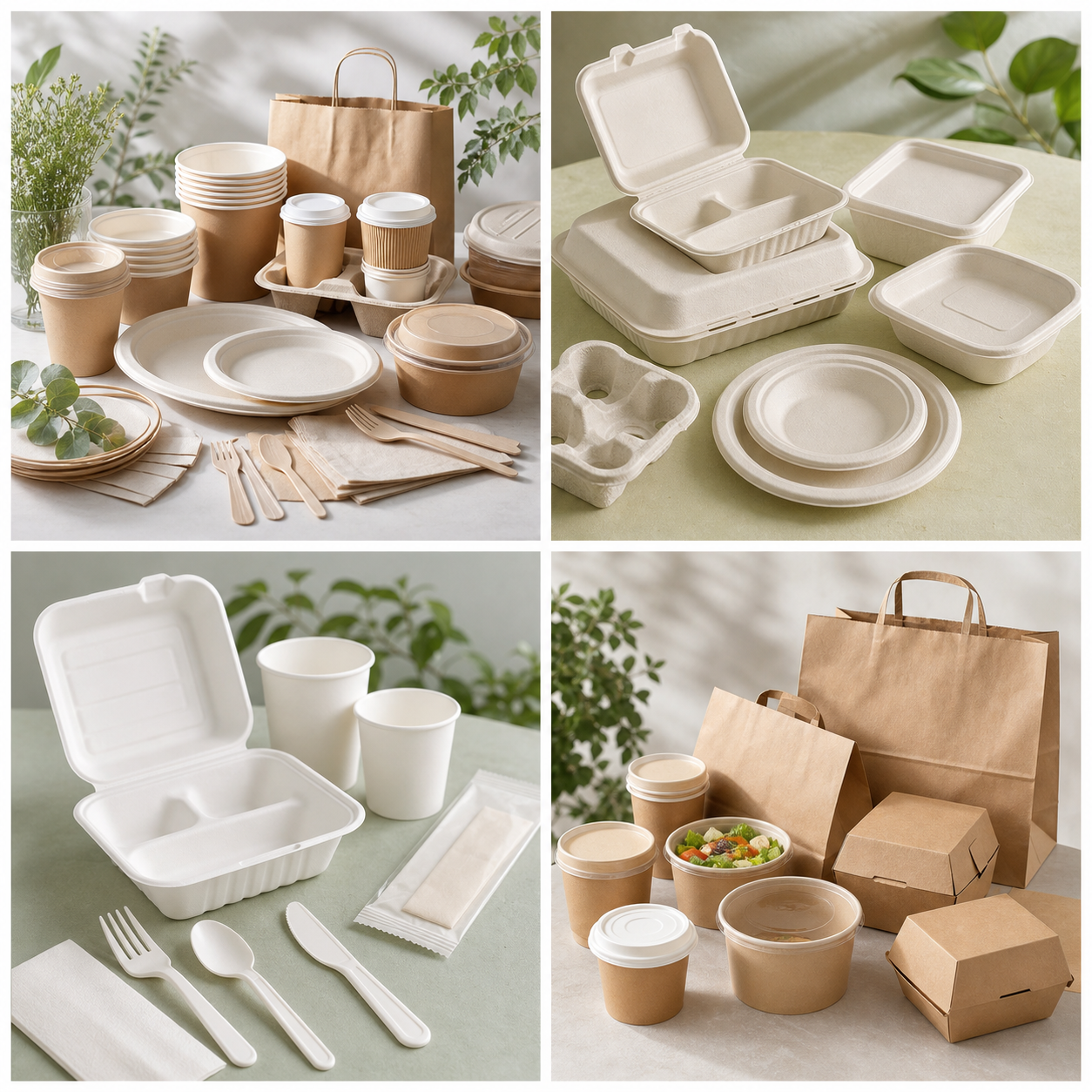
Foodservice packaging works best when it is matched to the food, the time it remains closed and the way it reaches the customer.
A dry pastry, a hot curry and an iced drink can leave the same counter, but they place different demands on a package. EcoLeaderPack supplies bagasse containers, coated paper formats and cornstarch-based cutlery for different parts of a foodservice program.
The useful starting point is the finished pack: its material, coating, size, lid and normal service conditions. These details also determine which samples and supporting documents are relevant to the order.
Match the Pack to the Food
The three product families below cover different menu and service needs. They are starting points rather than universal performance claims; final suitability depends on the selected item and the way it will be used.
Bagasse for Prepared Meals
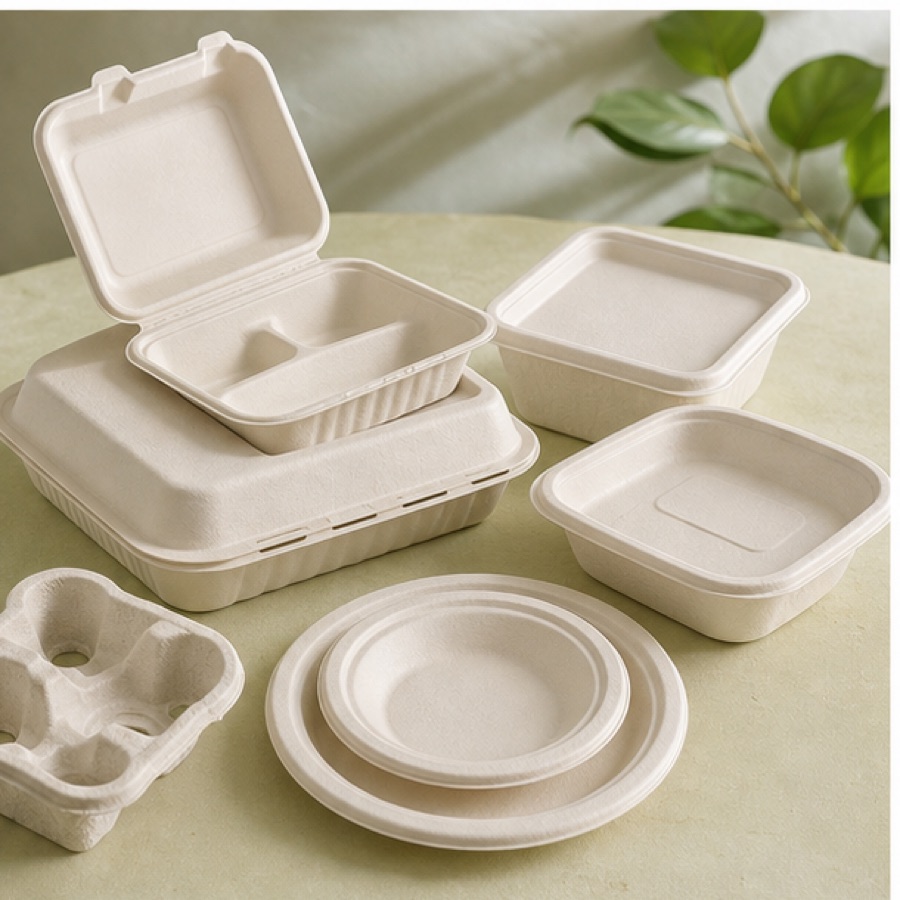
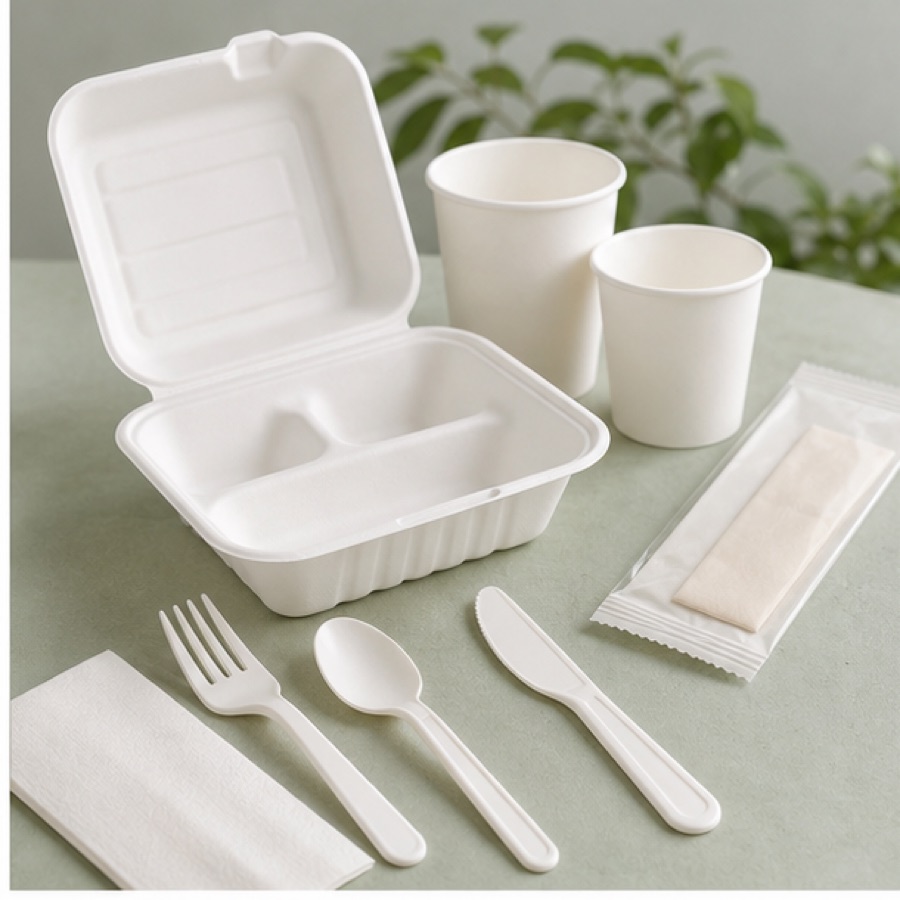
EcoLeaderPack supplies sugarcane bagasse tableware as clamshells, separate-lid containers, bowls, plates and trays. The range can be matched to prepared meals by portion, food type and closure style.
- Typical use: Rice dishes, curries, burgers, fried food and prepared meals.
- Format details: Depth, compartment layout, rim shape and lid style affect portion fit and closure.
- Order details: Share the food, serving condition and expected holding time so suitable samples can be identified.
Paper for Soups, Salads and Drinks
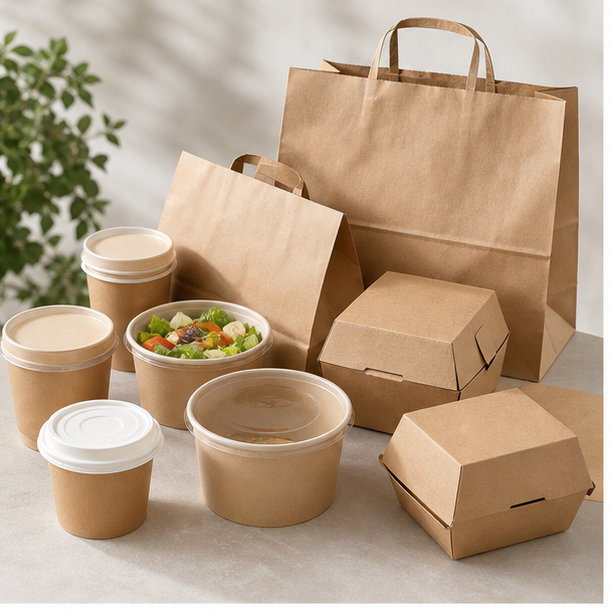
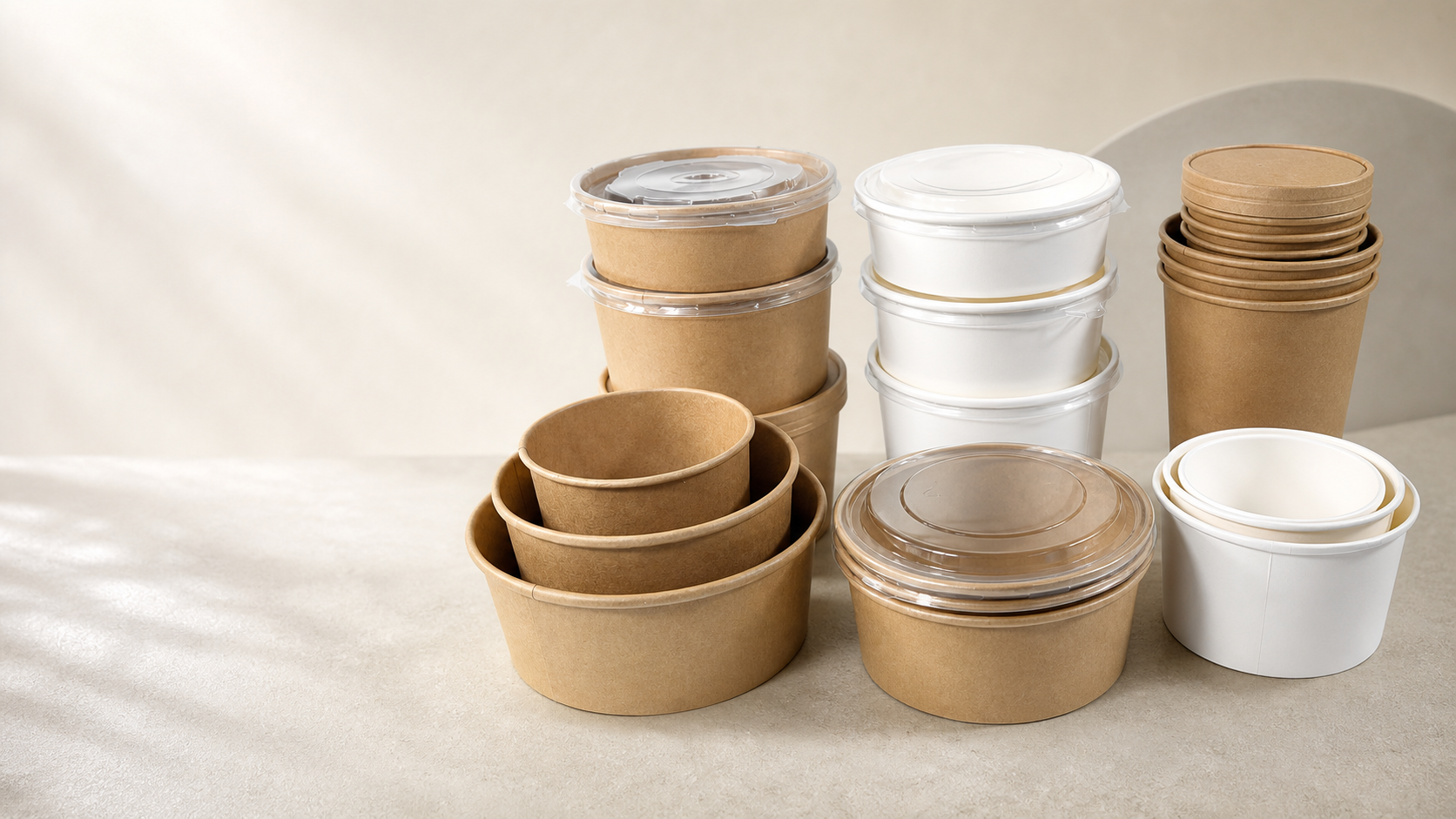
Coated paper is used for cups, bowls, takeaway boxes and bags. The paper structure and barrier layer need to suit the contents, while the rim and lid work as one finished set.
- Typical use: Coffee, cold drinks, soup, salad, bakery products and takeaway meals.
- Format details: Coating, rim profile, lid material and condensation affect the final choice.
- Order details: EcoLeaderPack supplies paper food packaging with printing and matching lid options confirmed for the selected format.
Cornstarch Cutlery for Meal Kits
Cornstarch-based cutlery is available as individual utensils or packed sets. It is useful when a foodservice program needs the cutlery, napkin and outer wrapper prepared as one item.
- Typical use: Takeaway orders, catering, office meals and foodservice kits.
- Format details: Utensil length, stiffness, color and wrapper contents can be specified for the project.
- Order details: EcoLeaderPack can supply cornstarch cutlery sets with a napkin, toothpick and individual wrapper where required.
Material and Order Details
Swipe horizontally to compare all columns.
| Application | Product family | Available formats | Details to confirm |
|---|---|---|---|
| Hot meals, curries and fried food | Molded sugarcane bagasse | Clamshells, bowls, plates, trays and separate-lid containers | Portion, compartments, lid fit, holding time and delivery conditions |
| Soups, salads and drinks | Coated paper | Cups, bowls, food boxes and bags | Coating, rim, lid, serving condition and condensation |
| Takeaway and catering cutlery | Cornstarch-based cutlery | Individual utensils and wrapped sets | Length, stiffness, wrapper contents, packing and intended claim |
Keep Documents Product-Specific
Food-contact, PFAS-related and compostability documents answer different questions. Their value depends on whether the document covers the selected material, finished item, intended use and destination market.
For the EU market, the European Commission’s food-contact materials guidance explains that packaging and tableware intended to contact food must comply with the applicable EU framework. In the United States, the FDA’s Food Contact Substances resources provide the relevant regulatory information and inventories.
- Food-contact evidence: EcoLeaderPack confirms available documents against the selected item, food use and destination. One report should not be assumed to cover an entire range.
- PFAS-related evidence: The product identity, formulation and scope of the available declaration or test report need to remain connected.
- Compostability evidence: Programs such as BPI certification support the products and scope identified by the certification program; the claim also needs a suitable collection and composting route.
The EU Packaging and Packaging Waste Regulation (PPWR) entered into force on 11 February 2025 and generally applies from 12 August 2026. It covers packaging placed on the EU market and includes requirements concerning manufacturing, composition, recovery and waste prevention, as well as restrictions on PFAS in food-contact packaging above specified thresholds. For a sourcing program, this makes accurate product identity and document scope more useful than a broad material claim.
Foodservice and Cosmetic Packaging
A foodservice order may combine containers, cups, cutlery and printed outer packing. EcoLeaderPack can review sizes, lid combinations, printing, inner packing and export cartons together, then retain the approved specification for repeat orders.
Hotels, resorts and lifestyle brands sometimes source restaurant packaging and guest-room amenities at the same time. The categories are related in presentation but not in production. EcoLeaderPack focuses on food-contact packaging, while bottles, pumps, jars and tubes are better discussed with a Professional Cosmetic Packaging Manufacturer familiar with cosmetic containers and formula compatibility.
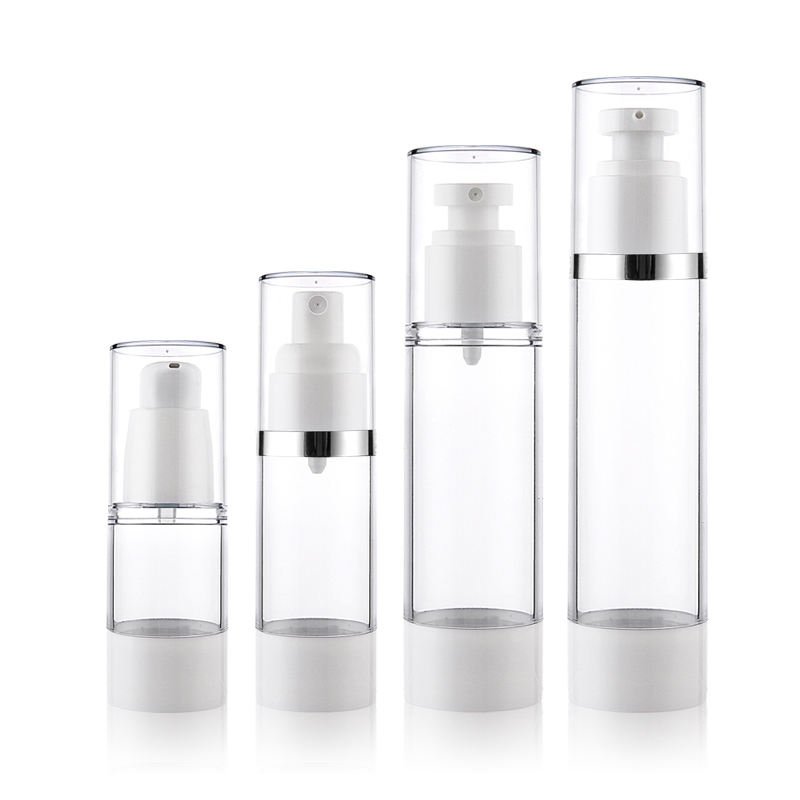
Keeping the product lines with the appropriate specialists also keeps supporting files easier to follow. EcoLeaderPack can address food-contact use, coatings, lids and foodservice packing; a Professional Cosmetic Packaging Manufacturer can address bottle materials, pump compatibility and closure requirements for personal-care products.
Test the Complete Pack
An empty container on a desk does not show how the complete pack will behave in service. A useful sample review uses the actual menu item, the normal portion, the intended lid and the normal delivery or holding time. Microwave or other heating checks should follow the instructions and documented use conditions for the selected finished item.
Test the food, oil, sauce, moisture and fill level the pack will actually carry.
Close, carry and stack the pack for the usual holding and delivery time.
Only test heating, chilling or freezing within the selected product’s confirmed use conditions.
- Container body: Check the base, sidewall and rim for seepage, softening or loss of shape during the normal service period.
- Lid and handling: Use the production lid, normal fill level, secondary bag and usual stacking arrangement; look for movement, spills or a loose closure.
- Finished-item use: If reheating is part of service, confirm that the exact item is documented and labelled for that use, then follow its instructions. Do not extend one sample result to another SKU.
Prepare the Order Details
A clear packaging request includes the product format, size, food type, normal serving condition, expected holding time, lid requirement, quantity, branding, packing method and destination. EcoLeaderPack can use this information to group suitable items, identify the relevant documents and arrange samples before the order specification is fixed.
For printed products or coordinated packs, the custom packaging discussion can also cover artwork, inner packs, carton marks and the mix of products required for one foodservice program.
References and Further Reading
- European Commission — Packaging Waste and PPWROfficial overview of Regulation (EU) 2025/40, its scope, objectives and application timeline.
- European Commission — Food Contact MaterialsEU framework and supporting resources for materials and articles intended to contact food.
- U.S. FDA — Packaging and Food Contact SubstancesFDA regulatory resources, guidance and inventories for food-contact substances.
- Biodegradable Products Institute — Compostability CertificationInformation about BPI’s third-party certification program and certified compostable products.
Request Samples or a Quote
Include the intended use, product type, size, quantity, customization and destination so EcoLeaderPack can review the relevant options.