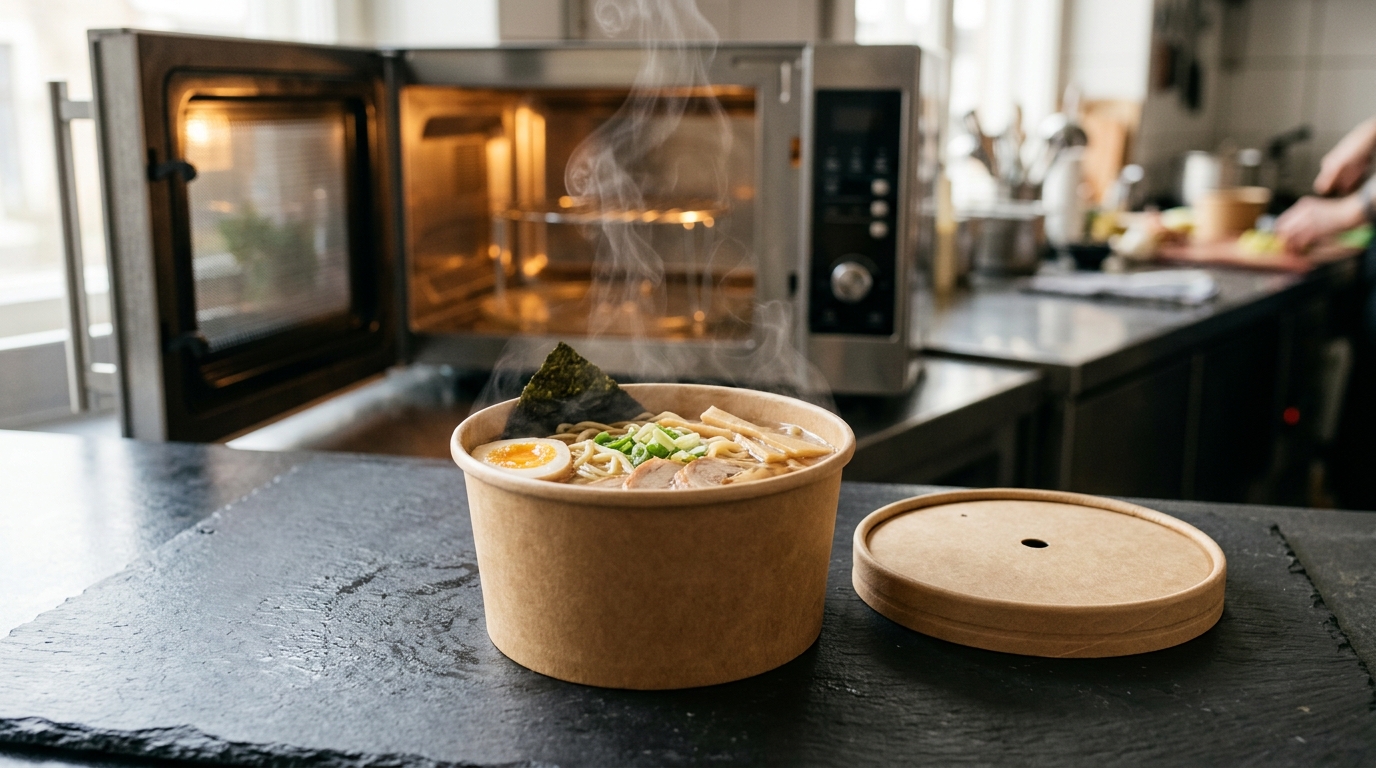
A disposable paper bowl is not inherently “microwave safe” simply because it is made of cellulose. Microwave safety depends on the thermal stability of the interior barrier coating (PE, PLA, aqueous dispersion, or PP), the chemical formulation of heat-seal adhesives, the absence of conductive metallic inks, and the heat deflection limits of the matching lid. If a paper bowl lacks a certified microwave-safe designation and verified food-contact documentation under defined heating conditions, food should be transferred to a tested ceramic, glass, or PP container before reheating.
The Physics of Microwave Heating on Paperboard Packaging
Commercial and domestic microwave ovens operate at a standard industrial frequency of 2.45 GHz. At this wavelength, electromagnetic radiation interacts almost exclusively with dielectric dipole molecules (primarily liquid water) and dissolved ions (salts) within the food.
Dry, non-polar cellulosic wood pulp fibers do not directly absorb microwave radiation; microwaves pass directly through the paperboard wall into the food. However, paper packaging is subjected to severe secondary thermal and mechanical stresses during microwave cycles:
- Trapped Moisture Vaporization: Virgin and kraft paperboards maintain an ambient equilibrium moisture content of 6% to 9% by weight. When exposed to microwave fields, this internal moisture rapidly vaporizes into expanding steam. If the interior barrier coating or exterior clay varnish prevents steam escape, high internal vapor pressure develops between the paperboard plies, leading to blistering, bubbling, or ply delamination.
- Lipid and Sugar Hotspots Exceeding 140°C: While pure water boils at 100°C (212°F), culinary oils, animal fats, and concentrated sugar glazes possess much lower specific heat capacities and rapidly absorb microwave energy. In foods like curry, barbecue sauce, or fried chicken, localized contact temperatures frequently spike to 120°C–160°C (248°F–320°F) within 60–90 seconds. These localized hotspots easily exceed the thermal softening thresholds of standard polymeric coatings.
How Can You Tell Whether a Paper Bowl Is Microwave Safe?
Commercial foodservice buyers and kitchen staff must evaluate the complete converted package, not merely the raw paperboard. A rustic unbleached kraft appearance, an FSC certification label, or a Mobius loop recycling symbol provides zero indication of high-temperature microwave resilience.
An audit-ready, commercially compliant paper bowl requires:
- An Explicit Microwave Symbol and Wattage Rating: Conforming to standardized icons (three wavy horizontal lines inside a microwave frame) accompanied by maximum wattage (e.g., ≤1000W) and maximum dwell time (≤2 to 3 minutes).
- Clear Operational Reheating Instructions: Stating whether the package is rated for aqueous reheating only (soups, oatmeal) or validated for high-fat and high-sugar preparations.
- Mandatory Lid Removal or Venting Protocol: Clear labeling on the lid specifying whether it must be removed, offset, or vented prior to heating.
- Zero Conductive Inks or Foil Foiling: Elimination of metallic hot-stamp foils, reflective pigments, or metal wire handles that produce electromagnetic arcing, electric sparking, and container fire.
- SKU-Specific Regulatory Documentation: A valid factory Declaration of Compliance (DoC) proving migration compliance under high-temperature testing protocols.
The USDA Food Safety and Inspection Service (FSIS) explicitly instructs food handlers to use only containers labeled for microwave use, warning that unlabeled takeout containers can melt, warp, or transfer volatile chemicals into hot food.
Quick Engineering Decision Table: Bowl Coatings and Lids
Swipe horizontally to compare thermal limits and practical reheating rules across all bowl components.
| Component / Substrate | Thermal Softening / Melting Point | Microwave Reheat Decision | Primary Failure Mode / Technical Reason |
|---|---|---|---|
| Unlabeled / Generic Paper Bowl | Unknown | NEVER MICROWAVE | Unknown barrier chemistry, risk of adhesive breakdown, odor transfer, or chemical migration. |
| LDPE-Coated Paper Bowl | Melting Point: 105°C–115°C (221°F–239°F) | Conditional (Aqueous Only) | Safe for water-based liquids up to 100°C (≤2 mins). High-fat or sugary foods cause localized pinhole melting and polymer softening. |
| Standard PLA-Coated Paper Bowl | Glass Transition (Tg): 55°C–60°C (131°F–140°F) | DO NOT MICROWAVE | Standard biopolymer coating softens and deforms above 55°C, resulting in barrier loss, blistering, and leakage. |
| Aqueous Dispersion Coated Bowl | Heat Resistance: Up to 100°C–120°C (formula-dependent) | Conditional (Tested SKUs) | Water-based polymer/mineral barrier withstands short-term reheating if certified under FDA Condition of Use H. |
| PP-Lined Paper Bowl | Melting Point: 160°C–165°C (320°F–329°F) | SAFE FOR REHEATING | High heat deflection threshold withstands boiling broths, heavy curries, and localized lipid hotspots up to 130°C. |
| Thermoformed rPET / PET Lid | Glass Transition (Tg): 70°C–80°C (158°F–176°F) | REMOVE BEFORE HEATING | Steam causes PET to shrink, warp, and collapse within seconds. Unsafe for microwave exposure. |
| Thermoformed PP Lid (Vented) | Heat Deflection Temp: 100°C–110°C | SAFE IF VENTED | Withstands steam temperatures. Must feature open steam vents to prevent hazardous pressure accumulation. |
| Formed Paperboard Lid | Variable (matches bowl coating) | LOOSEN OR VENT | Paper lids with aqueous or PE barriers tolerate reheat, but tight snap fit requires loosening to vent steam. |
Polymer Barrier Engineering: PE, PLA, Aqueous & PP
Paperboard is inherently porous. To contain broths, braised sauces, noodles, and dressed salads, the interior must be laminated or coated with a hydrophobic barrier. That barrier coating dictates microwave compatibility.
1. Low-Density Polyethylene (LDPE) Coatings
Traditional paper bowls utilize an extruded layer of LDPE (typically 15 to 20 gsm). LDPE has a crystalline melting point between 105°C and 115°C (221°F–239°F).
- Aqueous Reheating Performance: Water cannot exceed 100°C at standard atmospheric pressure. In high-moisture foods (e.g., clear chicken soup, miso broth, oatmeal), an LDPE-lined bowl performs adequately during short reheating intervals (1 to 2 minutes at 800–1000W).
- Lipid Failure Mode: In fatty or oily foods (e.g., pork ramen, fried noodles with chili oil), oil droplets floating on the surface heat to 130°C+. When these droplets contact the LDPE film, they exceed its melting point, producing microscopic pinholes, blister separation from the paper substrate, and potential migration of low-molecular-weight polyolefin oligomers.
2. Polylactic Acid (PLA) Biobased Coatings
PLA is derived from fermented plant starch (corn or cassava) and is widely specified for compostable packaging programs certified under ASTM D6868 and EN 13432.
- Low Glass Transition Temperature (Tg): Standard amorphous PLA has a glass transition temperature of only 55°C to 60°C (131°F–140°F). Above this threshold, the rigid polymer undergoes rapid relaxation into a flexible, rubbery phase.
- Microwave Vulnerability: Standard PLA-coated paper bowls should never be placed in a microwave. Hot steam and boiling food soften the film almost immediately, causing severe blistering, liquid weeping through the bottom seam, and complete structural failure. For high-heat applications, only specialized, highly crystallized bio-polymers or heat-modified formulations can be considered.
3. Aqueous Dispersion Coatings (Water-Based Barrier)
Water-based barrier coatings (WBBC) utilize ultra-thin polymeric/mineral dispersions that cure into a cohesive hydrophobic film on the paperboard fibers. Engineered primarily to enable paper mill repulping without dedicated polymer separation plants, high-grade cross-linked acrylic dispersions can withstand temperatures up to 100°C–120°C. Suitability must be verified through batch-specific extraction testing under defined conditions.
4. Polypropylene (PP) Extrusion Linings
For demanding microwave applications—such as supermarket ready-meals, institutional catering, and spicy, high-fat noodle dishes—PP-extruded paperboard provides the highest thermal margin. Polypropylene has a melting point of 160°C to 165°C (320°F–329°F), easily withstanding intense microwave hotspots without softening, scorching, or leaching.
Lid Thermodynamics: The Critical Safety Interface
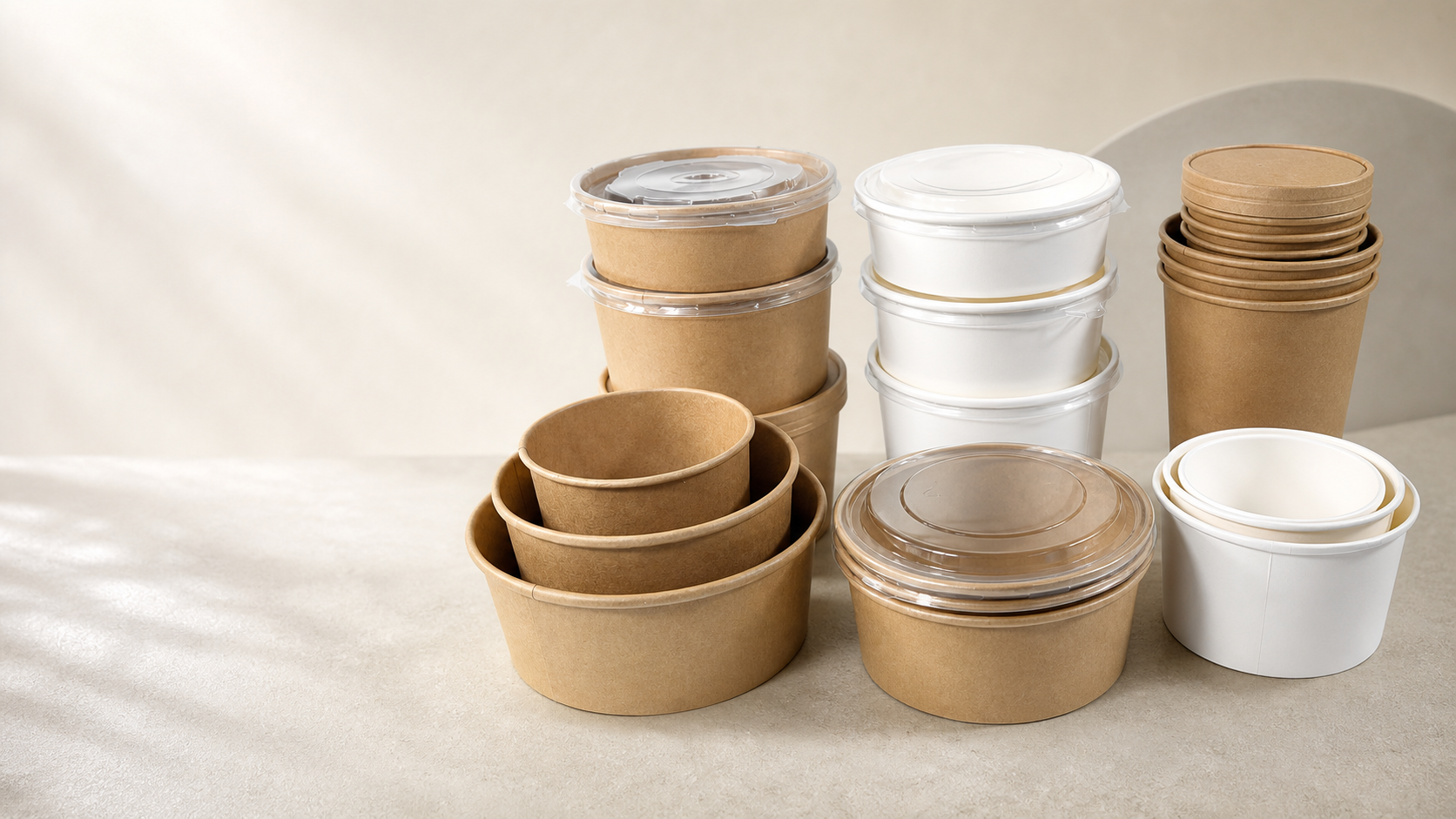
A microwave statement that applies to a paper bowl does NOT automatically apply to its lid closure. In institutional catering and commercial delivery, lid failure during reheating is the leading cause of customer scalding and packaging spills.
- PET and rPET Clear Lids (Glass Transition 70°C–80°C): Polyethylene terephthalate (PET) is the standard resin for crystal-clear cold deli display. When exposed to microwave steam (100°C), PET undergoes immediate thermal shrinkage and mechanical softening. The lid collapses into the bowl or pops off violently. Rule: All PET and rPET lids must be completely removed before microwaving.
- PP Lids (Heat Deflection 100°C–110°C): Polypropylene lids remain structurally stable during microwave steam exposure. However, if the lid creates a complete airtight seal without venting, expanding steam creates internal pressure that can rupture the bowl or blow the lid off when opened. PP lids approved for reheating must incorporate calibrated steam-relief vent holes.
- Vented Paperboard Lids: Double-vented paper lids provide consistent thermal expansion matching the bowl body. Operators should ensure vent pinholes are unblocked before starting the heating cycle.
Health Canada’s Food Safety Guidelines instruct consumers and food handlers to leave container lids slightly unsealed or loosely draped with microwave-safe paper wraps to allow steam to escape safely without generating hazardous pressure buildup.
Why There Is No Universal “One-Size-Fits-All” Reheating Time
Procurement teams often ask suppliers to state a single universal maximum reheating time (e.g., “Microwave safe for 3 minutes”). Scientifically, no responsible packaging manufacturer can provide a single time limit without defining the food matrix and microwave parameters.
The rate of temperature rise within the container is governed by:
- Microwave Magnetron Power: Commercial kitchen microwaves (1200W to 1800W) heat food up to 2.5 times faster than domestic countertop units (700W to 900W). A 60-second exposure in an 1800W commercial unit delivers equivalent thermal energy to 2.5 minutes in a household oven.
- Food Salinity and Dielectric Loss Factor: High-salt broths and gravies absorb microwave radiation at the extreme outer perimeter, creating intense edge overheating while the center remains cold.
- Sugar and Fat Content: Syrups, cheeses, and fats absorb microwave energy rapidly, jumping past 130°C in seconds.
- Starting Temperature: Reheating frozen chili at -18°C requires substantially longer exposure than reheating a room-temperature noodle bowl at 20°C.
FDA, USDA & EU Food Contact Migration Regulations
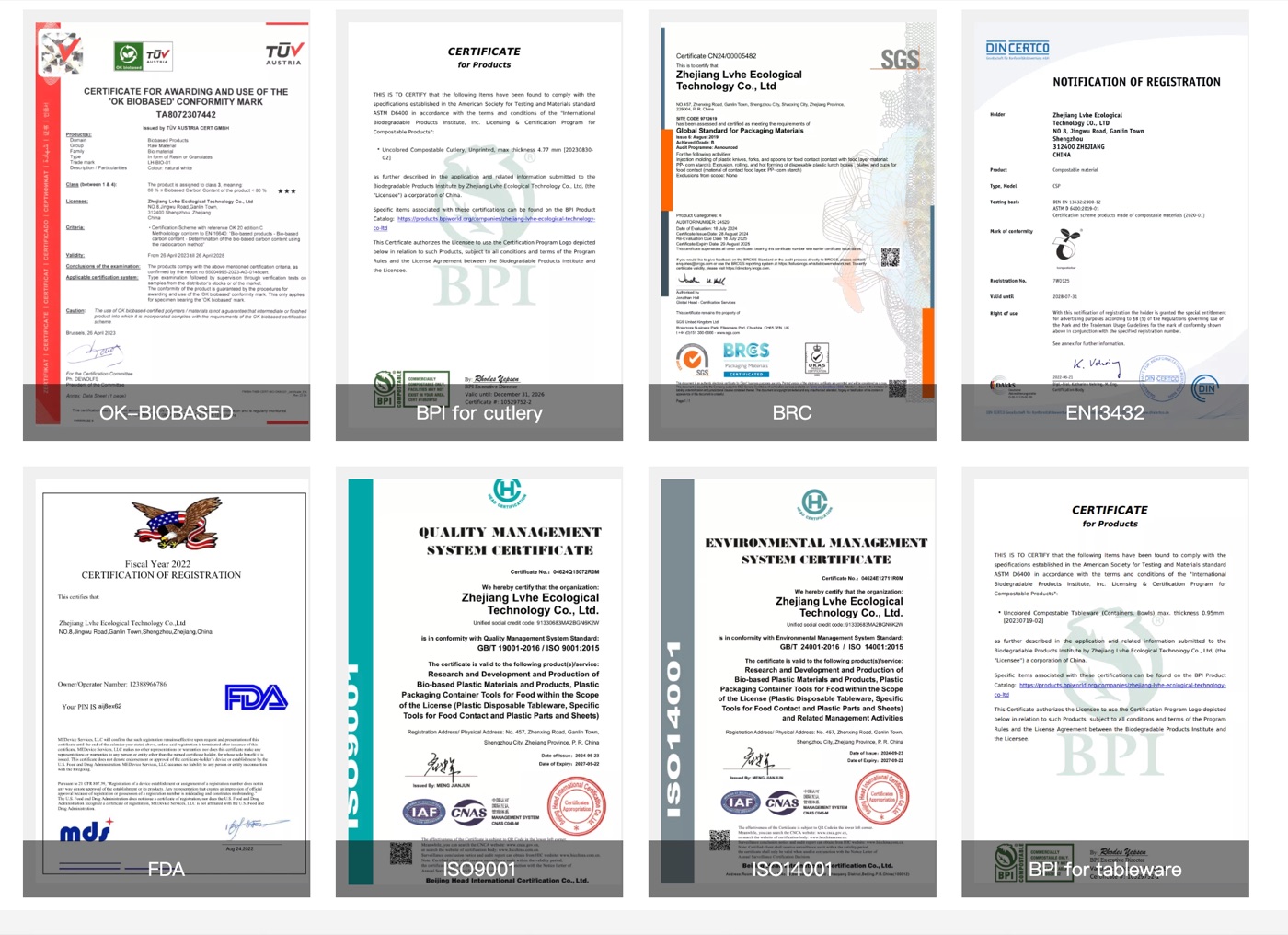
In commercial supply contracts, a microwave claim is a legal compliance statement backed by certified chemical extraction testing.
1. U.S. FDA Premarket Chemistry & Conditions of Use
Under the FDA Chemistry Recommendations for Food Contact Substances, microwave safety is evaluated under defined Conditions of Use (FDA Conditions of Use Table 2):
- Condition of Use H: Frozen or refrigerated storage: Ready-prepared foods intended to be reheated in container at time of use (212°F / 100°C). This is the standard regulatory baseline for microwave-reheatable paper takeout packaging.
- Condition of Use J: Cooking at temperatures exceeding 250°F (121°C). Applies to dual-ovenable trays and active microwave heat-susceptor packaging (e.g., metallized crisping sleeves).
- Extraction Testing Protocols: Packaging materials must pass chloroform-soluble extractives testing under 21 CFR 176.170 using food simulants (10% ethanol for aqueous foods, 3% acetic acid for acidic foods, and Miglyol 812 or vegetable oil for fatty foods) exposed to the maximum anticipated time-temperature profile.
2. European Union: Regulation (EC) No 1935/2004 & (EU) No 10/2011
In the European Union, paper packaging components contacting food must comply with the general safety criteria of Framework Regulation (EC) No 1935/2004 Article 3, mandating that packaging does not transfer constituents in quantities that endanger human health or bring about unacceptable changes in food organoleptic properties. Plastic barrier coatings and polymeric lids must strictly comply with Commission Regulation (EU) No 10/2011, which establishes an Overall Migration Limit (OML) of 10 mg/dm² (or 60 mg/kg food simulant) under standardized testing conditions (e.g., OM2 or OM3 testing protocols for high-temperature contact).
5-Stage B2B Sample Qualification Protocol
Before rolling out a paper bowl program across dozens of restaurant locations or institutional catering facilities, procurement managers should execute a structured 5-stage qualification protocol using production samples:
Swipe horizontally to review the complete 5-stage quality audit checklist.
| Test Stage | Laboratory & Kitchen Stress Procedure | Acceptance Criteria (Pass) | Critical Failure Indicators (Reject) |
|---|---|---|---|
| 1. Dimensional & Rim Tolerance | Measure top rolled rim outside diameter (OD) and flange thickness with a digital vernier caliper across 20 samples. | Rim OD matches engineering drawing within ±0.25 mm; uniform roundness with no ovalization. | Variations >0.4 mm causing loose lid snap or overtight rim cracking. |
| 2. Thermal Aqueous Stress | Fill bowl to 75% capacity with boiling water (95°C–100°C). Microwave at 1000W for 2.5 minutes with vented lid. | Zero bottom sagging; sidewall retains vertical crush strength; zero steam seal leakage. | Bottom panel drops >3 mm; side seam wicking; steam pressure blows lid off. |
| 3. Lipid Hotspot & Oil Bleed | Fill with 50% vegetable oil and 50% water emulsion (simulating oily curry). Microwave at 1000W for 2 minutes. | Interior coating remains smooth and fully adhered; 3M Kit test rating ≥8 maintained. | Coating blisters, peels, or pinholes; visible oil grease rings bleed through paperboard. |
| 4. Organoleptic Odor & Taste | Microwave bowl filled with deionized water for 2 minutes. Allow to stand capped for 10 minutes. Perform blind sensory panel. | Clean taste; zero chemical, burnt paper, polyethylene, or solvent off-odors. | Plastic, chemical, or burnt starch odor detected in water simulant. |
| 5. Dynamic Stacking Crush Load | Immediately following microwave cycle, snap production lid, place 1.5 kg top dead-weight load for 10 minutes. | Container maintains structural stacking stability; zero sidewall buckling or lid collapse. | Sidewall creases or collapses under top load; contents spill. |
Frequently Asked Questions: Microwave Safety in Paper Bowls
Can you microwave a paper bowl for 30 seconds?
Yes, provided the bowl is a confirmed food-grade paper container without metal trim or foils. A 30-second reheat in a standard 800W–1000W microwave is generally safe for mild aqueous warming. However, short duration does not make an unknown or non-food-grade paper vessel safe.
Are kraft paper bowls more microwave safe than white paper bowls?
No. “Kraft” refers only to the unbleached sulfate pulping process of the base paper fibers, whereas “white” paper uses bleached pulp. Microwave safety is determined entirely by the internal barrier coating (PE, PLA, PP, or aqueous), the heat-seal adhesives, and the printing inks, not by the color of the paper fibers.
What happens if you microwave a PLA-coated paper bowl?
Because amorphous PLA has a low glass transition temperature (55°C–60°C), hot food and steam will cause the PLA lining to soften, melt, and blister rapidly. This destroys the moisture barrier, causing soup or sauce to saturate the paperboard and leak through the bottom seam.
Can you leave a clear plastic lid on while microwaving?
No, unless the lid is explicitly molded from polypropylene (PP) and features calibrated steam vents. Clear lids made of PET or rPET will soften, warp, and shrink within seconds when exposed to hot steam. Always remove clear PET lids before reheating.
Does “food-grade” mean the same as “microwave-safe”?
No. Food-grade certification (such as compliance with FDA 21 CFR 176.170 at room temperature) merely confirms that materials will not transfer toxic substances during ambient contact. Microwave safety requires documented testing under high-temperature thermal conditions (FDA Condition of Use H or J).
Source High-Temperature Microwave-Safe Paper Bowls
EcoLeaderPack manufactures kraft and white paper bowls engineered specifically for hot soups, prepared ready-meals, and commercial microwave reheating. We provide complete factory compliance dossiers, including FDA 21 CFR 176.170 test reports, EU Regulation (EU) No 10/2011 migration declarations, and custom vented lid tooling.
Request Paper Bowl Production Samples & Compliance Dossiers
Share your bowl capacity, barrier coating preference, menu food types, microwave heating parameters, order volume, and destination country. EcoLeaderPack will supply matched test samples and laboratory documentation.