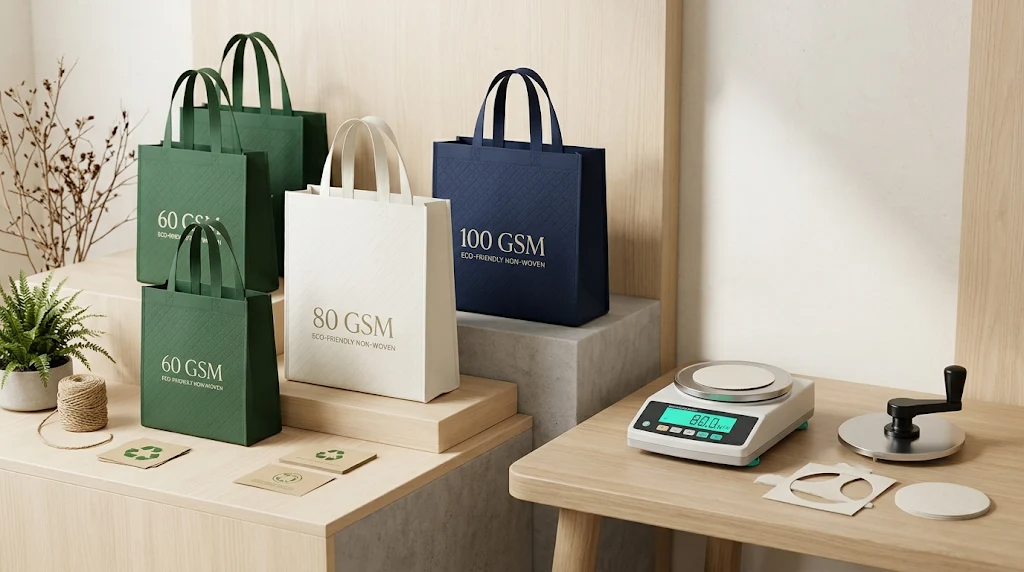
GSM stands for grams per square metre (g/m²), defining the fabric weight of a non-woven polypropylene bag. To switch between metric GSM and US ounces, the exact mathematical conversion factor is 33.906: divide GSM by 33.906 to get ounces per square yard (oz/yd²), or multiply oz/yd² by 33.906 to get GSM. Under this standardized ratio, an 80 GSM reusable supermarket bag equals 2.36 oz/yd², a 100 GSM retail shopping bag equals 2.95 oz/yd², and a 3 oz/yd² US specification converts to approximately 101.7 GSM.
In international packaging manufacturing, non-woven roll stock is bought, slit, and converted in metric GSM, while North American buyers, commercial printers, and brand merchandisers frequently discuss fabric weight in ounces. When evaluating supplier bids for custom non-woven bags, verifying whether an ounce quote refers to area weight (oz/yd²) or linear roll weight (oz/linear yd) prevents costly gauge misunderstandings before production lines run.
GSM ↔ oz/yd² Converter & Bag Fabric Weight Estimator
Conversion factor: 1 oz/yd² = 33.906 g/m² (ASTM D3776, Eq. 8; NIST SP 811). Interactive real-time calculation.
80 GSM ≈ 2.36 oz/yd²
- g/m² (GSM)
- —
- oz/yd²
- —
- oz per linear yard
- enter a roll width
- Weight of 1,000 m²
- —
Note: oz/yd² is an area weight. If a supplier quotes ounces per linear yard, it depends on roll width: oz per linear yard = oz/yd² × width (in) ÷ 36.
—
- Body panels + gussets + base
- —
- Handles (folded strips)
- —
- Total cut area incl. allowance
- —
- Fabric weight per bag
- —
- Fabric for the whole order
- —
Box-style tote estimate: 2 × W × H (front/back) + 2 × G × H (gussets) + W × G (base) + handles folded double. Excludes lamination film, ink, thread, or bottom cardboard inserts.

What Does GSM Mean in Non-Woven Polypropylene Bags?
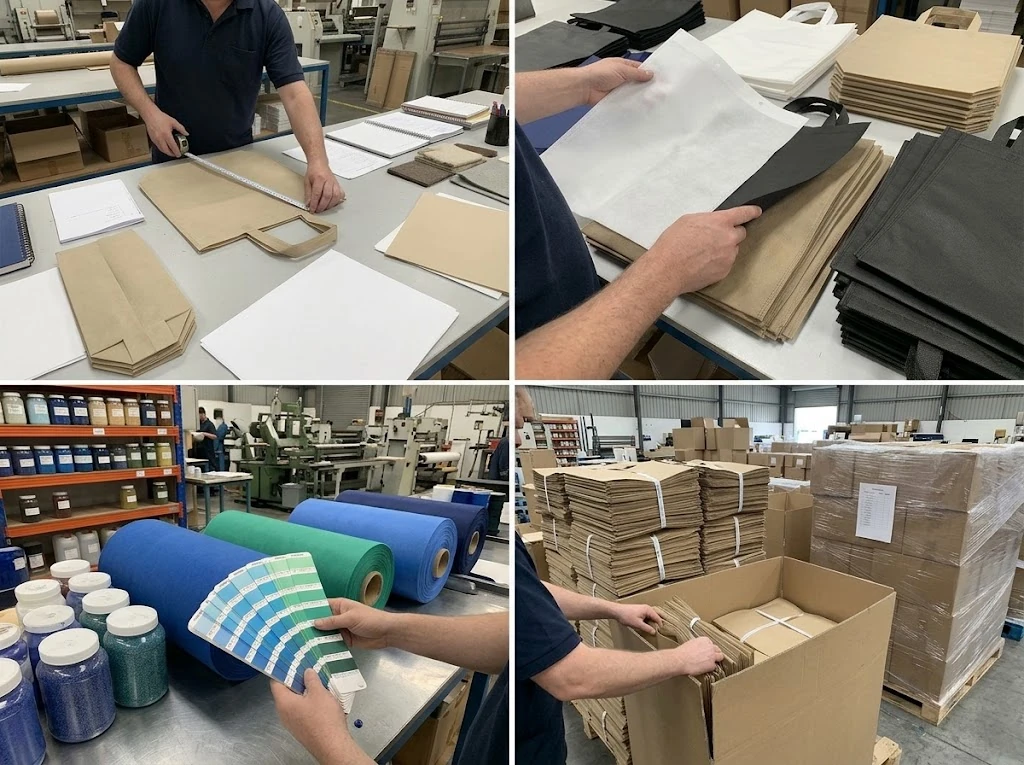
In plain terms, GSM tells you how much raw thermoplastic polymer is packed into the fabric. If you cut out a sheet of unprinted non-woven fabric measuring exactly 1 metre by 1 metre, and place it on a laboratory balance, an 80 GSM fabric weighs exactly 80 grams. It is the international standard metric used by polymer extruders, bag converting factories, and global testing bodies to price raw materials and certify finished goods (ISO 9073-1:2023).
Because non-woven polypropylene (PP) is an extruded spunbond textile, raw material cost is directly tied to the total tonnage of resin consumed. Higher GSM means denser fiber distribution, superior opacity, and enhanced puncture resistance. However, fabric weight only describes the raw cloth—not the completed bag. A bag made with high-GSM fabric can still tear prematurely if the handle welds lack adequate bonding depth or if the bottom gusset seams lack proper reinforcement.
Is GSM the Same as Fabric Thickness? Why Hand Feel Can Be Misleading
Many buyers make the mistake of equating GSM with physical thickness. GSM measures fabric weight per unit area, not caliper thickness. Two rolls of fabric can both weigh exactly 80 GSM on an analytical scale, yet one can feel noticeably thicker, softer, or stiffer in your hand than the other.
This variance happens during the thermal bonding stage of spunbond production. Non-woven fabric is formed by extruding continuous molten polypropylene filaments onto a moving conveyor belt, which then pass through heated calendar rollers. If the factory operates the rollers at higher pressure with a fine diamond pattern, the fibers are pressed tightly together, resulting in a thin, dense, high-tensile sheet. If they use a lighter textured pattern with lower cylinder pressure, the fibers remain loftier, creating a thicker, softer hand feel at the exact same 80 GSM weight.
+-----------------------------------------------------------------------------------+
|                        THE SPUNBOND CALENDER EMBOSSING EFFECT                     |
+-----------------------------------------------------------------------------------+
| High Pressure + Fine Diamond Roller  --> Compact, dense, thin caliper (high grab)  |
| Lower Pressure + Textured Dot Roller --> Lofty, soft, thick hand feel (same mass) |
+-----------------------------------------------------------------------------------+
A common trap in low-cost manufacturing involves adding calcium carbonate (chalk filler) into the raw polypropylene masterbatch. Chalk is significantly cheaper than virgin polypropylene resin and has higher density. Adding 20% to 30% chalk filler allows an unethical supplier to hit an "80 GSM" target on a scale using less polymer, but the resulting fabric becomes brittle, chalky, and prone to splitting along fold lines. Virgin polymer formulations in custom non-woven bags rely on 100% prime polypropylene pellets without mineral chalk dilution, preserving repeated hinge-flex endurance, clean ultrasonic welding, and consistent tensile ratings.
How Do You Convert GSM to oz/yd²? The Mathematical Baseline
The conversion between metric GSM (g/m²) and imperial ounces per square yard (oz/yd²) relies on internationally standardized physical constants: 1. One avoirdupois ounce is defined as 28.349523125 grams. 2. One linear yard equals 0.9144 metres, making one square yard exactly 0.83612736 square metres (0.9144 ).
Dividing the mass of one ounce by the area of one square yard (28.349523125 ) yields the official constant of 33.906 g/m² per oz/yd². This exact conversion is established in standard fabric testing methods (ASTM D3776/D3776M; NIST SP 811).
Swipe horizontally to compare all columns.
| From Unit | To Unit | Mathematical Formula | Practical Example |
|---|---|---|---|
| GSM (g/m²) | Ounces per square yard (oz/yd²) | Divide by 33.906 (or ) | 80 GSM = 2.359 oz/yd^2 |
| oz/yd² | GSM (g/m²) | Multiply by 33.906 | 3.0 oz/yd^2 = 101.72 GSM |
| oz/yd² & Roll Width | Ounces per linear yard (oz/yd) | oz/yd^2 Width (in) | 2.36 = 4.13 oz/linear yd |
Pro-tip for quick mental math: Dividing GSM by 34 gives an approximation within 0.28% of the true mathematical value. For example, 80 = 2.353 oz/yd^2, which is close enough for quick factory ballpark estimates during phone consultations.
Comprehensive GSM to oz/yd² Chart: What Each Fabric Weight Feels Like
Non-woven shopping and tote bags typically span from 40 GSM up to 150 GSM. EcoLeaderPack operates a standard production envelope of 60 to 120 GSM for automated ultrasonic heat-sealing and precision stitching lines. Lighter dust covers or heavy luggage-grade textiles are run under dedicated custom schedules.
Swipe horizontally to compare all columns.
| Fabric Weight (GSM) | Imperial Equivalent (oz/yd²) | Tactile Hand Feel & Drape | Typical Weight Limit (kg / lbs) | Primary Commercial Application | Sourcing Advice & Production Notes |
|---|---|---|---|---|---|
| 40–50 GSM | 1.18–1.47 oz | Ultra-light, translucent, paper-like stiffness | 1–2 kg / 2–4 lbs | Garment dust covers, dry-cleaning bags, shoe pouches | Single-use or light storage; automated ultrasonic seams only. |
| 60–70 GSM | 1.77–2.06 oz | Lightweight, soft drape, folds flat easily | 3–5 kg / 7–11 lbs | Event giveaways, trade show literature bags, promotional handouts | Economical for high-volume campaigns; low freight shipping weight. |
| 75–80 GSM | 2.21–2.36 oz | Global industry standard: sturdy, opaque, pliable | 8–12 kg / 18–26 lbs | Supermarket grocery totes, takeaway bags, brand retail shoppers | The proven sweet spot for cost-per-bag, strength, and multi-year reuse. |
| 90–100 GSM | 2.65–2.95 oz | Stiff, substantial, holds box shape upright | 12–16 kg / 26–35 lbs | Heavy grocery bags, wine bottle carriers, retail apparel packaging | Excellent puncture resistance; supports reinforced box-X handle stitching. |
| 120 GSM | 3.54 oz | Heavyweight, rigid, canvas-like structured hand | 16–20 kg / 35–44 lbs | Premium boutique bags, trade show executive totes, heavy delivery | Maximum durability; suitable for 100+ commercial wash-wipe reuse cycles. |
| 150 GSM | 4.42 oz | Extra-heavy, board-like stiffness, high density | 20+ kg / 45+ lbs | Industrial tool bags, oversized laundry sacks, equipment bags | Specialized heavy gauge; requires heavier gauge needles and thread. |
Going from an 80 GSM fabric up to 100 GSM increases raw material consumption by 25%, but it dramatically improves bag standing stiffness on retail counters. Analyzing tensile yield versus unit cost across the non-woven bag GSM fabric weight guide helps procurement teams balance pouch rigidity against freight volume.
What Is the Difference Between oz per Square Yard and oz per Linear Yard?
A frequent source of confusion during import procurement occurs when a supplier quotes fabric in "ounces" without stating the reference unit. Ounces per square yard (oz/yd²) is an area measurement that remains constant regardless of whether the fabric roll is 40 inches or 120 inches wide. In contrast, ounces per linear yard measures the total weight of a one-yard strip cut across the entire manufacturing width of the roll.
Consider an 80 GSM non-woven fabric (2.359 oz/yd^2) manufactured on a standard 63-inch (1.6 metre) production roll: - Area weight: 2.36 oz/yd^2 - Linear yard weight: 2.359 = 4.13 oz/linear yd
If a supplier quotation casually states "4 oz fabric," verifying the exact unit is critical: 1. If the quote means 4.0 oz per square yard, that equates to a heavy 135.6 GSM premium fabric. 2. If the quote means 4.0 oz per linear yard on a 63-inch roll, that equates to only 77.5 GSM standard shopping bag fabric.
These two fabrics represent completely different weight classes and material costs. ASTM D3776 requires linear yard ratings to state the measured roll width alongside the weight figure (ASTM D3776/D3776M). Always demand quotes in metric GSM or explicitly defined oz/yd² area measurements to prevent paying for half the intended polymer mass.
What Fabric GSM Should You Choose for Common Bag Styles?
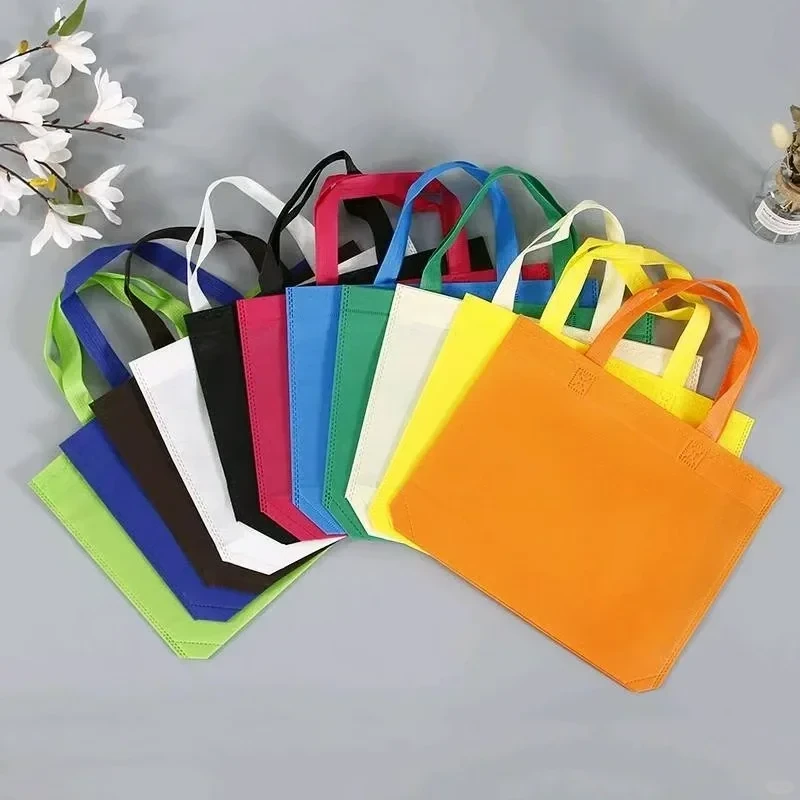
Different bag architectures place distinct mechanical stresses on non-woven polypropylene. Selecting the right GSM depends on whether the bag carries soft apparel, rigid canned groceries, or heavy bottled liquids.
+-----------------------------------------------------------------------------------+
|                        ECOLEADERPACK PRODUCT & GSM MATRIX                         |
+-----------------------------------------------------------------------------------+
| Promotional Bags (50-70 GSM)   --> Trade shows, conferences, lightweight leaflets |
| Standard Totes (75-80 GSM)     --> Reusable supermarket groceries, takeaway food  |
| Laminated Shoppers (100+ GSM)  --> Full-color gravure BOPP film, moisture barrier |
| Thermal Coolers (80-100 GSM)   --> EPE foam + foil insulated cold chain delivery  |
| Recycled rPET (70-100 GSM)     --> GRS certified ocean/landfill bottle recycling |
+-----------------------------------------------------------------------------------+
Reusable Grocery Tote Bags (75–90 GSM)
Everyday supermarket shoppers require high tear strength and puncture resistance against rigid cardboard boxes and canned foods. Standard custom non-woven tote bags run in 80 GSM provide the optimal performance-to-cost ratio. When combined with continuous heat-sealed seams on ultrasonic non-woven bags or cross-stitched handle boxes, an 80 GSM tote comfortably handles 10 to 12 kg without seam distortion.
Promotional & Event Giveaway Bags (50–70 GSM)
Trade show event bags, conference giveaways, and promotional literature totes prioritize compact folding, light shipping weight, and aggressive unit pricing. Fabric weights between 60 and 70 GSM deliver sufficient opacity for single-color screen printing while keeping shipping box weights low for international exhibition freight.
Laminated Non-Woven Shopping Bags (100–120 GSM Base Fabric + BOPP Film)
For retail packaging requiring photorealistic full-bleed graphics, metallic finishes, or total moisture barrier protection, laminated non-woven bags fuse an 80 to 100 GSM spunbond PP base with a 15 to 25 GSM bi-axially oriented polypropylene (BOPP) film. The resulting 100 to 125 GSM composite shell creates a rigid, wipe-clean structure that stands upright on retail display shelves.
Thermal Insulated Grocery & Food Delivery Bags (80–100 GSM Outer Layer)
Foodservice delivery bags and grocery coolers require a protective outer shell that resists condensation. Cold-chain grocery totes and foodservice delivery carriers engineered as insulated non-woven bags combine an 80 to 90 GSM water-resistant outer non-woven shell with an internal 2 mm to 4 mm expanded polyethylene (EPE) foam core and reflective food-grade aluminum foil liner, holding safe temperatures for 2 to 4 hours.
Recycled rPET Eco Bags (70–100 GSM)
For corporate ESG procurement mandates, rpet non-woven bags converted from 100% post-consumer recycled PET water bottle flakes deliver identical tensile breaking strength and printing clarity to virgin spunbond polypropylene, while significantly lowering fossil carbon footprints under Global Recycled Standard (GRS 4.0) certification.
How Much Fabric Goes Into One Non-Woven Bag? (The Cutting Math)
Understanding fabric consumption allows procurement teams to calculate raw material costs, ocean container loading efficiencies, and gross shipping weights. To calculate the total fabric required for one bag, sum the gross cut area of all components—front panel, back panel, side gussets, bottom base, and handle strips—then add an 8% to 12% manufacturing allowance for hem folds, ultrasonic seam overlaps, and die-cutting scrap.
Gross Cut Area = (2 × W × H) + (2 × G × H) + (W × G) + (Handles × 2) + Hem Allowance (10%)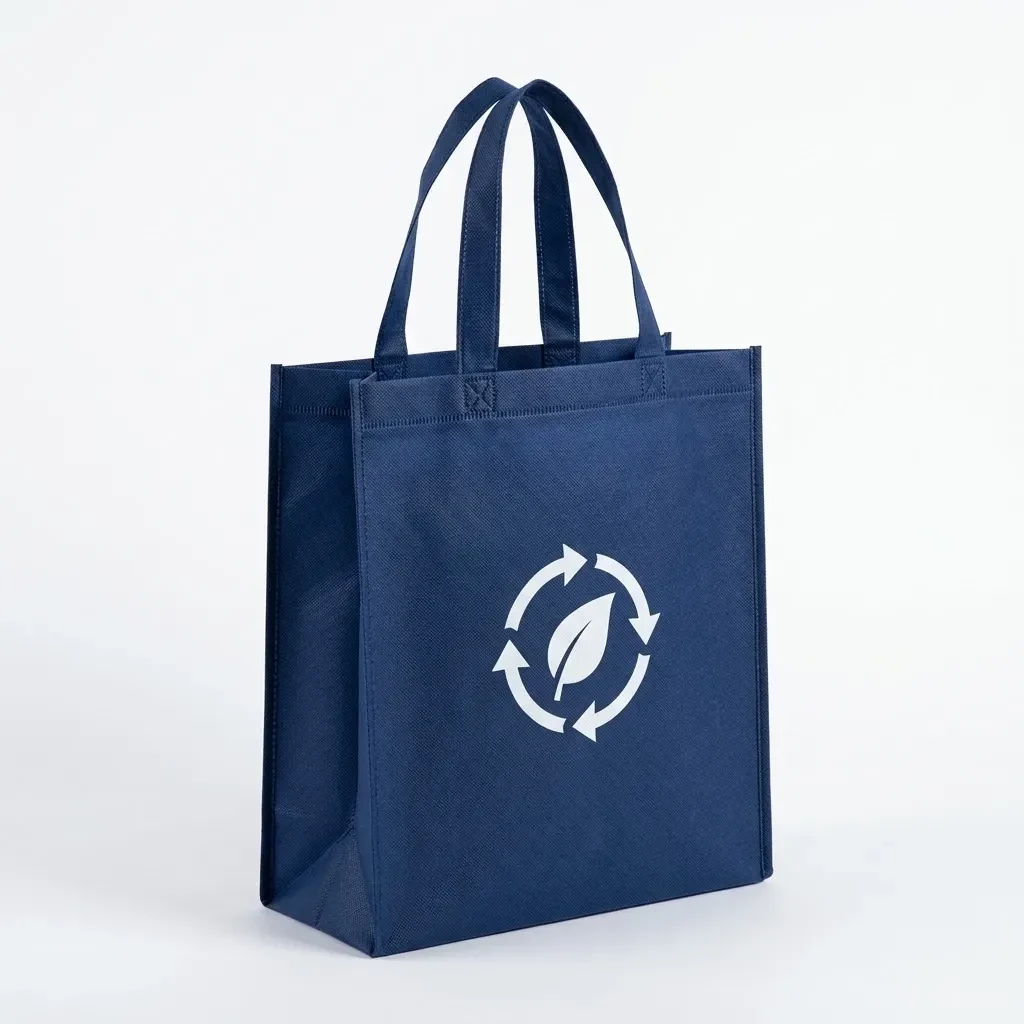
Here is a practical engineering calculation for our most popular reusable supermarket shopping tote:
Swipe horizontally to compare all columns.
| Bag Component | Dimensions (Metric) | Dimensions (Imperial) | Calculated Surface Area (m²) |
|---|---|---|---|
| Front & Back Panels | 2 (38 cm W cm H) | 2 (15.0 in) | 0.319 m^2 |
| Side Gussets (Left & Right) | 2 (12 cm G cm H) | 2 (4.7 in) | 0.101 m^2 |
| Bottom Base Panel | 1 (38 cm W cm G) | 1 (15.0 in) | 0.046 m^2 |
| Handle Straps (Folded 4-ply) | 2 (60 cm L cm W ) | 2 (23.6 in ) | 0.060 m^2 |
| Subtotal Net Cut Area | — | — | 0.526 m^2 |
| Seam & Hem Allowance (10%) | Overlap allowance for ultrasonic sealing | Overlap allowance | +0.053 m^2 |
| Total Gross Cut Area per Bag | — | — | 0.579 m^2 (≈ 0.692 yd^2) |
Applying this surface area to standard 80 GSM non-woven fabric: - Net fabric weight per bag: 0.579 m^2 g/m^2 46.3 grams (1.63 oz) - Raw roll stock required for 5,000 bags: 46.3 g ,000 = 231.5 kg (510.4 lbs) - Raw roll stock required for 20,000 bags (1 × 20GP container): ≈ 926.0 kg (2,041.5 lbs)
This material weight excludes secondary elements such as printing inks, sewing thread, and bottom cardboard inserts. Using Tab 2 of our embedded calculator above, you can input your custom dimensions in either inches or centimetres to calculate exact order yardage and shipping weights instantly.
How Do You Test and Verify Delivered Fabric GSM on Arrival?
Importers do not need an external testing laboratory to audit the fabric weight of incoming shipments. Quality control teams can verify delivered GSM right on the warehouse floor using two basic tools: 1. A 100 cm² circular fabric sample cutter (a calibrated round punch with 112.8 mm diameter, cutting exactly 0.01 m^2 of fabric). 2. A digital laboratory balance with 0.01 g or 0.001 g measurement precision.
+-----------------------------------------------------------------------------------+
|                           WAREHOUSE GSM VERIFICATION SOP                          |
+-----------------------------------------------------------------------------------+
| Step 1: Draw 3-5 sample bags randomly across different master shipping cartons.    |
| Step 2: Cut one clean 100 cm² disc from an unprinted, uncreased body panel.      |
| Step 3: Weigh the disc on the digital scale (e.g., scale displays 0.803 g).       |
| Step 4: Multiply by 100 --> Measured Fabric Weight = 80.3 GSM (Pass).             |
+-----------------------------------------------------------------------------------+
In commercial non-woven converting, raw polymer roll stock naturally exhibits slight cross-directional gauge variation. International standards establish an allowable manufacturing tolerance of ±5 GSM (or ±5%) against nominal contract specifications (ISO 9073-1:2023). Real inspection logs from EcoLeaderPack's export production lines demonstrate this natural statistical spread:
| Quality Inspection Batch (80 GSM Nominal) | Specimen Die Cut Area | Measured Swatch Mass | Calculated GSM | Variance vs. Nominal | Inspection Result |
|---|---|---|---|---|---|
| Inspection Lot #2026-A1 | 100 cm^2 (0.01 m^2) | 0.794 g | 79.4 GSM | -0.75% | PASSED |
| Inspection Lot #2026-A2 | 100 cm^2 (0.01 m^2) | 0.812 g | 81.2 GSM | +1.50% | PASSED |
| Inspection Lot #2026-B1 | 100 cm^2 (0.01 m^2) | 0.788 g | 78.8 GSM | -1.50% | PASSED |
| Inspection Lot #2026-B2 | 100 cm^2 (0.01 m^2) | 0.806 g | 80.6 GSM | +0.75% | PASSED |
| Inspection Lot #2026-C1 | 100 cm^2 (0.01 m^2) | 0.798 g | 79.8 GSM | -0.25% | PASSED |
When issuing official Purchase Orders, never rely on ambiguous marketing descriptions such as "sturdy fabric" or "premium heavy-duty cloth." Explicitly specify: "80 GSM virgin polypropylene non-woven fabric, ±5 GSM tolerance tested per ISO 9073-1." This contractual clause establishes an objective standard during pre-shipment third-party inspections, protecting your order against unannounced material downgrades.
Sources & Industry Test Standards
- ASTM D3776 / D3776M-20(2025): Standard Test Methods for Mass Per Unit Area (Weight) of Fabric (Equation 8: 1 oz/yd^2 = 33.906 g/m^2).
- ISO 9073-1:2023: Nonwovens Test Methods — Part 1: Determination of Mass Per Unit Area.
- NIST Special Publication 811: Guide for the Use of the International System of Units (SI) — Appendix B.8 Conversion Factors for Physical Units.
- EcoLeaderPack Technical Manufacturing Specification: Spunbond Polypropylene Non-Woven Converting Guidelines (60–120 GSM Standard Operating Range, ±5 GSM Mass Tolerance).
Request Fabric Swatches & a Factory Direct Quotation
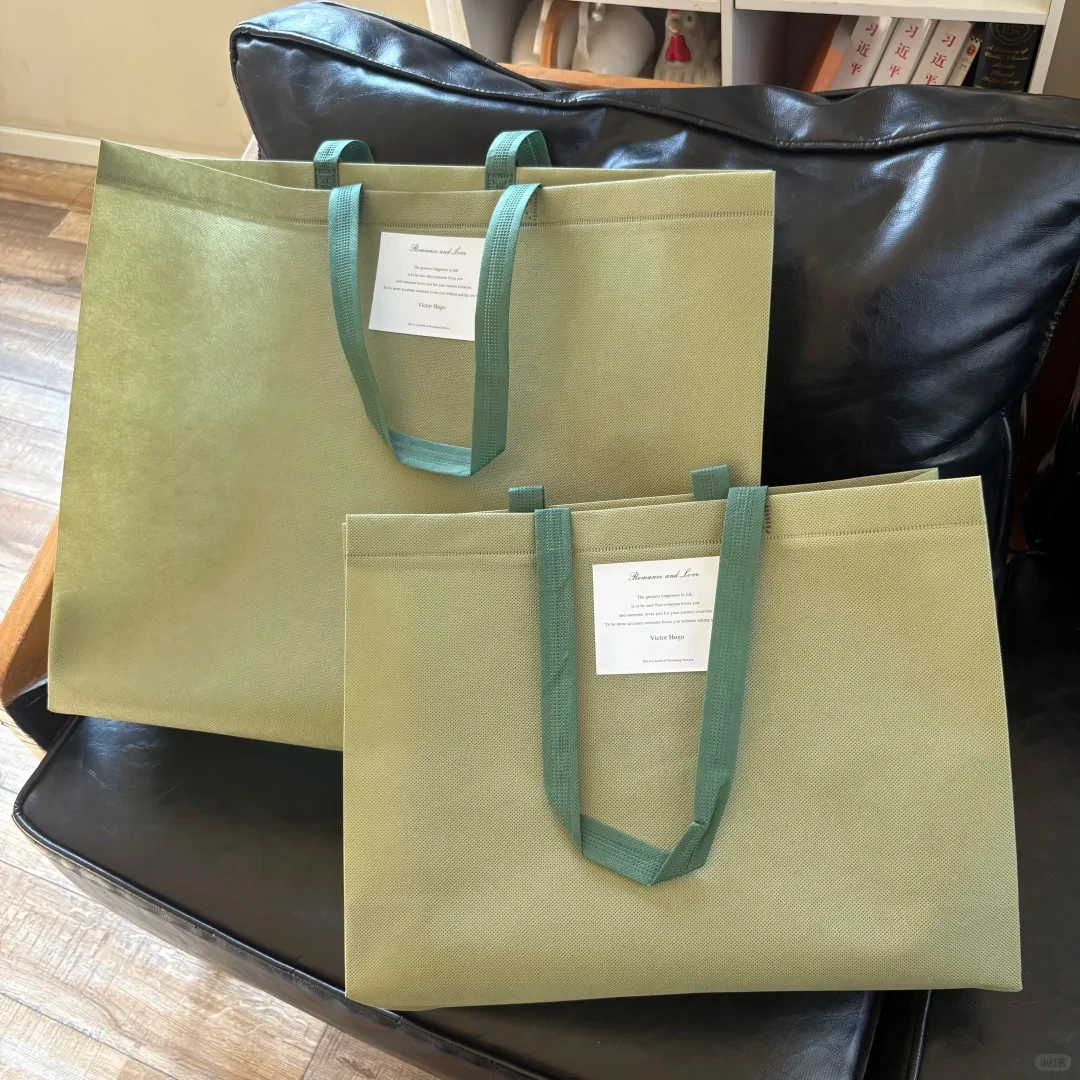
EcoLeaderPack operates state-of-the-art non-woven converting and printing facilities, delivering factory-direct wholesale packaging for supermarket chains, retail brands, and food delivery platforms worldwide. We maintain complete traceability across our 60 to 120 GSM product line, supporting custom dimensioning, full-bleed printing, reinforced cross-stitching, and laminated moisture barriers.
Use our interactive calculator above to configure your custom bag dimensions, fabric weight, and order volume, then click "Send these specs for a quote" to automatically populate your project specifications into the inquiry form below. Pre-production physical sample swatch cards ship within 3 to 5 business days, and our engineering desk provides formal technical die lines prior to production release.
Request a Custom Non-Woven Bag Quotation
Factory-direct pricing for wholesale non-woven shopping bags, grocery totes, and promotional carriers. Submit your specifications below: