When procurement managers evaluate paper cups, physical board weight—whether 280 gsm or 320 gsm, virgin kraft or bleached cupstock—usually dominates the conversation. However, the microscopic layer that fundamentally dictates container performance, regulatory compliance, factory unit economics, and end-of-life viability is the internal barrier coating. The identical paperboard base behaves as three completely distinct commercial products depending on whether it utilizes conventional Polyethylene (PE), bio-based Polylactic Acid (PLA), or an engineered Water-Based (aqueous dispersion) barrier coating.
EcoLeaderPack manufactures across all three coating technologies for our global paper cup, paper food bowl, and carton lines. This engineering guide examines the material science, thermal mechanics, regulatory mandates, and Total Cost of Ownership (TCO) variables to help you select the optimal barrier solution for your brand.
Quick Procurement Decision Matrix: Select PE coating when lowest unit cost and reliable thermal barrier properties are primary drivers and local regulations allow plastic-lined paper. Select PLA coating when you operate in regions with accessible industrial composting infrastructure and require verified bio-based inputs. Select Water-Based Aqueous Dispersion when servicing European and UK markets subject to the EU Packaging and Packaging Waste Regulation (Regulation (EU) 2025/40, PPWR), where achieving Recyclability Grade A/B and avoiding single-use plastic composite bans (<5% plastic threshold) significantly lowers annual EPR taxes.
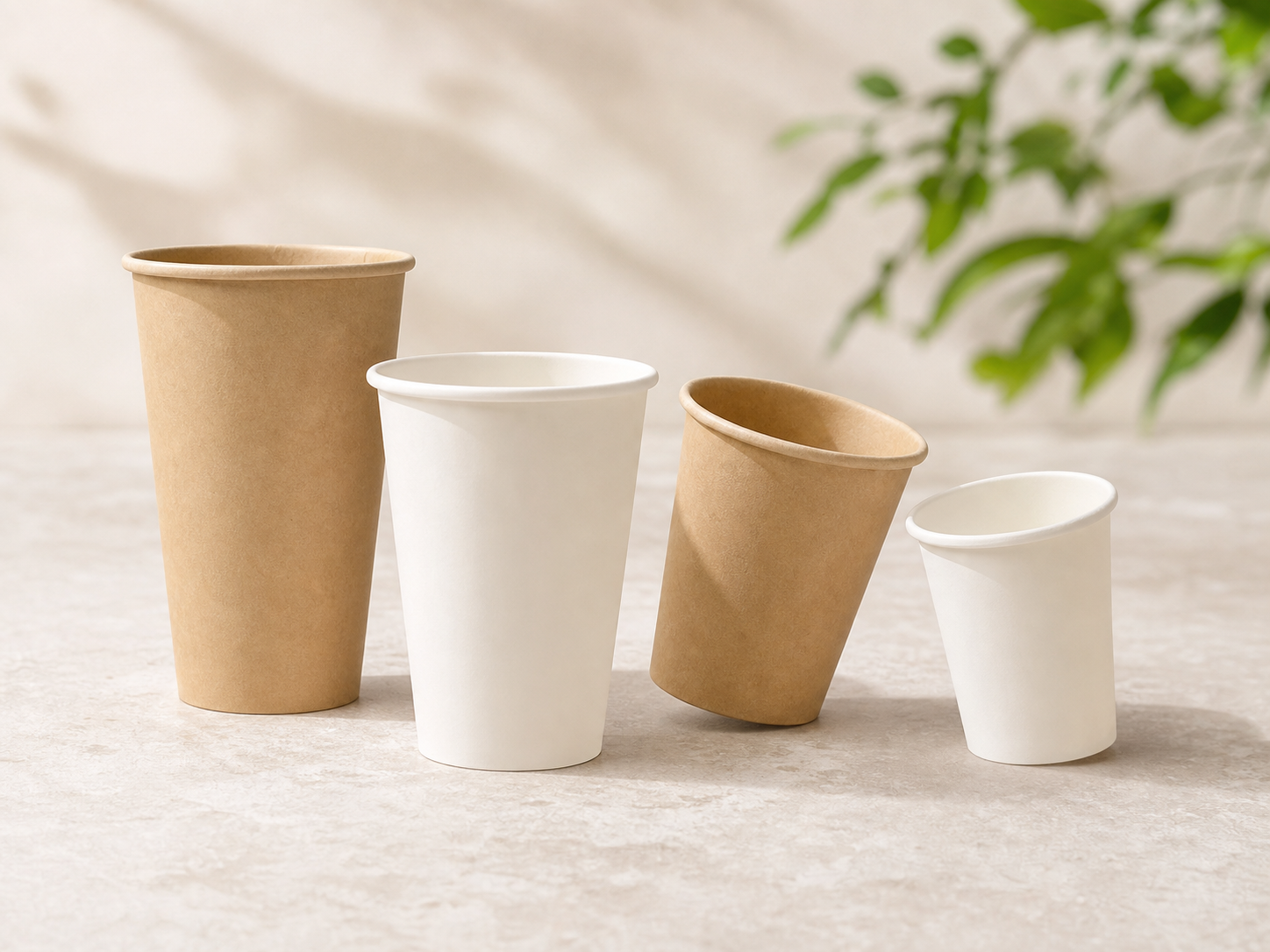
The Physics and Chemistry of Barrier Coatings
Untreated cellulose paperboard is porous and hydrophilic; without a protective barrier, hot coffee or acidic soups penetrate paper fibers within seconds, causing fiber swelling, structural softening, and seam delamination. The coating serves three indispensable mechanical functions:
- Liquid & Vapor Barrier: Preventing moisture penetration and maintaining a low Water Vapor Transmission Rate (WVTR) so the cup exterior stays dry.
- Grease Resistance: Preventing non-polar lipid compounds from penetrating the fiber matrix.
- Heat-Sealing Medium: Thermally fusing the side seam and bottom disc under pressure and heat (or ultrasonic vibration) during high-speed rotary cup-forming operations.
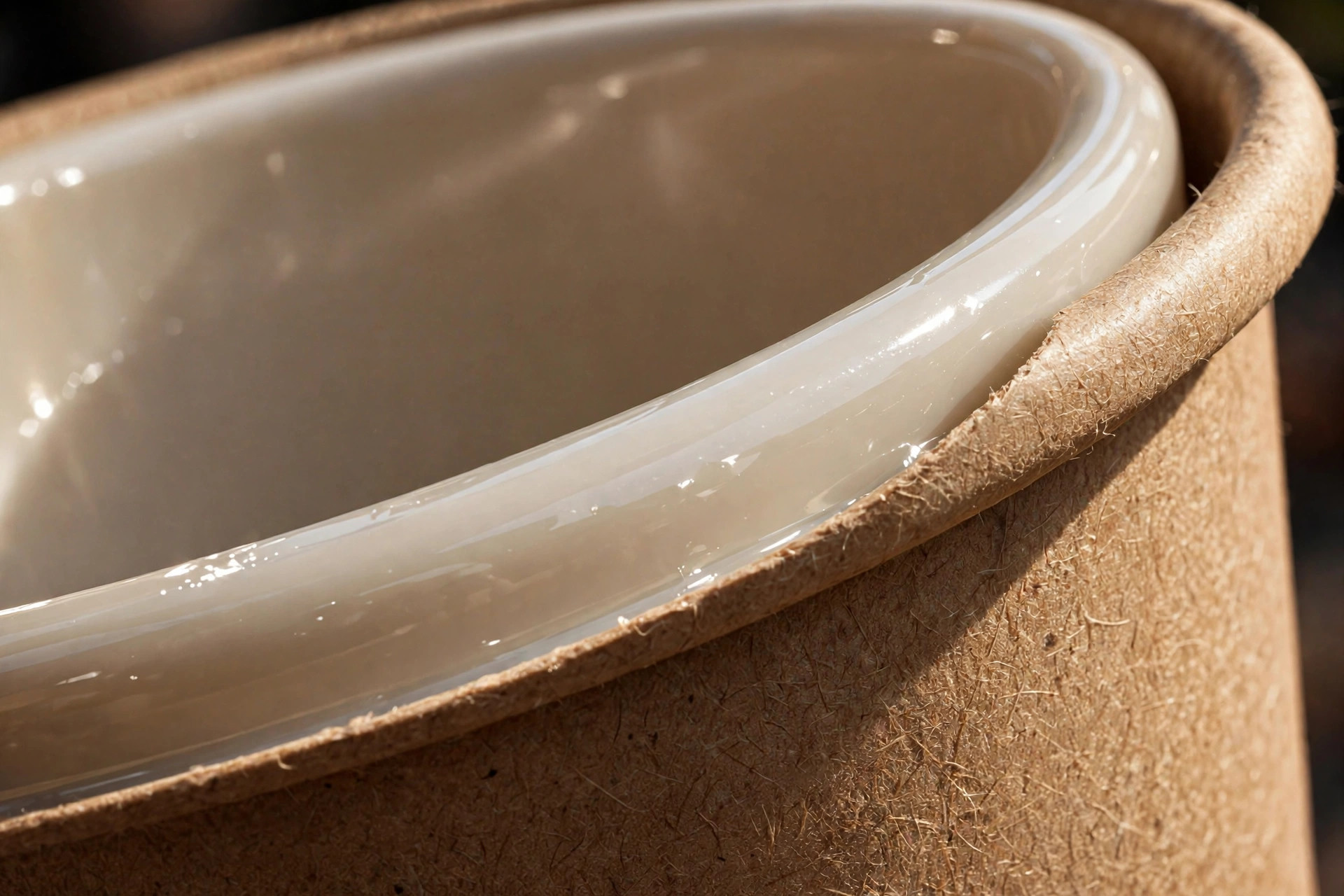
1. Polyethylene (PE) Coating: The Industrial Workhorse
Material Formulation: Low-Density Polyethylene (LDPE), applied to paperboard via high-speed melt extrusion at typical coat weights of 15–18 gsm for single-side coated cups (1PE) for hot drinks, or 15+15 gsm for double-side coated cups (2PE) for cold drinks to prevent condensation penetration.
Technical Advantages:
- Unmatched Hydrophobic Barrier: Demonstrates exceptionally low WVTR (<5 g/m²·24h) and superior grease resistance.
- Broad Thermal Operating Window: Stable from -20°C up to +90°C, comfortably withstanding boiling beverages (100°C) during short-term consumer consumption.
- High-Speed Machine Runnability: Broad heat-sealing temperature window (150°C–180°C), allowing cup-forming speeds of 150 to 250+ units per minute with virtually zero pinhole defect rates.
- Cost Baseline: The lowest raw material and conversion cost in the packaging industry.
Procurement & Regulatory Liabilities:
- Recycling Incompatibility: The tightly bonded LDPE film does not break down in standard municipal paper pulpers. It requires specialized repulping facilities equipped with continuous screening drums to delaminate the plastic film. In the majority of global waste streams, PE-coated cups end up in landfill or thermal incineration.
- PPWR Eco-Modulation Penalty: Under Regulation (EU) 2025/40 Article 6, PE-laminated paper packaging is exposed to low recyclability grading (Grade C or lower). Starting in 2030, EU member state Extended Producer Responsibility (EPR) schemes must levy heavy penalty surcharges (malus fees) on low-grade packaging, significantly eroding the initial purchase price advantage.
- Mandatory SUPD Marking: Under the EU Single-Use Plastics Directive (Directive (EU) 2019/904) and Commission Implementing Regulation (EU) 2020/2151, PE cups must feature the prominent "PLASTIC IN PRODUCT" marking.
2. Polylactic Acid (PLA) Coating: The Industrially Compostable Bio-Plastic
Material Formulation: Polylactic Acid is an aliphatic polyester synthesized from fermented plant starches (dextrose derived from corn, cassava, or sugarcane). Applied via extrusion coating at typical thicknesses of 20–30 gsm.
Technical Advantages:
- 100% Bio-Based Carbon: Derived entirely from annually renewable agricultural resources rather than fossil fuel petrochemicals.
- Certified Industrial Compostability: When tested as a finished cup, it meets harmonized industrial composting standards: EN 13432 in the European Union and ASTM D6868 in North America (certified via BPI). Under thermophilic commercial composting conditions (58°C and high humidity), it biodegrades into water, CO₂, and biomass within 90 to 180 days.
- Effective Ambient Barrier: Delivers moisture and grease barrier characteristics comparable to LDPE for typical beverage serving times.
Procurement & Regulatory Liabilities:
- Thermal Softening Risks: PLA possesses a relatively low glass transition temperature ($T_g$) of approximately 55°C–60°C. When exposed to liquids above 80°C for prolonged durations, standard un-crystallized PLA coatings can soften, compromising seam rigidity unless high-grade specialty resins are specified.
- Storage & Hydrolysis Vulnerability: PLA is sensitive to atmospheric humidity and elevated storage temperatures. Stored above 35°C in non-air-conditioned warehouses, PLA-coated cups can experience premature hydrolytic degradation, causing board embrittlement and shelf-life limitations of 12 to 18 months.
- Regulatory Classification as Plastic: Under EU jurisprudence, bio-based plastics are legally treated as plastics. PLA-coated cups are not exempt from the Single-Use Plastics Directive and must carry the identical "PLASTIC IN PRODUCT" turtle marking logo. Furthermore, if discarded into standard paper recycling bins, PLA behaves as a non-soluble plastic contaminant.
EcoLeaderPack's PLA paper cup lines hold certified OK Compost Industrial certification and are backed by comprehensive PFAS/PFOA/PFOS-free laboratory test reports.
3. Water-Based (Aqueous Dispersion) Coating: The Circular Paper-Stream Solution
Material Formulation: An engineered aqueous polymer emulsion (water-borne acrylic and copolymer micro-dispersions) applied directly onto raw paperboard using industrial blade, rod, or gravure coaters, followed by controlled hot-air tunnel drying. Applied at low dry coat weights of 4–8 gsm.
Technical Advantages:
- Standard Paper Mill Repulpability: Unlike extruded plastic sheets, the micron-thin polymer dispersion particles readily disintegrate and disperse under mechanical agitation in ambient-temperature water. When evaluated under standardized testing protocols—such as PTS-RH 021/97 (German Paper Technology Foundation) and the 4evergreen alliance recyclability evaluation protocol—aqueous dispersion cups achieve usable fiber yields exceeding 90% to 95%, with minimal reject flakes.
- PPWR Recyclability Grade A/B Positioning: Under Regulation (EU) 2025/40 Article 6, aqueous-coated cups are engineered to qualify for Recyclability Performance Grade A (≥95%) or Grade B (≥80%). This shields brand buyers from 2030 market bans and secures the lowest eco-modulated EPR tariff tiers.
- The 5% Composite Compliance Advantage: Because aqueous dispersion utilizes very low coat weights (typically 2% to 4% of total cup weight), the finished packaging remains below the critical 5% plastic composite threshold defined in PPWR Annex V. This enables compliant usage in foodservice environments where heavier plastic-laminated packaging faces strict restrictions.
- Commercial Cost Balancing: Avoids the high material cost premium of PLA while unlocking significant downstream EPR fee savings compared to PE.
Procurement & Technical Considerations:
- Tighter Cup-Forming Process Window: Aqueous coatings have a narrower heat-sealing temperature band than PE. Cup-forming machines require precise temperature and ultrasonic bottom-knurling calibration to avoid micro-channel leaks along the bottom curl.
- Grease Barrier Tuning: For extreme hot-oil applications (such as deep-fried appetizers held for over 60 minutes), dispersion coatings require formulation testing to prevent oil strike-through. Always validate barrier performance with physical samples of your specific menu items.
Comprehensive Technical Specification Comparison
Scroll horizontally to inspect physical, chemical, and regulatory specifications.
| Technical Parameter | Conventional PE Coating | Bio-Based PLA Coating | Water-Based Aqueous Dispersion |
|---|---|---|---|
| Primary Polymer Source | Fossil petrochemical (LDPE) | Bio-based dextrose (corn, cassava) | Water-borne acrylic/copolymer dispersion |
| Typical Dry Coat Weight | 15 – 18 gsm (single-side) | 20 – 30 gsm | 4 – 8 gsm |
| Polymer Mass Fraction (% of Cup) | 5% to 8% (exceeds 5%) | 6% to 10% (exceeds 5%) | 2% to 4% (below 5% threshold) |
| Thermal Operating Range | -20°C to +90°C (100°C short-term) | -20°C to +75°C (sensitive >80°C) | -10°C to +90°C (100°C short-term) |
| Sealing Technology | Standard thermal bar / ultrasonic | Ultrasonic / calibrated thermal | Ultrasonic / high-precision thermal |
| Standard Paper Bin Recyclability | Poor (requires specialized pulpers) | Incompatible (plastic contaminant) | Excellent (PTS-RH 021/97 / CEPI passed) |
| Industrial Compostability | Non-compostable | Certified (EN 13432 / ASTM D6868) | Generally non-compostable (recycling path) |
| EU SUPD Turtle Logo Required | Yes (Mandatory marking) | Yes (Legally classified as plastic) | Exempt in multiple EU jurisdictions* |
| PPWR Recyclability Grade Outlook | Grade C or Below C (At risk in 2030) | Requires separate organic collection | Grade A or B (≥80%–95% yield) |
| Warehouse Shelf-Life | 36+ months (unrestricted) | 12 – 18 months (moisture-sensitive) | 18 – 24 months (standard conditions) |
| Relative FOB Purchase Cost | Baseline (Lowest) | +25% to +40% premium | +10% to +20% moderate premium |
*Note: Classification of aqueous dispersions under national SUPD transpositions varies by member state. Verify local market surveillance interpretation before finalizing claims.
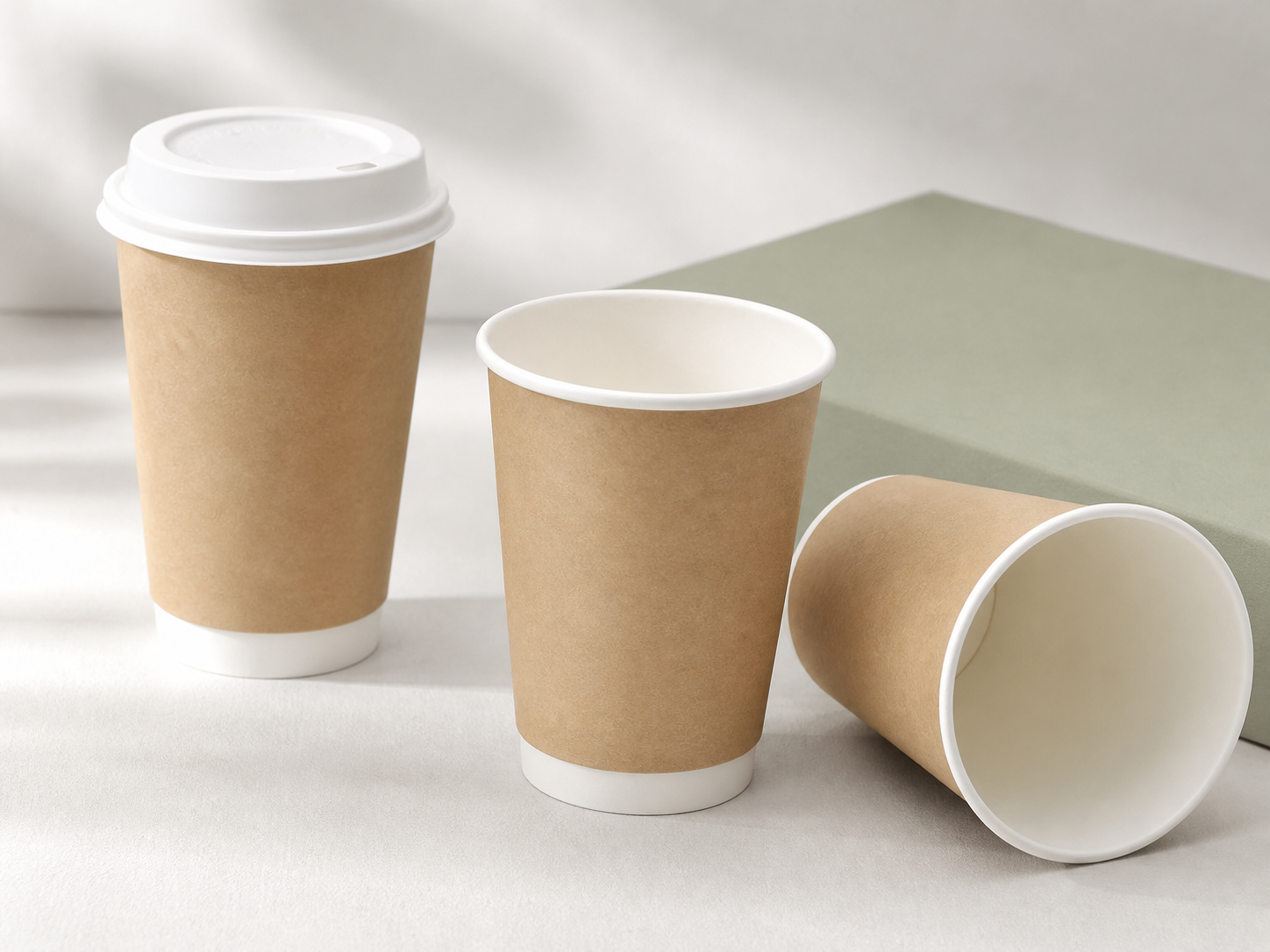
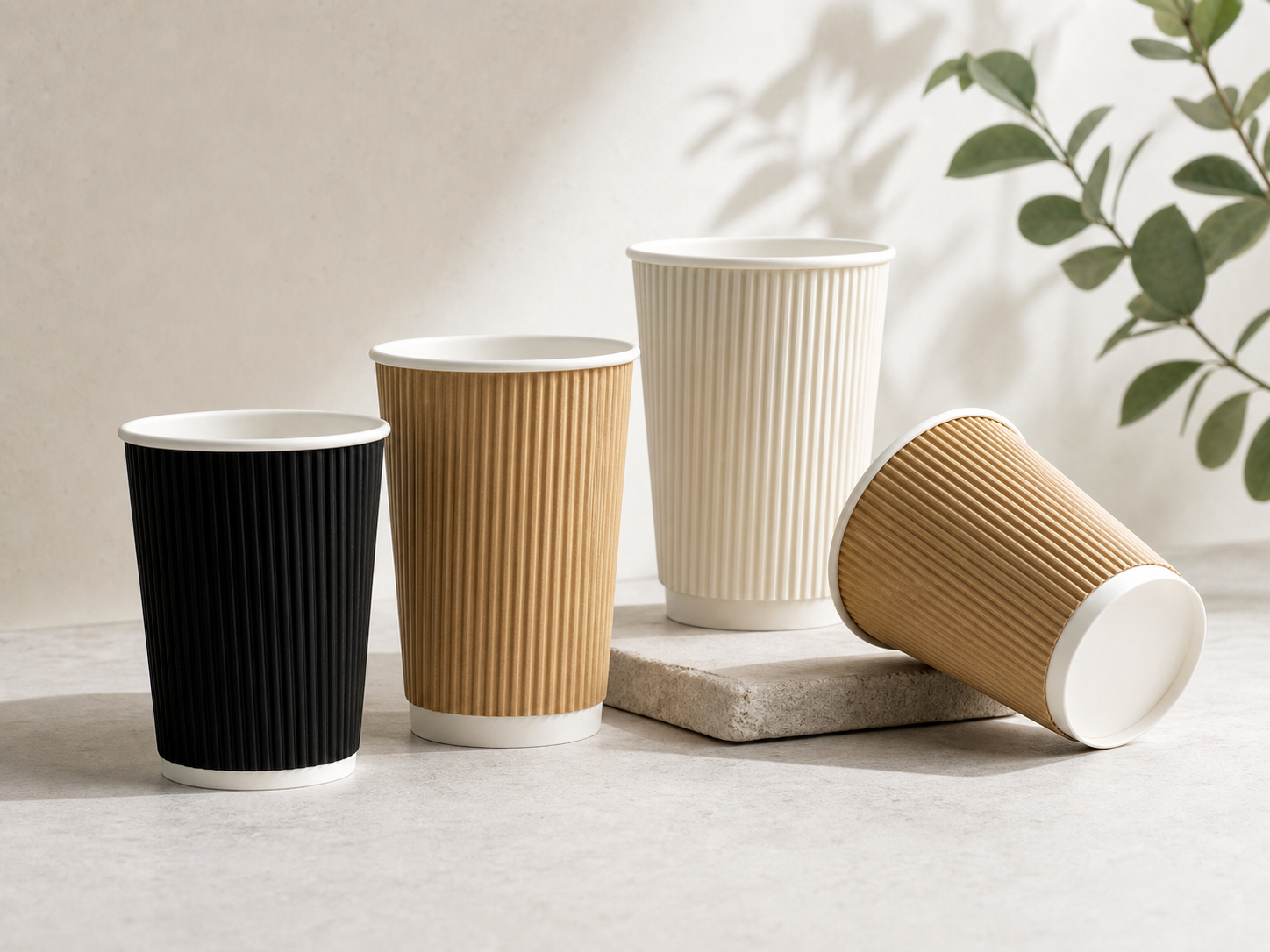
EU PPWR Regulatory Impacts on Coating Selection (See our PPWR 2026 Preparation Guide)
The enforcement of Regulation (EU) 2025/40 (PPWR) transforms barrier coating selection from a purely aesthetic or cost-per-case decision into a central compliance risk:
1. Statutory PFAS Limits (Article 5(5))
As of 12 August 2026, all food-contact paper packaging placed on the EU market must comply with strict limits: 25 ppb for any individual PFAS, 250 ppb for the sum of targeted PFAS, and 50 ppm for Total Fluorine. Regardless of whether you specify PE, PLA, or water-based dispersion, buyers must verify batch-specific laboratory test reports (Combustion Ion Chromatography per EN 14582). EcoLeaderPack enforces raw material verification across all coating formulations to guarantee full compliance.
2. Eco-Modulated EPR Fees (Article 44)
From 2030, EU national Extended Producer Responsibility fees will be directly modulated based on recyclability performance grades (A, B, or C). Packaging that repulps cleanly in existing paper streams (Grade A/B) will receive fee discounts, while plastic-laminated packaging facing difficult fiber separation (Grade C) will be penalized. In high-volume retail and QSR operations, paying an extra $2 to $3 per thousand cups for aqueous dispersion board at purchase can prevent $8 to $12 per thousand in annual EPR fee penalties at disposal.
3. Annex V Prohibitions and the 5% Plastic Threshold
From 1 January 2030, single-use plastic packaging used for food and beverages filled and consumed inside HORECA dine-in premises is prohibited. Under official European Commission guidance, any composite packaging containing 5% or more plastic by weight is legally treated as plastic packaging. Conventional 15–18 gsm PE cups typically exceed this 5% boundary and will be banned from dine-in foodservice, whereas advanced water-based dispersion coatings (<4% dry polymer weight) remain legally viable.
Industry Signal: The Foldable-Lid Monomaterial Cup
In late 2026, structural design and coating chemistry converged to challenge traditional two-piece packaging formats. Industry attention focused on the foldable-lid takeaway cup developed by startup Nothing (founded by Brandon and Jordan Leeds). By engineering elongated paperboard walls that fold inwards to form an integrated, spill-resistant closure, the design completely eliminates the secondary plastic or molded pulp lid.
Crucially, the container relies on an advanced water-based aqueous dispersion coating certified plastic-free by Flustix and certified home-compostable (TÜV OK compost HOME). For B2B procurement directors, this development signals two critical commercial trends:
- System Optimization: Regulators under PPWR Article 10/24 are penalizing excessive packaging components. Sourcing the cup body and closure as a single monomaterial unit cuts component procurement, eliminates lid storage SKUs, and streamlines waste stream classification.
- The Dispersion Coating Maturity: Water-based dispersion coatings are no longer experimental niche products; they withstand complex scoring, sharp folding creasing, and hot-liquid contact without cracking or leaking.
4-Step Framework for Making the Final Coating Decision
Step 1: Define Thermal Demands and Hold Times
Evaluate the operational stress test of your menu. A standard flat white or black Americano held for 20 minutes at 85°C can be served seamlessly in PE or aqueous dispersion cups. If your menu features high-fat broths, alcohol-infused specialty drinks, or extended delivery holding times exceeding 45 minutes, perform rigorous testing on prospective coatings to prevent structural seepage.
Step 2: Map Destination Market Waste Infrastructure
Align coating selection with the waste collection systems accessible to your consumers. Sourcing a premium PLA cup in a municipality with zero industrial composting collection means the cup will be sent to landfill or incinerated. Conversely, supplying aqueous dispersion cups into regions with robust paper recycling allows consumers to utilize existing blue collection bins.
Step 3: Calculate Total Cost of Ownership (TCO)
Do not compare FOB supplier invoices in isolation. Calculate: FOB Unit Cost + Shipping Freight + National EPR Surcharges + SUPD Compliance Administrative Costs. In European markets, the modulated EPR fee differential frequently flips the economics in favor of water-based dispersion coatings.
Step 4: Request Formally Certified Physical Samples
Never commit to multi-container volume production without laboratory and operational testing. Request 50 to 100 sample units of both PE and aqueous dispersion cups from your prospective vendor. Fill them with your actual boiling beverages, test them in your cup dispensers, and inspect the base seams after 60 minutes.
What EcoLeaderPack Provides for Enterprise Buyers
EcoLeaderPack supplies single-wall, double-wall, and ripple-wall paper cups, food containers, and takeaway packaging engineered across PE, PLA, and high-performance Water-Based Dispersion barrier coatings. Our production capabilities include:
- Customized High-Precision Printing: Up to 6-color flexographic and offset printing utilizing food-safe, water-based inks compliant with EU and FDA migration standards (custom packaging services).
- Matched Closure Solutions: Complete ranges of paper cup lids, including recyclable PP sipping lids, molded bagasse pulp lids, and heat-resistant CPLA lids.
- Comprehensive Regulatory Dossiers: We provide SKU-specific third-party laboratory test reports (FDA 21 CFR 176.170, Regulation (EC) No 1935/2004, German BfR XXXVI), batch-level Total Fluorine (PFAS) screening, and TÜV Austria OK Compost certifications.
For custom packaging inquiries and technical sample requests, contact our engineering sales office directly via WhatsApp (+86 155 2109 3069) or email [email protected]. Explore our full catalog of sustainable paper food packaging and paper bowls.
Request Paper Cup Coating Samples & Technical Quotations
Specify your target cup sizes (4oz espresso to 20oz cold drinks), wall construction (single, double, or ripple wall), preferred barrier coatings, and estimated order quantities. EcoLeaderPack will supply matched physical testing samples and complete compliance files.