When the label simply says oz
For a net weight or food portion, multiply oz by 28.349523125. Using 28.3495 is more than precise enough for an early packaging estimate.
oz × 28.349523125
A quick check before you choose a pack
An ounce on a recipe, label, or filling sheet does not always mean the same thing. Use this calculator to turn weight oz into grams—or convert US fl oz when you have the product density.
If the specification means weight, 1 oz is exactly 28.349523125 g. If it says fl oz, you are looking at volume, and density becomes part of the answer.
Start with the unit on the source document. The calculator updates as you type.
Conversion result
28.3495 g
Formula used
grams = oz × 28.349523125
These are weight-ounce conversions—the useful version when a portion or net weight is written in oz.
| Ounces (oz) | Grams (g) | Rounded grams | Possible packaging use |
|---|---|---|---|
| 0.1 oz | 2.835 g | 2.83 g | Seasoning or sample |
| 0.5 oz | 14.1748 g | 14.17 g | Dip or condiment portion |
| 1 oz | 28.3495 g | 28.35 g | Small snack or ingredient portion |
| 2 oz | 56.699 g | 56.7 g | Sauce, topping, or side |
| 4 oz | 113.3981 g | 113.4 g | Small prepared-food portion |
| 8 oz | 226.7962 g | 226.8 g | Medium meal component |
| 16 oz | 453.5924 g | 453.59 g | One-pound bulk or family pack |
Treat the last column as a sense check, not a container recommendation. Two foods with the same weight can occupy very different amounts of space.
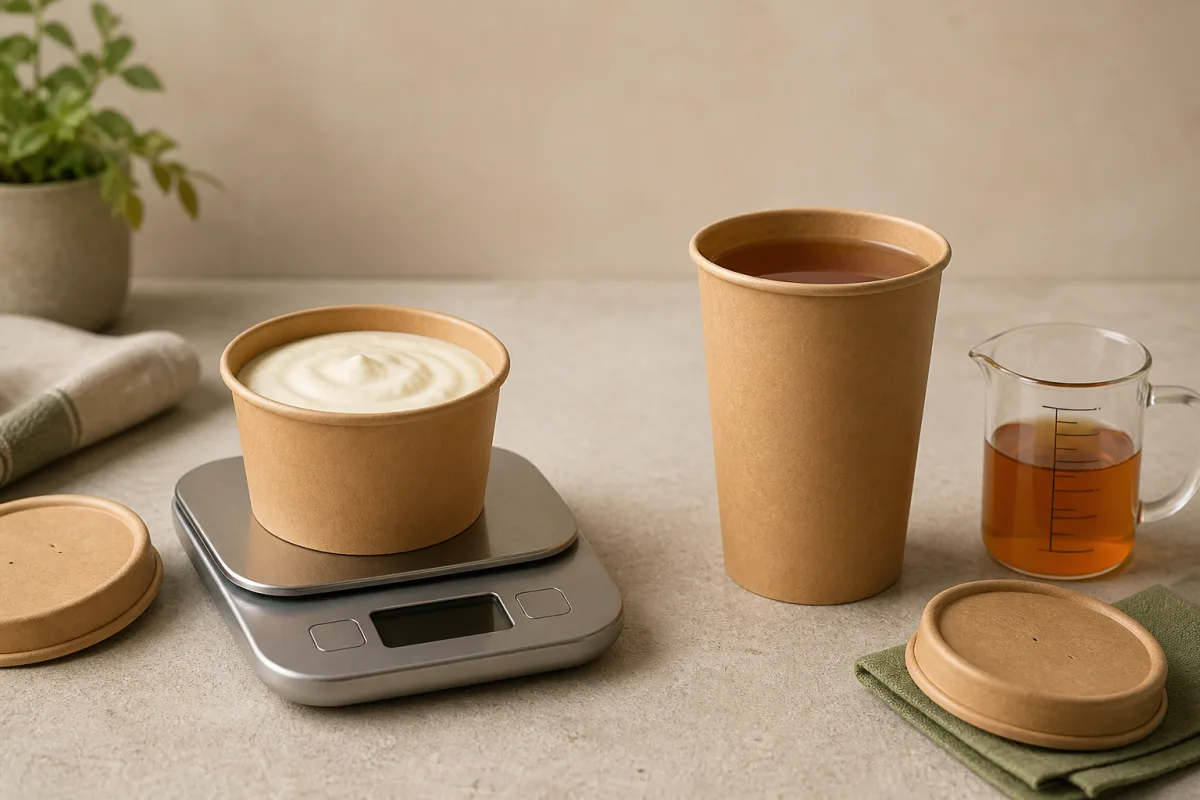
= 283.5 g
= 295.7 mL
oz / fl oz
One is weight and the other is volume. That small pair of letters matters: a 4 fl oz cup will not necessarily hold 4 oz by weight. The food's density, the space left under the lid, and even its shape all affect the real fill.
10 oz
= 283.495 g
10 US fl oz
= 295.735 mL × g/mL
For a net weight or food portion, multiply oz by 28.349523125. Using 28.3495 is more than precise enough for an early packaging estimate.
oz × 28.349523125
Divide grams by 28.349523125. A 100 g target, for example, comes to about 3.5274 oz.
g ÷ 28.349523125
Convert the US fluid ounces to millilitres first, then multiply by the finished product's density. This is the route for dressings, sauces, oils, and other flowable foods.
fl oz × 29.5735295625 × g/mL
What the calculator cannot decide for you
Once you have the gram figure, take it to a real fill test. That is where the container, lid, headspace, and shipping weight come into the picture.
Net weight is the food. Tare is the empty pack. Add them together only when you need the filled-unit weight for cartons or freight.
A nominal mL or fl oz capacity cannot tell you how a chunky salad, rice dish, powder, or thick sauce will sit. Fill it, close the lid, and see.
For liquids and semi-liquids, use the density of the finished recipe at a stated temperature. A generic internet value is fine for a sketch, not a production setting.
Label declarations and filling tolerances vary by market and process. Confirm both before the pack goes into production.
Look at the original label or filling sheet and confirm whether the unit is oz or US fl oz.
Run the conversion. If it is fl oz, use a density measured from the finished food—not a convenient guess.
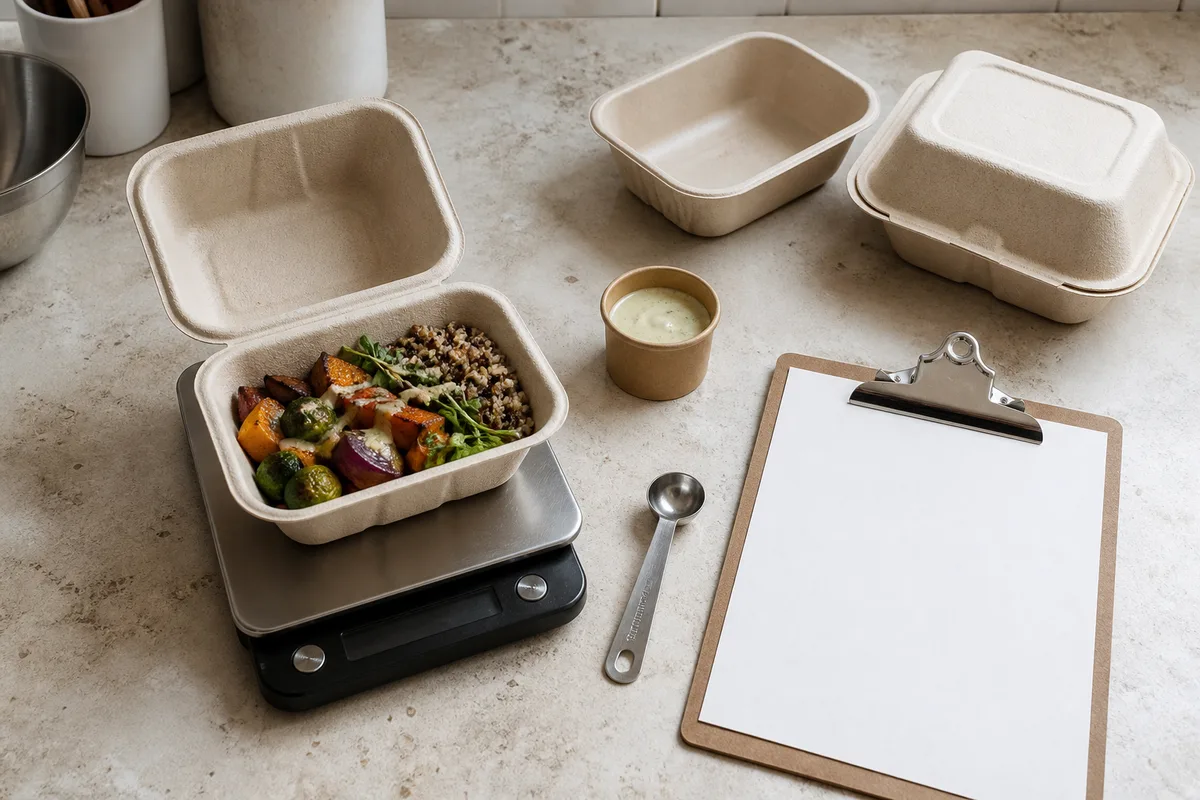
Portion the food into the shortlisted pack, leave the intended headspace, fit the lid, and weigh the filled unit.
One standard weight ounce equals exactly 28.349523125 grams, commonly rounded to 28.35 g.
0.5 weight oz equals 14.1748 g, or 14.17 g when rounded to two decimal places.
No. A fluid ounce is volume. One US fl oz equals 29.5735 mL, and its mass equals that volume multiplied by product density.
No. Glass, paper, bagasse, PLA, PP, or PET does not change the mass conversion. Package material changes tare weight and performance, not the number of grams in one weight ounce.
Tell us what the food is, how much goes in, whether it is served hot or cold, and where it will be sold. We can narrow the packaging options before you spend time on samples.