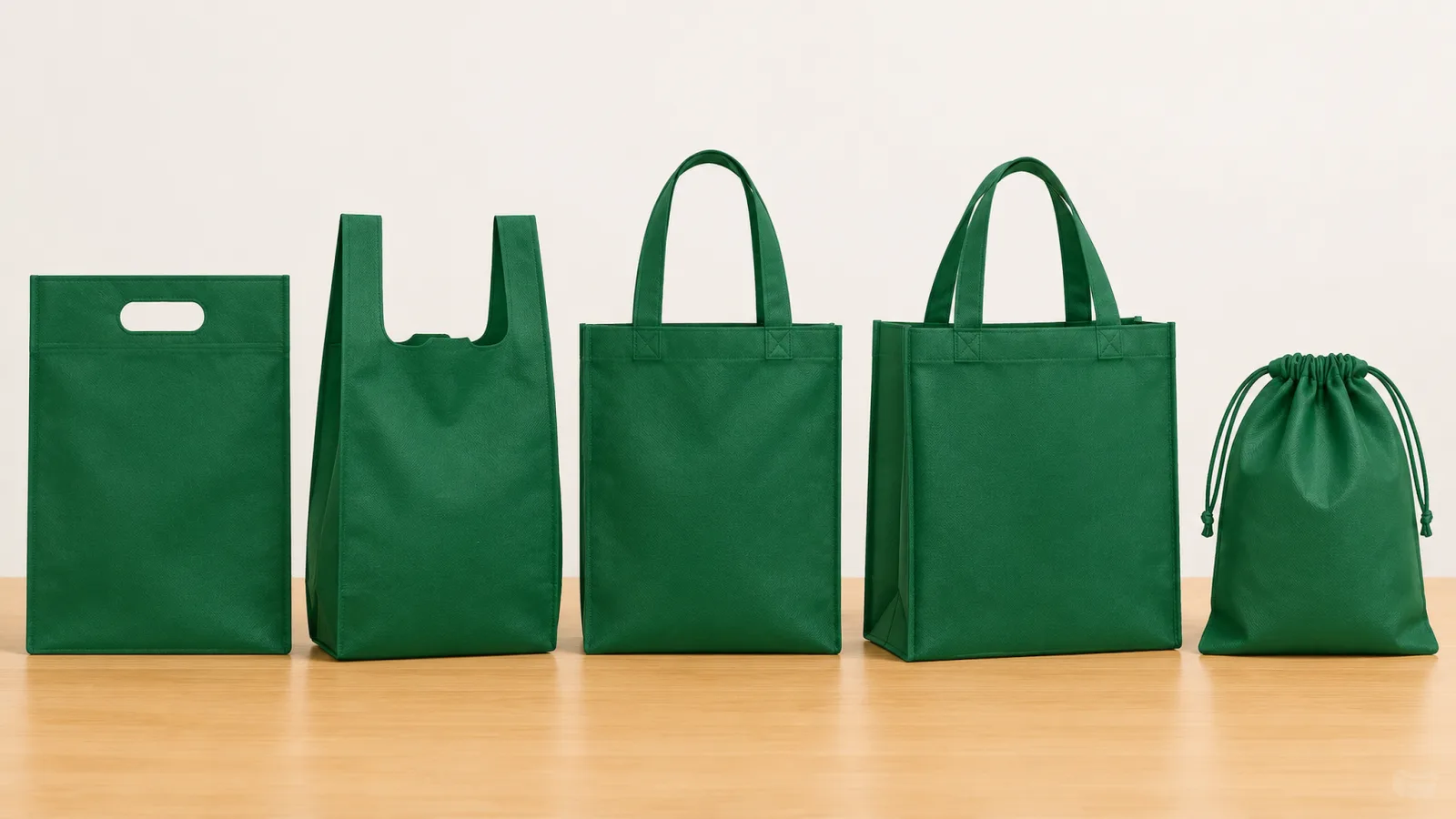
Commercial non-woven bags fall into six main bag styles: D-cut punch-handle bags, W-cut vest bags, loop-handle totes, 3D box bags, BOPP laminated totes and drawstring pouches. The right choice comes down to three practical things: the shape of what goes inside, how much weight the handles must hold, and whether the order runs on high-speed ultrasonic rollers or sewing machines.
What Are the Main Types of Non-Woven Bags?
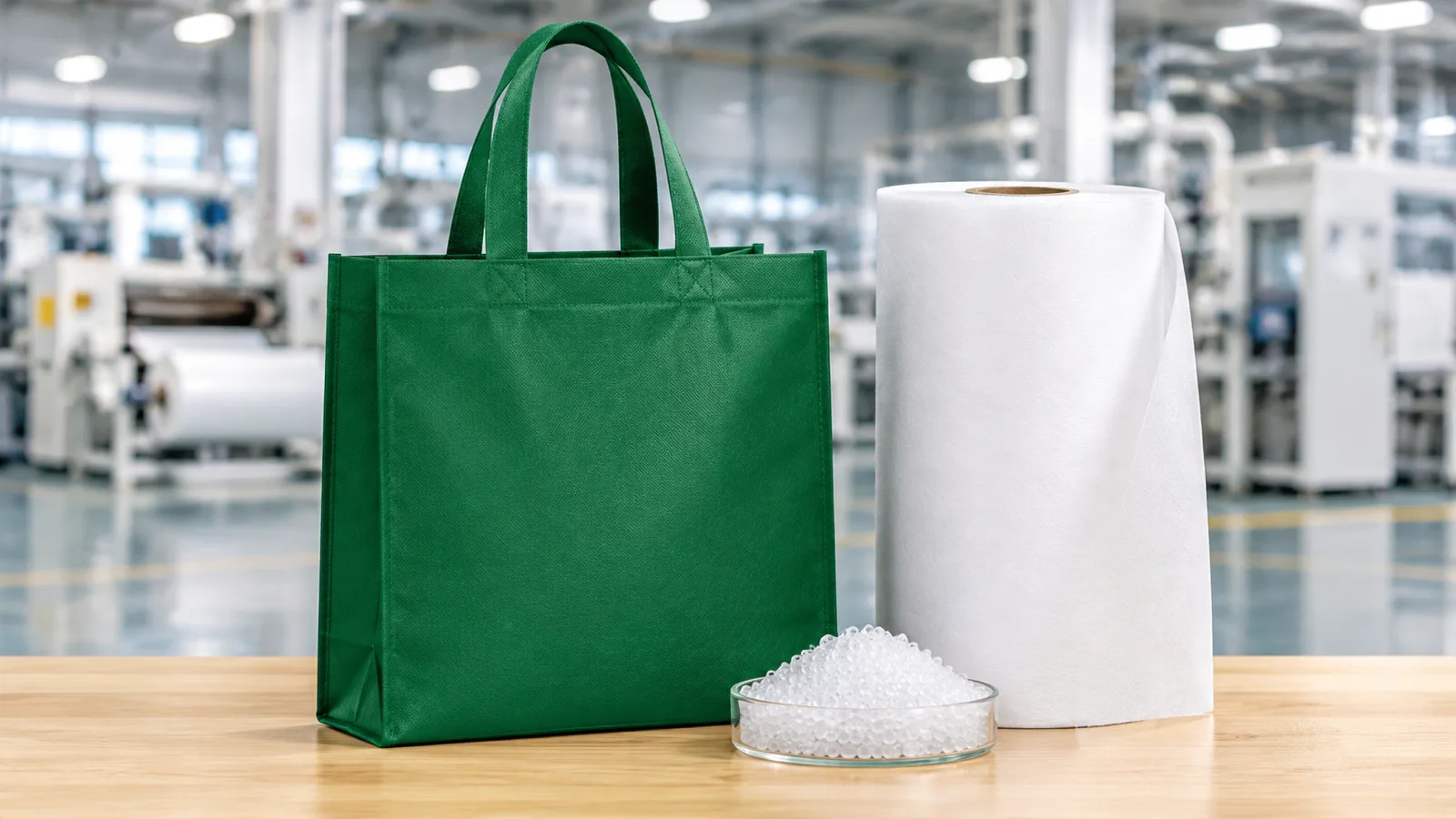
Most custom non-woven bags start as rolls of spunbond polypropylene in 60 to 120 GSM, then take their shape on either automated welding lines or cut-and-sew tables. Comparing the six core silhouettes side by side makes it easy to narrow down a quote before you draw a dieline:
| Bag style | Gusset & base | Usual GSM | Seam & handle build | Typical MOQ | Relative cost |
|---|---|---|---|---|---|
| D-Cut Punch Handle | Flat 2D (optional bottom fold) | 60–80 GSM | Ultrasonic die-cut grip hole | 3,000 pcs | Lowest |
| W-Cut (U-Cut) Vest Bag | Side gussets | 50–80 GSM | Ultrasonic vest straps | 5,000 pcs | Lowest–Low |
| Flat / Bottom-Gusset Tote | Flat or bottom fold only | 70–100 GSM | Ultrasonic weld or stitched loop | 1,000 pcs (3,000 ultrasonic) | Low–Mid |
| 3D Box Bag | Full side + flat bottom gussets | 80–120 GSM | Ultrasonic box weld or sewn + X-stitch | 1,000 pcs (3,000 ultrasonic) | Mid |
| BOPP Laminated Tote | Full 3D box gussets | 80–120 GSM base + film | Bound sewn seams + webbing/self handles | 1,000 pcs | Mid–High |
| Drawstring / Cinch Bag | Flat pouch | 50–80 GSM | Welded or sewn sides + cord channel | 1,000 pcs | Low |
Unit price moves mainly with fabric weight, manual sewing time, print method (1-colour screen vs multi-cylinder rotogravure) and order volume. If you want to weigh spunbond PP against cotton, paper or woven PP first, see our guide to the pros and cons of non-woven bags.
Which Non-Woven Bag Style Fits Your Project?
Pick your use case and target carry weight below to see the usual bag structure, GSM range and MOQ, or switch to the second tab to compare two styles directly.
Non-Woven Bag Style Finder
Pick how the bag will be used and how much weight it needs to carry, or compare two styles side by side.
3D Box Non-Woven Bag
Side panels and a flat bottom let the bag stand open on a counter and hold boxy items upright. Confirm target load on a pre-production sample.
- Usual GSM
- 80–100 GSM
- Handles & seams
- Ultrasonic or X-stitched loop
- Typical MOQ
- 1,000 pcs (3,000 ultrasonic)
- Relative cost
- Mid

What Is the Difference Between D-Cut and W-Cut Non-Woven Bags?
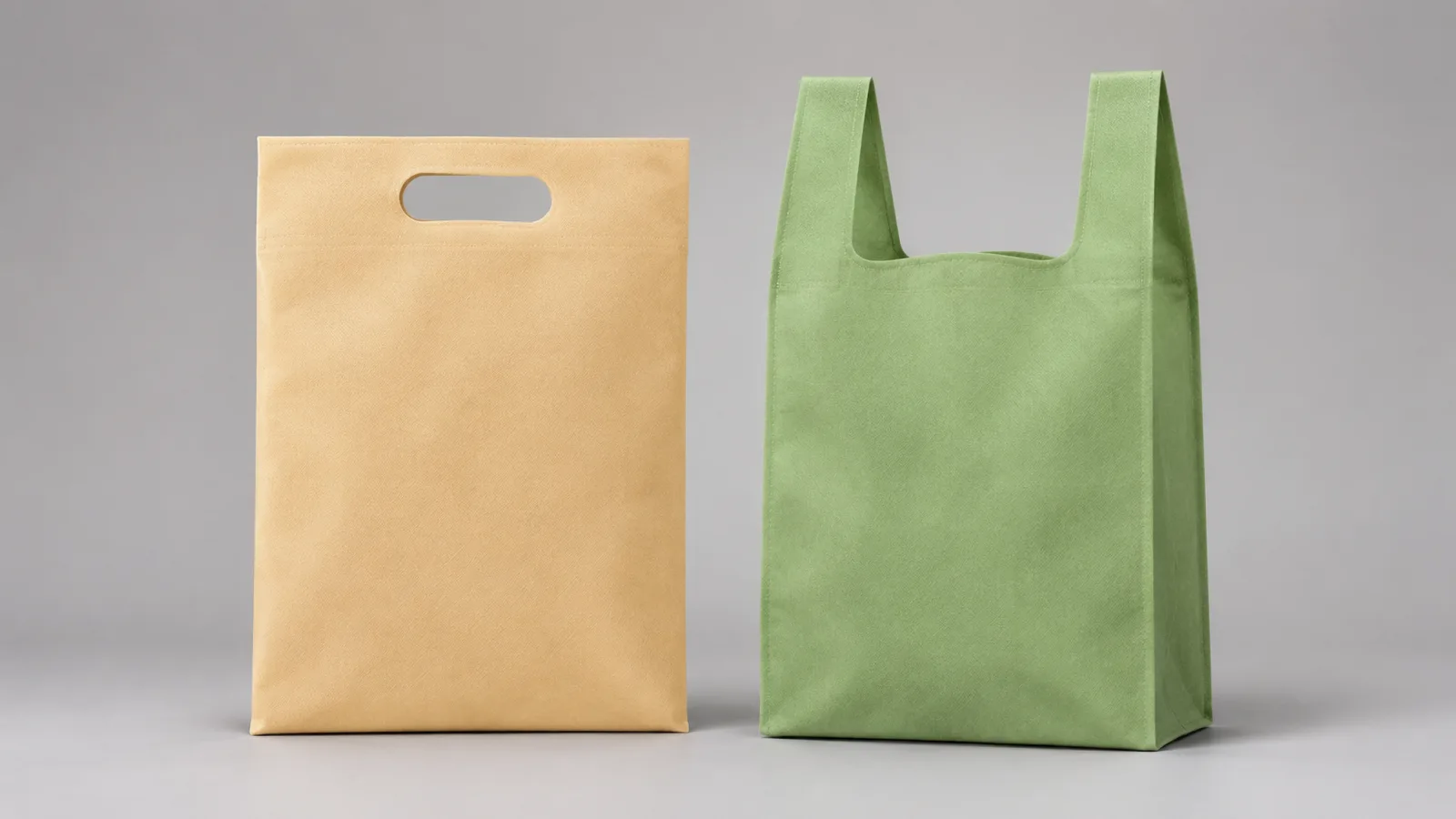
Both styles run at high speed on ultrasonic non-woven bags machines without a single stitch of thread, which keeps unit cost down on large runs. The difference is how the handle is cut out of the top of the bag.
A D-cut bag has a kidney-shaped grip punched straight through a reinforced top fold. It lies completely flat under a checkout counter and displays a clean, uninterrupted logo panel—a practical choice for pharmacies, bookstores, shoe boxes and conference literature. Because all the weight hangs on the punched opening, keep loads light and step up to 70–80 GSM so the grip does not stretch.
A W-cut (or U-cut) vest bag has a wide scoop cut from the top and folded side gussets, just like a classic supermarket T-shirt carrier. The two integrated shoulder straps spread weight better than a D-cut slot and open wide for bulky fruit, produce or takeaway tubs. Automated vest-bag tooling needs roll setup, so W-cut orders typically start at 5,000 pcs.
Loop-Handle Tote vs 3D Box Bag: When Do You Need Full Gussets?
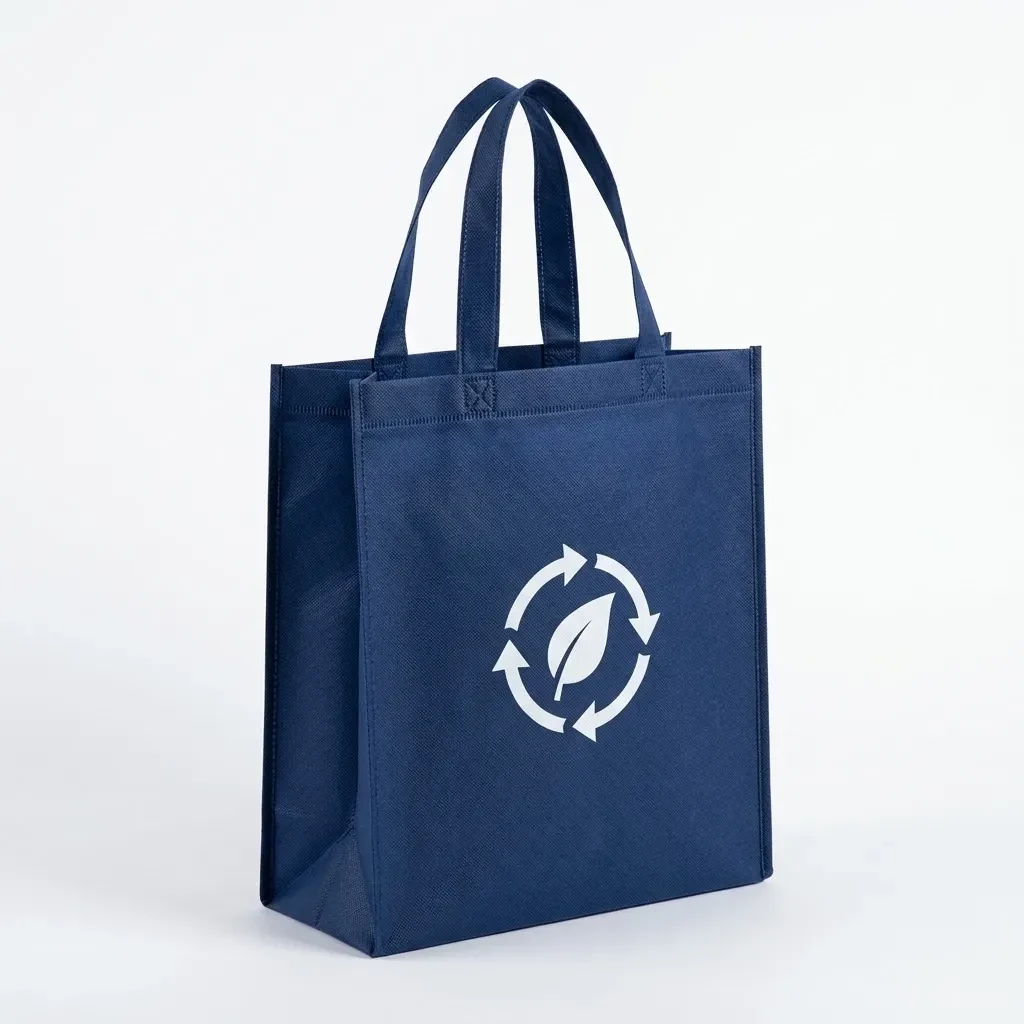
Standard custom non-woven tote bags attach two separate strip handles (usually 2.5 to 3 cm wide) to the top hem so the bag can hang comfortably over a shoulder. A flat tote or bottom-gusset tote folds thin in shipping cartons and works well for clothing, catalogues and event giveaways.
Once you pack wide, square items—groceries, glass jars, shoe cartons or meal trays—a flat tote pulls inward at the mouth and tips containers sideways. Box non-woven bags solve that with three separate panels (front/back plus full side and bottom gussets) so the bag stands open like a carton on a checkout belt. Adding a removable rigid PE or paperboard bottom insert keeps the base flat under concentrated weight.
Ultrasonic Welded vs Sewn Handles: Which Seam Holds More Weight?
Most buyers check fabric GSM and forget the handle root, even though the handle attachment is where overloaded bags usually let go. Factories join handles and side seams in two ways:
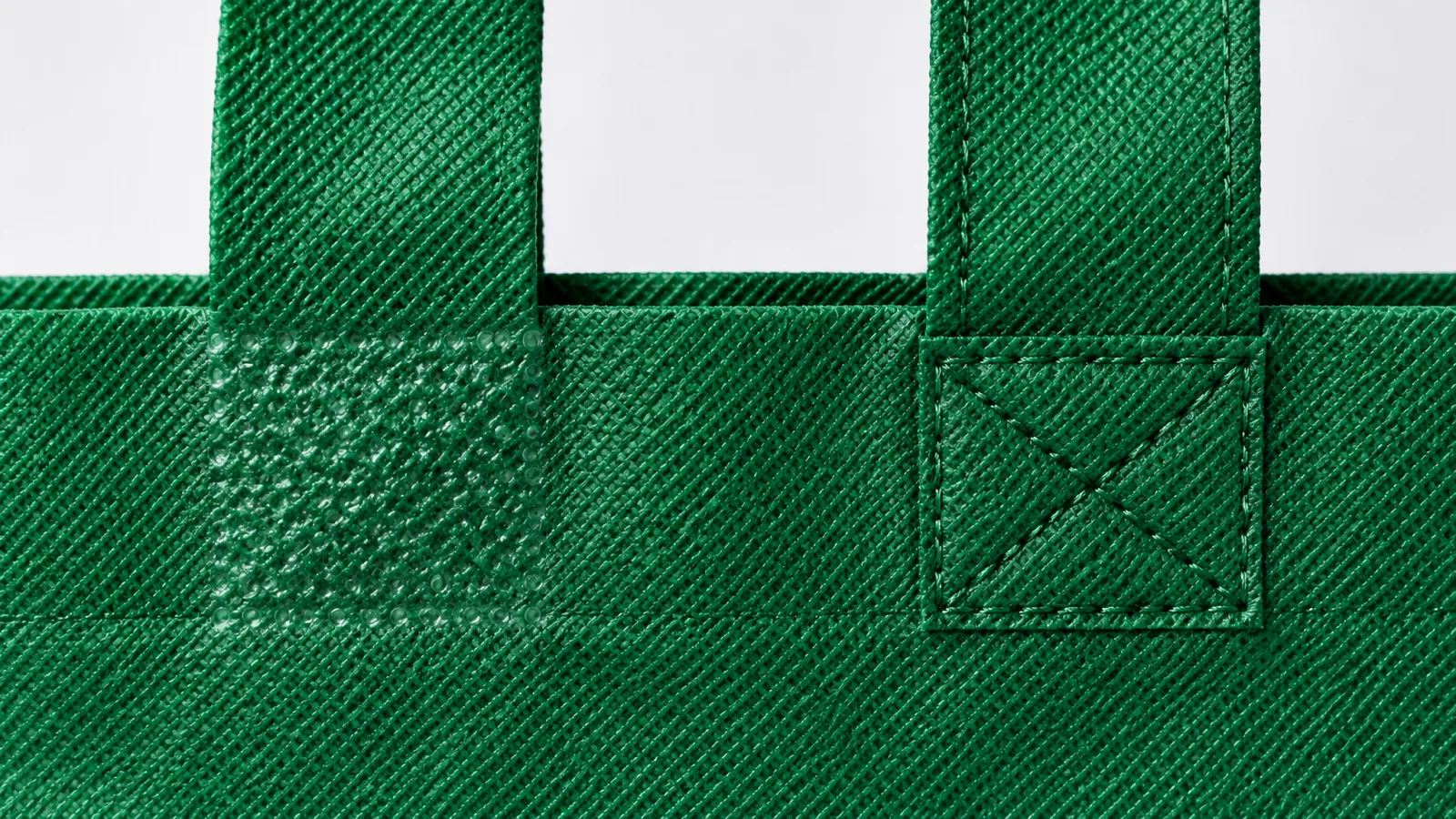
- Ultrasonic heat welding: High-frequency vibration melts the PP fibres together in a neat embossed dot pattern. Edges look clean, production is fast and unit cost stays low (typical MOQ 3,000 pcs, 50–90 GSM). It suits light-to-medium everyday loads, though sharp sideways jerks can peel a weld sooner than thread.
- Lockstitch sewing with X-box reinforcement: Operators sew piped edges and stitch an "X-in-a-box" square where each webbing or self-fabric handle meets the top hem (MOQ 1,000 pcs). Running the handle strap all the way down to the bottom of the bag ("full-wrap webbing") takes strain off the top hem altogether for heavy grocery or bottle carriers.
When Should You Choose Laminated, Insulated, Foldable or rPET Styles?
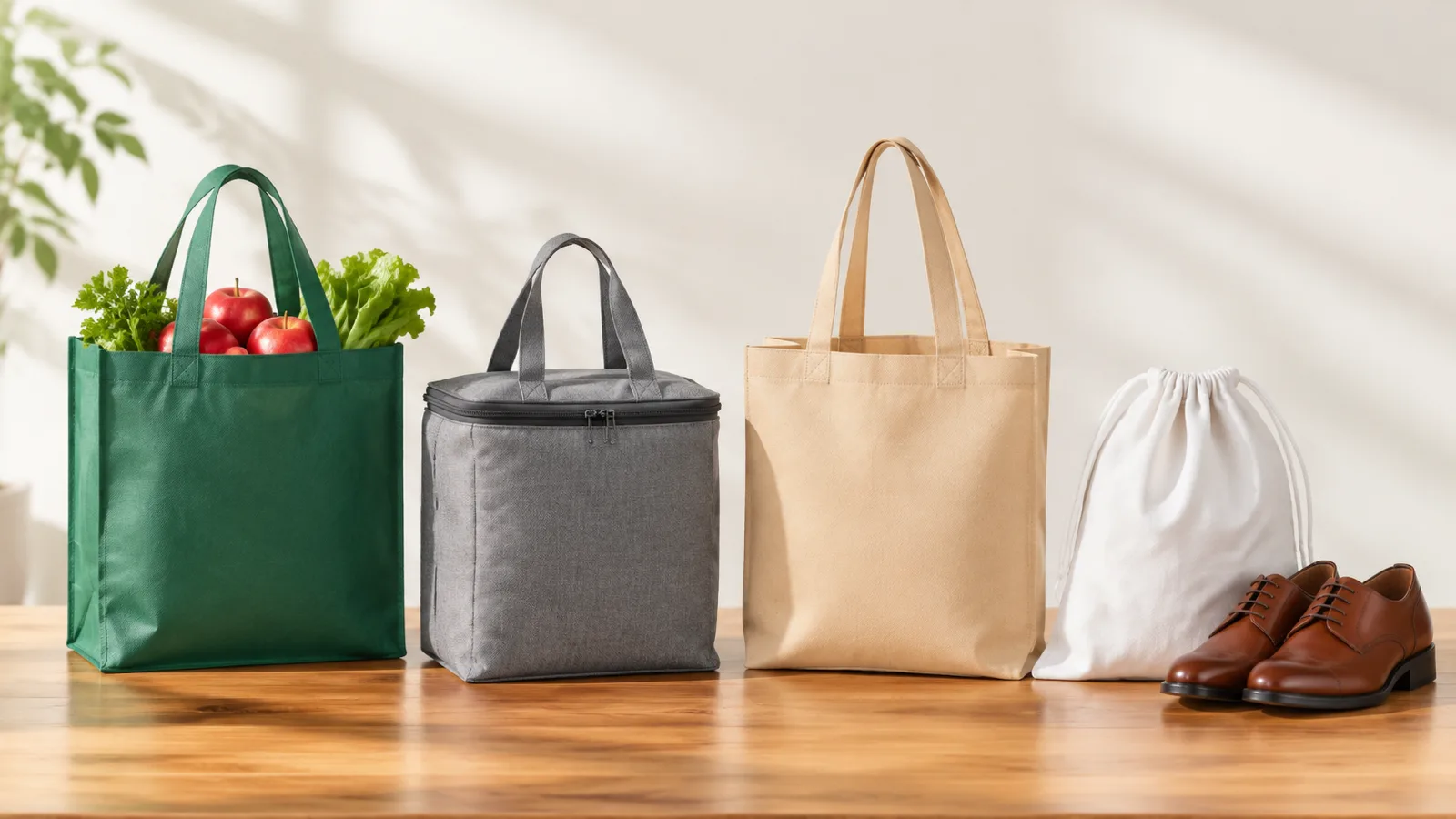
Beyond plain spunbond totes, four specialised constructions cover specific retail and delivery jobs:
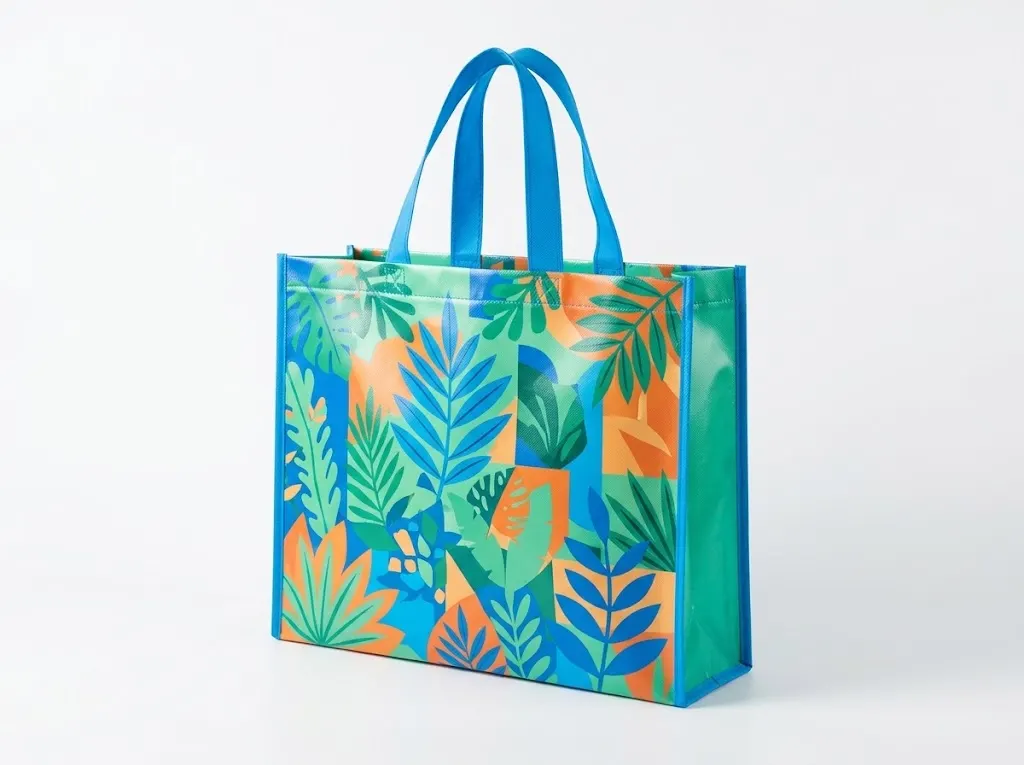
- Laminated non-woven bags: A gravure-printed gloss or matte BOPP film is thermally bonded to 80–120 GSM spunbond PP. It gives full-colour photographic artwork, stiffens the panels so the bag stands crisp and wipes clean in the rain (note that stitched seam needle holes are still not watertight).
- Insulated non-woven bags: Built with an outer non-woven shell, EPE foam middle layer, reflective foil or PEVA lining and a zippered top to slow down heat gain or loss on grocery and meal delivery routes.
- Foldable non-woven bags & drawstring pouches: Lighter 50–80 GSM fabric lets pocket shoppers fold into a snap pouch or cinch shut as breathable shoe and garment dust covers.
- rPET non-woven bags: Made from recycled PET bottle fibres for brands that need a post-consumer recycled story; chain-of-custody scope (such as GRS) should be confirmed per project when quoting.
How Do GSM and Test Standards Work Together on a Bag Spec?
Picking 80 GSM or 100 GSM is only half the specification. Lab fabric methods such as ASTM D5034 (grab test), ASTM D5035 (strip test) and ISO 9073-3 measure the breaking force of the flat fabric sheet—not whether a handle will rip off a finished bag. Sewn seam strength is tested separately under ASTM D1683.
Because there is no single universal standard for whole-bag carry capacity, treat any kg rating as a design target and verify it on your pre-production sample: load the bag to your target weight, hang it by the handles and give it repeated vertical jolts. See our non-woven bag GSM guide to pick fabric weight and our non-woven bag buying guide for pre-order spec checks.
MOQs, Lead Times and What to Put in Your Quote Request
EcoLeaderPack manufactures custom non-woven bags directly in 60 to 120 GSM spunbond PP across stitched and ultrasonic lines (see 16 commercial uses for non-woven bags for industry sizing ideas). Keep these baseline production figures in mind when planning a launch:
- Starting MOQ: 1,000 pcs for sewn totes, 3D box bags, laminated totes, insulated coolers and drawstring bags; 3,000 pcs for ultrasonic bags (5,000 pcs for W-cut vest bags).
- Sampling time: 5 to 7 days once artwork and dimensions are confirmed.
- Bulk lead time: 7 to 15 days after pre-production sample approval.
Share your bag style, width × gusset × height, target carry weight, artwork colours and quantity below, or reach us on WhatsApp (+86 155 2109 3069).
Sources
- EDANA, What are nonwovens?
- ASTM International, ASTM D5034 Breaking Strength and Elongation of Textile Fabrics (Grab Test)
- ASTM International, ASTM D1683/D1683M Failure in Sewn Seams of Woven Fabrics
- ASTM International, ASTM D3776 Mass Per Unit Area (Weight) of Fabric
- ISO 9073 series (Textiles — Test methods for nonwovens)
Request a Quote and Samples
Tell us the bag style, size, GSM and quantity. We will reply with a quote and sample options.