Box dimensions are always written in one fixed sequence—Length × Width × Height (L × W × H), also called Length × Width × Depth (L × W × D)—and measured across the inside walls when ordering custom packaging. Facing the open top of the box, Length is the longer edge of the opening, Width is the shorter edge at 90 degrees, and Height (Depth) runs straight down from the top opening rim to the inside floor.
Getting inside and outside numbers mixed up is the single most common reason a sample box arrives 4 mm (0.16 in) too tight for a bottle or insert, or refuses to slide into a hotel dispenser cover. Whether you are sizing one-piece collapsible rigid gift boxes, retail folding cartons, or pre-filled custom tissue boxes, the breakdown below shows where to place your ruler, how much wall thickness each box structure eats up, and how a few millimeters change your freight bill.
What Order Do Box Dimensions Go In: L × W × H or L × W × D?
Across North American, European, and Asian factories, the three numbers in a box quote always follow Length × Width × Height (L × W × H). Structural dieline engineers and corrugated converters often swap the word Height for Depth (L × W × D), as standardized in the FEFCO International Fibreboard Case Code and the ECMA Code of Folding Carton Design Styles—both terms describe the exact same vertical measurement.
What trips buyers up is assuming "Length" means the tallest side of the box. In packaging, the opening always decides Length and Width, even on a tall, skinny perfume carton where Height ends up being the largest number of the three:
- Length (L): Look straight down into the open top where the product loads. Measure the longer side of that opening from left to right.
- Width (W): Stay at that same open top and measure the shorter side running front to back, perpendicular to the length. (On a square cube box, Length and Width are equal.)
- Height / Depth (H or D): Measure vertically from the top opening fold straight down to the interior bottom base, excluding tuck flaps, dust flaps, or magnetic lid overhangs.
When sending specifications by email, write all three figures in a single unit and label the sequence explicitly—for example, 250 × 180 × 90 mm (9.84 × 7.09 × 3.54 in) Inside L × W × H. Never mix inches and millimeters in the same line, and confirm any quote written as W × L × H before approving a cutting die.
Should You Measure Inside or Outside Box Dimensions?
Use inside dimensions (ID) whenever you want a product, tray, or bottle to fit inside the box, and use outside dimensions (OD) whenever the finished box has to fit inside something else—such as a shipping master carton, retail shelf slot, hotel tissue cover, or gift bag. Packaging factories always draft dielines outward from inside score-to-score dimensions, following ASTM D2658 (Standard Test Method for Determining Dimensions of Fiberboard Boxes).
If you measure the outside of an existing rigid gift box with a ruler and send those numbers without stating "outside size," the factory will treat them as inside dimensions—or worse, if you ask to match an outside footprint without accounting for 2.0 mm (0.08 in) greyboard walls, the usable interior shrinks by 6 to 10 mm (0.24 to 0.39 in). How much space the walls consume depends directly on the paperboard grade you choose for your packaging boxes:
| Box Structure | Typical Board Thickness | Wall Deduction (OD minus ID) | Primary Dimension to Specify on PO |
|---|---|---|---|
| C1S / Kraft Folding Carton (Cosmetics, tea, bakery) | 0.40–0.55 mm (16–22 pt / 300–400 GSM) | +1.0 to +1.5 mm (+0.04 to +0.06 in) | Inside (ID) so bottles, blisters, or liners slide in smoothly |
| Custom Facial Tissue Box (Pre-filled sealed carton) | 0.45–0.50 mm (18–20 pt / 350 GSM FBB) | +1.0 to +1.5 mm (+0.04 to +0.06 in) | Outside (OD) to fit hotel room covers & tight master cartons |
| E-Flute Corrugated Mailer (Roll-end tuck front) | 1.5–1.8 mm (0.06–0.07 in flute) | +3.5 to +6.0 mm (+0.14 to +0.24 in, double side walls) | Inside (ID) for product cavity; Outside (OD) for parcel billing |
| Traditional Setup Rigid Box (Lid-and-base gift box) | 1.5–2.5 mm (60–100 pt) greyboard + wrap | +4.5 to +6.5 mm (+0.18 to +0.26 in) | Inside (ID) of the base tray, plus lid height specified separately |
| One-Piece Collapsible Rigid Box (Foldable magnetic gift box) | 1.5–2.5 mm (60–100 pt) greyboard + wrap | +6.0 to +10.0 mm (+0.24 to +0.39 in across L & W; +5–8 mm H) | Inside (ID) for usable cavity; confirm flat-folded size for freight |
Interactive Box Size, Wall Deduction & Flat-Pack Calculator
Enter either your product's maximum dimensions or an existing box's measurements below to calculate the recommended internal dieline size, finished exterior footprint, matching gift bag size, and approximate units per cubic meter (1 CBM) for ocean or air shipping.
Box Inside/Outside Dimension & Flat-Pack Estimator
Switch between millimeters and inches, pick your box structure, and see exact inside dieline specs, outside shipping size, and matching paper bag dimensions.
- Recommended Inside Size (ID)
- 264 × 194 × 88 mm (10.39 × 7.64 × 3.46 in)
- Estimated Outside Size (OD)
- 272 × 202 × 94 mm (10.71 × 7.95 × 3.70 in)
- Matching Gift Bag (W × G × H)
- 295 × 115 × 255 mm (Standing fit)
- Shipping Density (per 1 CBM)
- ~920 pcs flat-packed (~13 mm thick)
Structural Note: Collapsible rigid side panels fold inward with concealed magnets, adding ~8 mm (0.31 in) to exterior L/W. Flat-packed shipping fits ~5–6× more gift boxes per CBM than pre-glued rigid boxes.

How Do You Measure a Box Step by Step?
Always measure a fully assembled box resting on a flat, rigid table—never guess three-dimensional finished dimensions by laying a ruler across an unglued flat carton unless you are reading score-to-score lines on an engineering dieline. Tape measures sag across wide openings, so use a rigid steel ruler or digital calipers for retail packaging under 400 mm (16 in).
Follow this four-step sequence to record interior specifications without misreading a crease:
- Square up the box and open the top: Fold the base flaps or pop up the collapsible walls so all four corners sit at true 90-degree angles, looking down into the loading opening.
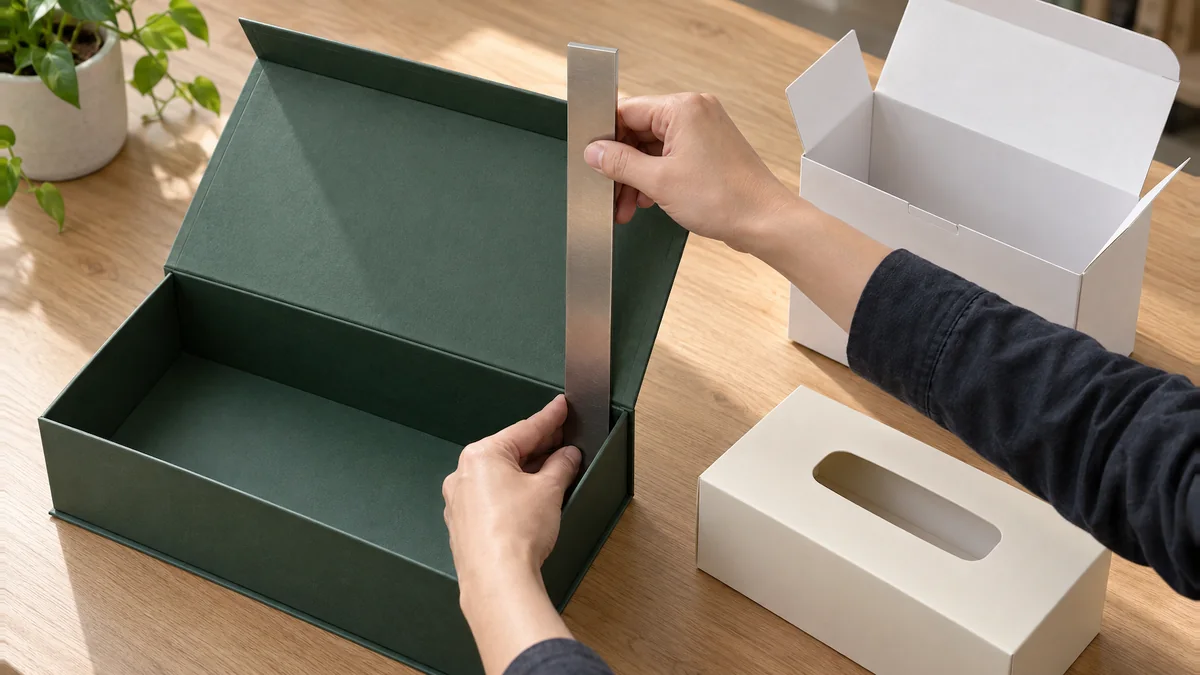
- Measure Inside Length (L): Press the zero end of your ruler flush against the left interior wall and read the distance to the opposite right interior wall along the longer opening edge.
- Measure Inside Width (W): Rotate your ruler 90 degrees and measure wall-to-wall across the shorter opening edge—stay below the top rim rather than measuring across bowed outer edges.
- Measure Inside Height / Depth (H): Stand the ruler vertically on the inside bottom floor and lay a flat card across the top crease line so you capture true usable depth without counting upward-flaring flaps.
Do not round fractional measurements down when recording a sample. Writing 10 in when a glass serum bottle actually needs 10.15 in (258 mm) guarantees torn dust flaps on the packing line.
How Do You Measure Collapsible Rigid Gift Boxes and Custom Tissue Boxes?
Standard mailer tutorials assume every box opens from four top flaps, which breaks down on two of the highest-volume retail and hospitality formats: one-piece collapsible rigid gift boxes (foldable magnetic boxes) and pre-filled facial tissue cartons. Each has a structural quirk that buyers need to measure differently.
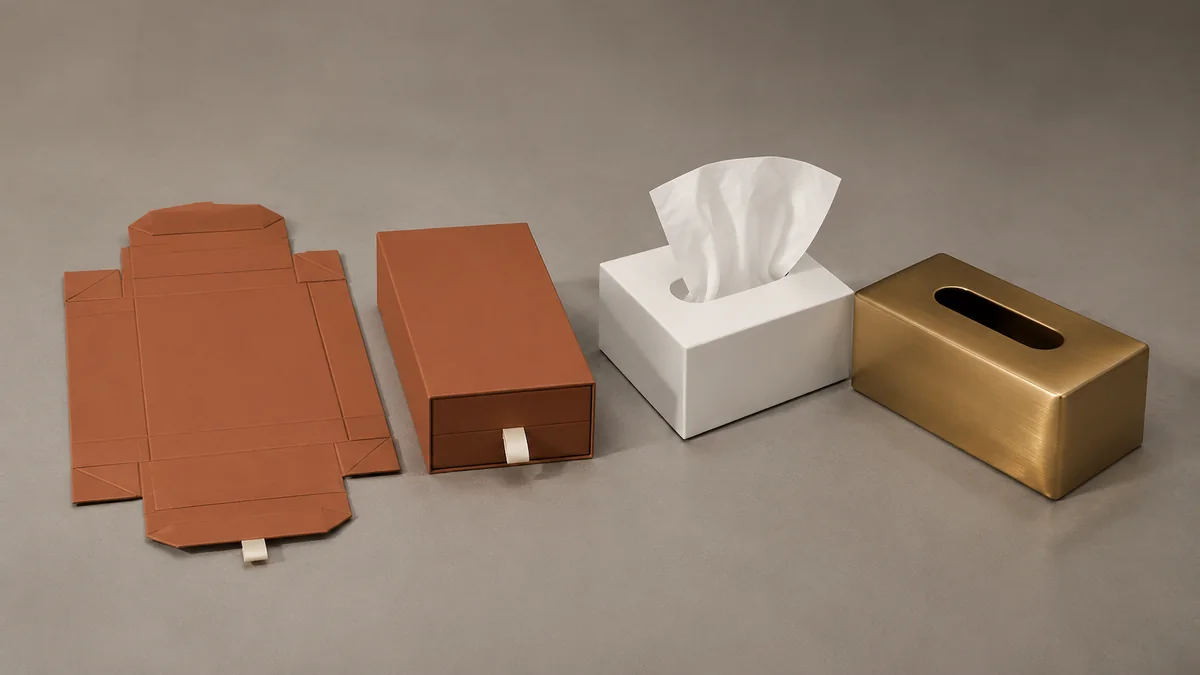
Measuring One-Piece Collapsible Rigid Gift Boxes
A collapsible rigid gift box (also called a foldable magnetic gift box) is built from a single continuous wrapped greyboard spine—typically 1.8 to 2.5 mm (70 to 100 pt) thick—whose left and right triangular gusset walls fold up and lock via concealed neodymium magnets or 3M corner adhesive strips. Because the side panels tuck inside the front cover flap and spine overhang, the outside footprint is 6 to 10 mm (0.24 to 0.39 in) wider and longer than the usable interior.
When ordering custom collapsible gift boxes for apparel sets, cosmetics, or wine kits, give two numbers: the usable inside cavity (L × W × H) after accounting for any EVA foam or paperboard insert, and—if you ship via air courier—check the flat-folded blank dimensions. A 300 × 200 × 100 mm (11.8 × 7.9 × 3.9 in) magnetic gift box folds down to roughly 13 mm (0.51 in) flat, packing 850 to 1,000 boxes per CBM compared with just 130 to 150 boxes per CBM for traditional pre-assembled setup boxes.
Measuring Custom Facial Tissue Boxes (Finished Pre-Filled Cartons)
Unlike empty gift boxes, custom tissue boxes are glued shut on all six faces and supplied as complete, pre-filled finished units (carton, facial tissue sheets, filling, and export packing quoted together at a 5,000-box MOQ). You cannot open top flaps to measure the inside wall, so focus on external fit and dispensing stack height:
- Measure Outside Dimensions (L × W × H) without the tissue plume: Place the box flat with the poly-window or die-cut slot facing up. Measure base length, base width, and carton wall height—never include the pop-up tissue sheets sticking out of the top slot.
- Check hotel dispenser cover clearance: On a recent hospitality order using our reference 225 × 120 × 60 mm (8.86 × 4.72 × 2.36 in) 350 GSM white board box, a resort chain needed the carton to slip underneath existing acrylic room covers; leaving 3 to 5 mm (0.12 to 0.20 in) of breathing room per side prevented wedging in humid bathrooms.
- Let ply and sheet count drive Height: Inside a tissue carton, 90 pulls of 4-ply 170 × 170 mm (6.69 × 6.69 in) virgin wood-pulp tissue need roughly 60 mm (2.36 in) of vertical height so the first five sheets pull cleanly without tearing—increasing to 120 or 150 pulls means raising carton Height, not stretching Length or Width.
How Much Extra Clearance Does Your Product Need Inside a Box?
Ordering a box to the exact millimeter of your product (0 mm clearance) creates an air-piston effect on rigid boxes and bows out the side panels of custom cake and bakery boxes. Workers on the packing bench need finger or air clearance so items slide in fast without scuffing matte lamination or foil stamping.
Use these shop-floor clearance allowances when converting product measurements into internal box dimensions:
| Product & Insert Setup | Add to Product Length & Width | Add to Product Height | Why This Allowance Matters |
|---|---|---|---|
| Cosmetic bottle / jar in 350 GSM folding carton | +1.5 to 2.5 mm (+0.06 to 0.10 in) | +2.0 to 3.0 mm (+0.08 to 0.12 in) | Clears inward-folded dust flaps and glue-seam overlap without rattling |
| Apparel / gift set in collapsible rigid box (no insert) | +3.0 to 5.0 mm (+0.12 to 0.20 in) | +3.0 to 5.0 mm (+0.12 to 0.20 in) | Keeps folded tissue wrap (17–28 GSM) and magnetic side flaps from snagging |
| Glass bottle + EVA foam or molded paperboard insert | Insert cavity -0.5 mm snug; outer insert +1.5 mm to box wall | +2.0 to 4.0 mm (+0.08 to 0.16 in) above bottle cap | Foam grips the bottle slightly tight while sliding easily into the rigid base |
| Cake board inside a bakery box | +6.0 to 12.0 mm (+0.25 to 0.50 in) | +25 to 50 mm (+1.0 to 2.0 in) above piping | A 10 in (254 mm) cake drum needs at least a 10.25–10.5 in interior base so icing never touches the walls |
How Do Box Dimensions Affect Carrier Rounding and Freight Cost?
Once your box is packed for transit, carriers ignore interior space and bill strictly by outside dimensions (OD)—taking whichever is higher between actual scale weight and dimensional (volumetric) weight. Under both the UPS 2026 US Rate and Service Guide and FedEx parcel rules (updated August 2025), every fractional outside inch is rounded up to the next whole inch at the widest bulge before dividing by 139 (commercial/export) or 166 (US retail ground).
That rounding rule turns 0.2 in (5 mm) of wasted board overhang into a permanent surcharge on every order. A parcel mailer whose outside length measures 12.2 in (310 mm) gets billed as 13 in; trimming the internal dieline by 6 mm drops the outside length to 11.95 in (12 in billed) and cuts parcel dimensional weight by roughly 7% to 8% across thousands of shipments.
For B2B bulk imports from China, freight forwarders measure the export master carton rather than individual gift boxes:
- International Express (DHL / FedEx): Length × Width × Height (cm) ÷ 5,000 = Volumetric kg.
- Air Cargo & Door-to-Door DDP Lines (IATA Standard): Length × Width × Height (cm) ÷ 6,000 = Volumetric kg (many DDP lines also enforce a 12 kg minimum per carton and extra-handling fees above 22.5–28 kg).
- Pre-filled tissue vs. flat-packed gift boxes: Because filled facial tissue cartons cannot ship flat, sizing a custom master carton tightly around our 225 × 120 × 60 mm box (84 boxes in 69 × 49.5 × 43.5 cm, 24.8 volumetric kg) cuts freight per box by about 29% compared with loose stock cartons—whereas collapsible rigid boxes and folding cartons ship completely flat as dense cargo.
How Do You Size a Paper Gift Bag to Fit Your Box?
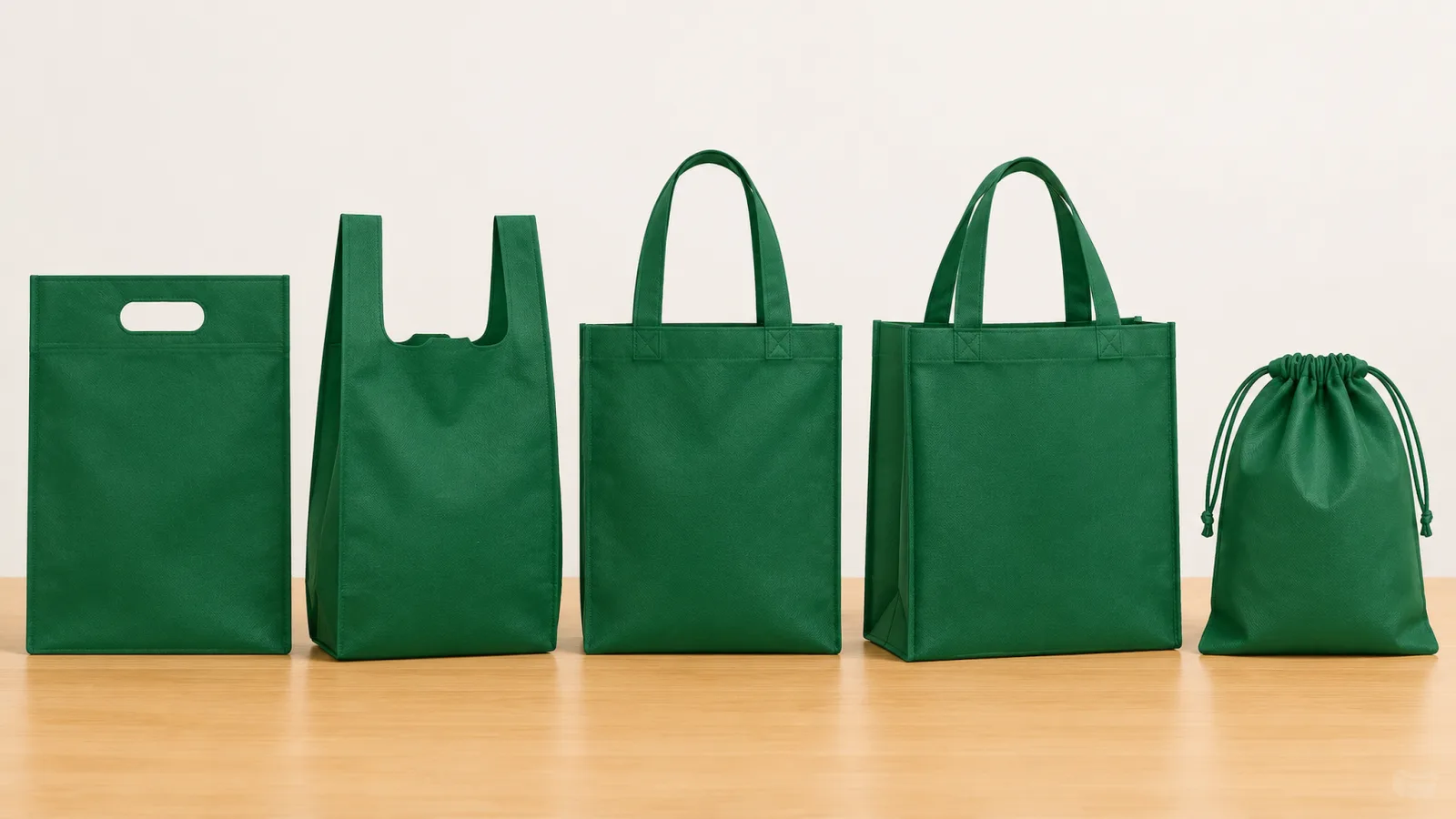
Retail and boutique brands frequently pair collapsible rigid gift boxes or pastry cartons with matching custom paper carrier bags so customers can carry the box out of the store upright. Unlike boxes, three-dimensional shopping bags are written as Width × Gusset × Height (W × G × H), where Width is the front face, Gusset is the side pleat depth, and Height runs from the flat block bottom to the top rim.
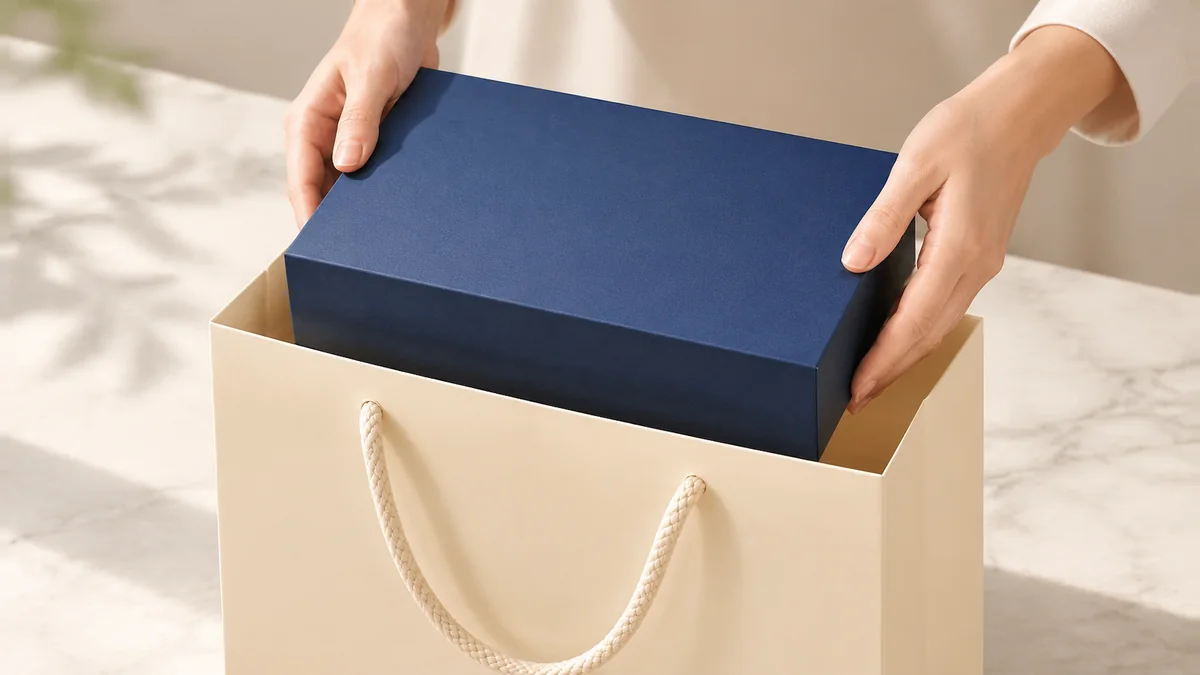
Always size your bag from the outside dimensions (OD) of the closed box—never the inside dimensions—and decide first whether the box sits flat on its base (for cakes, food sets, and fragile bottles) or upright on its edge (for apparel and cosmetic gift boxes):
- Bag Width (W) and Side Gusset (G): Add 15 to 25 mm (0.6 to 1.0 in) to the matching outside box sides so knuckles clear the bag walls and sharp rigid box corners do not tear the side creases.
- Bag Height (H): Add 45 to 65 mm (1.8 to 2.6 in) above the top of the box—twisted kraft handles, ribbon ties, and cotton rope handles pull the top rim inward when lifted, and a shallow bag gapes open if height is cut too close.
- Soft reusable totes: If you are pairing meal boxes or retail gift sets with wholesale paper bags or 3D non-woven box bags, verify the flat bottom board width on a physical sample before running bulk print plates.
Request a Free 24h Box Dieline & Custom Quote
Not sure how much wall allowance or insert clearance to add to your product? Send us your item measurements—or use the calculator above to pre-fill your target dimensions—and our structural engineers will return a free custom AI/PDF dieline within 24 hours, along with flat-pack master carton CBM math, 5–7 day physical sample options, and factory-direct tiered pricing.
Sources & Industry Test Standards
- ASTM International — ASTM D2658-18(2023) Standard Test Method for Determining Dimensions of Fiberboard Boxes (interior score-to-score measurement and exterior caliper verification).
- FEFCO / ESBO — International Fibreboard Case Code (structural packaging standard for interior L × B × H notation measured from the opening).
- ECMA — Code of Folding Carton Design Styles (folding paperboard carton panel ordering and score allowances).
- NIST — Special Publication 811 (Guide for the Use of the International System of Units) (exact metric-to-imperial conversion: 1 inch = 25.4 mm).
- UPS & IATA Dimensional Weight Rules — UPS Shipping Dimensions and Weight & IATA Cargo Standards (whole-inch fractional exterior rounding rules and cm³ ÷ 6,000 volumetric divisor).
Request Your Custom Box Dieline & Factory Quote
Share your target box style (collapsible rigid gift box, folding carton, custom tissue box, or matching gift bag), rough dimensions, and order quantity.