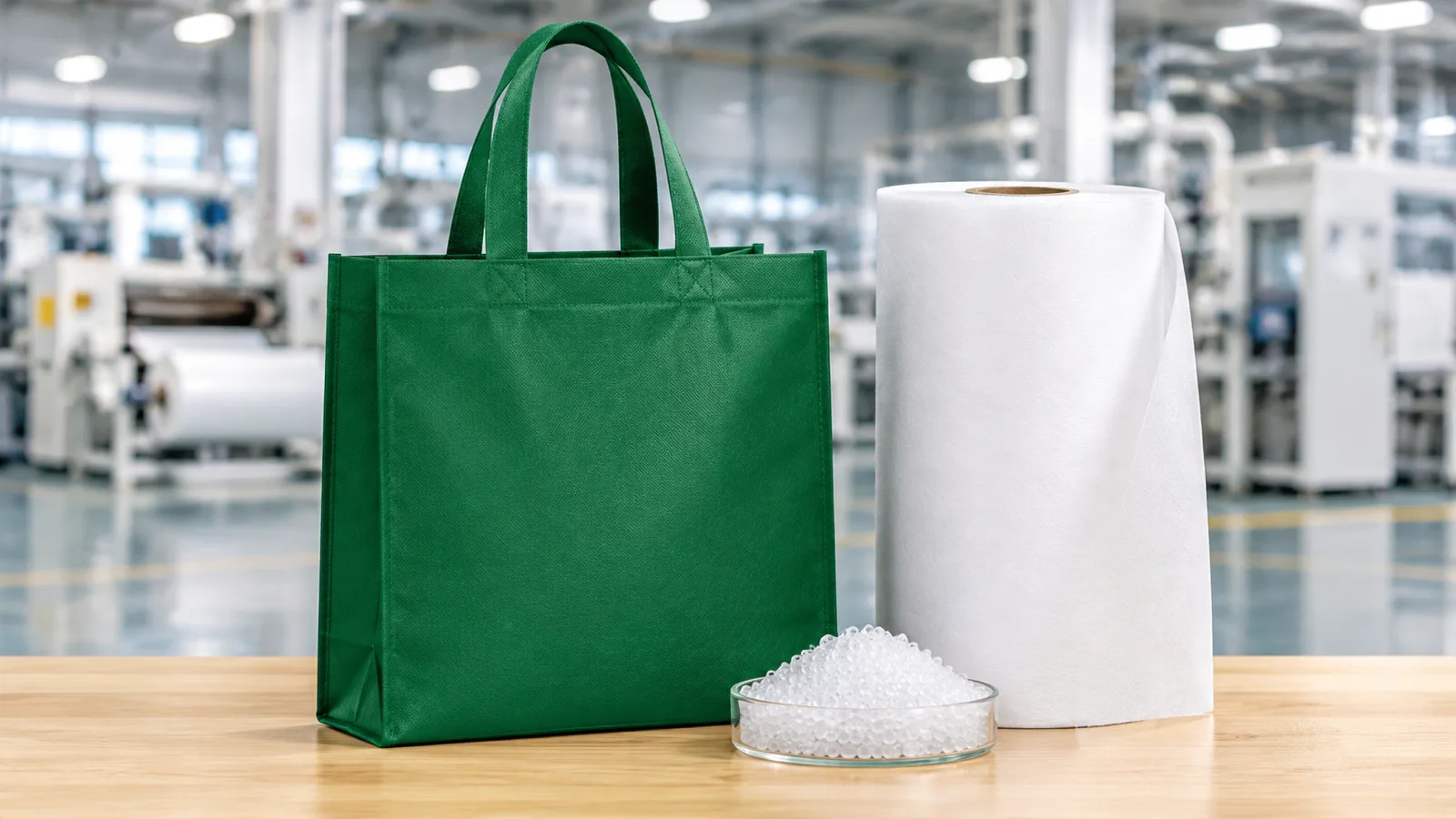
A non-woven bag is made from polypropylene (PP), the same plastic used for bottle caps and yogurt cups. What makes it a fabric is how it is processed. The PP is melted, spun into fine filaments, laid into a web and heat-pressed together. There is no yarn and no loom. That is why the fabric is light, does not fray when cut and does not mind getting wet.
What Is a Non-Woven Bag Made Of?
Almost every non-woven shopping or promotional bag is made of spunbond polypropylene. PP weighs 0.90 to 0.91 g/cm³, which makes it lighter than water. Colour is added as masterbatch pellets when the resin is melted, so the colour goes all the way through the fibre instead of sitting on the surface.
There are two common variations. rPET non-woven bags use fabric made from recycled PET bottles. Laminated non-woven bags have a thin printed BOPP film bonded to the PP fabric. Whichever you choose, the base fabric matters more than anything else. The same GSM can perform very differently depending on how much filler is in it, which is covered in the filler test section below.
How Is Spunbond PP Fabric Made?
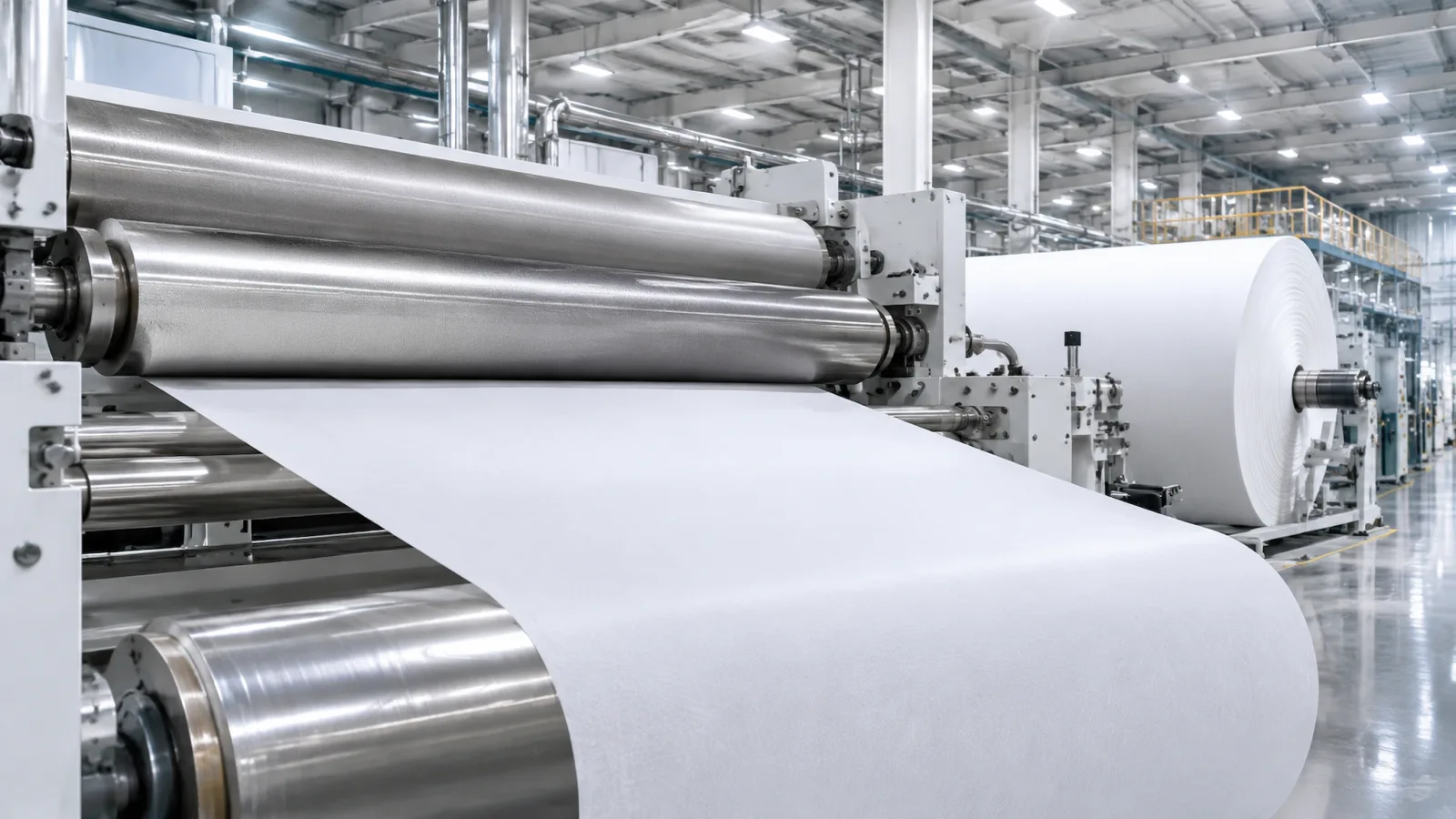
Spunbond fabric is made in one continuous line, from resin pellets to a finished roll:
- Melting: PP pellets and colour masterbatch are melted in a screw extruder and filtered.
- Spinning: The melt is pushed through a spinneret, a plate with thousands of tiny holes, and comes out as continuous filaments.
- Drawing: Cool air stretches the filaments thinner, which makes them stronger.
- Laying the web: The filaments fall in a random pattern onto a moving mesh belt with suction underneath.
- Bonding: Hot embossed rollers press the web. The raised dots on the rollers melt the fibres together at those points, and the fabric is wound onto a master roll.
The rolls are then slit to width and made into bags, either welded on ultrasonic non-woven bags lines or cut and sewn into custom non-woven tote bags.
Is Non-Woven Fabric Plastic, Paper or Cloth?
Chemically, it is plastic: 100% polypropylene, resin code #5. In use, it behaves like a light cloth. It folds, it breathes and it can be sewn or welded.
It is not paper. Paper is made of wood fibres that lose their strength when wet, while PP does not absorb water and stays just as strong. It is also different from woven cotton. Cotton is made of yarns crossing over and under each other, and the cut edges fray. Non-woven fibres are bonded together, so the edges stay clean without hemming.
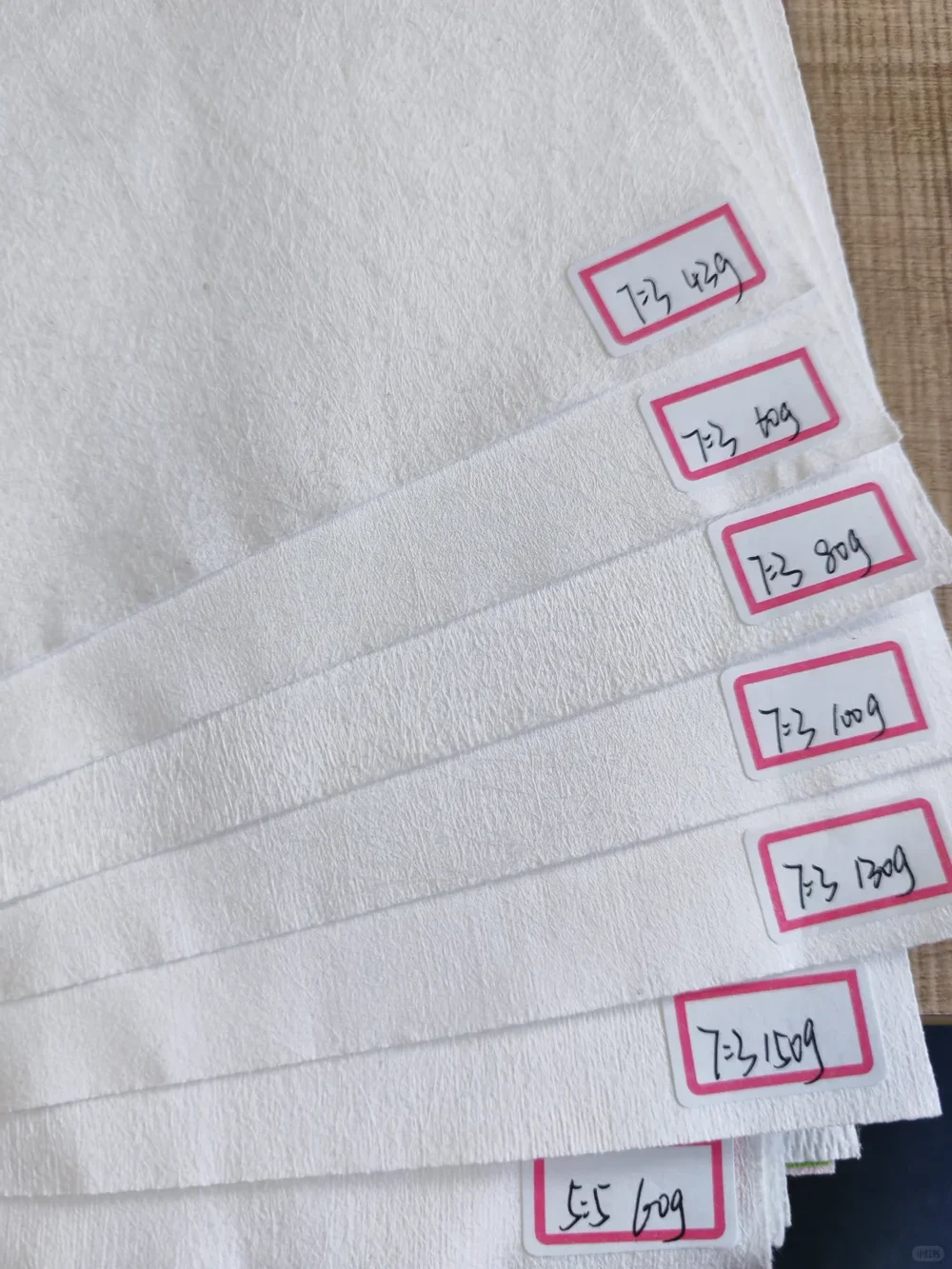
Most retailers choose around 80 GSM for grocery totes. If you are unsure which weight fits your bag, see our guide on what GSM means in non-woven bags.
Quick Fabric Check: Burn, Float and Fabric Type
When a sample arrives, you can learn a lot from two simple tests: burning a strip and dropping a swatch in water. Pick what you saw below to find out what the fabric probably is, or switch tabs to compare the main non-woven types.
Non-Woven Fabric Check: Burn, Float and Fabric Type
Pick what you saw when you burned and floated a swatch to see what the fabric probably is. Or compare the main non-woven types.

What Is the Difference Between Spunbond, Meltblown and Spunlace?
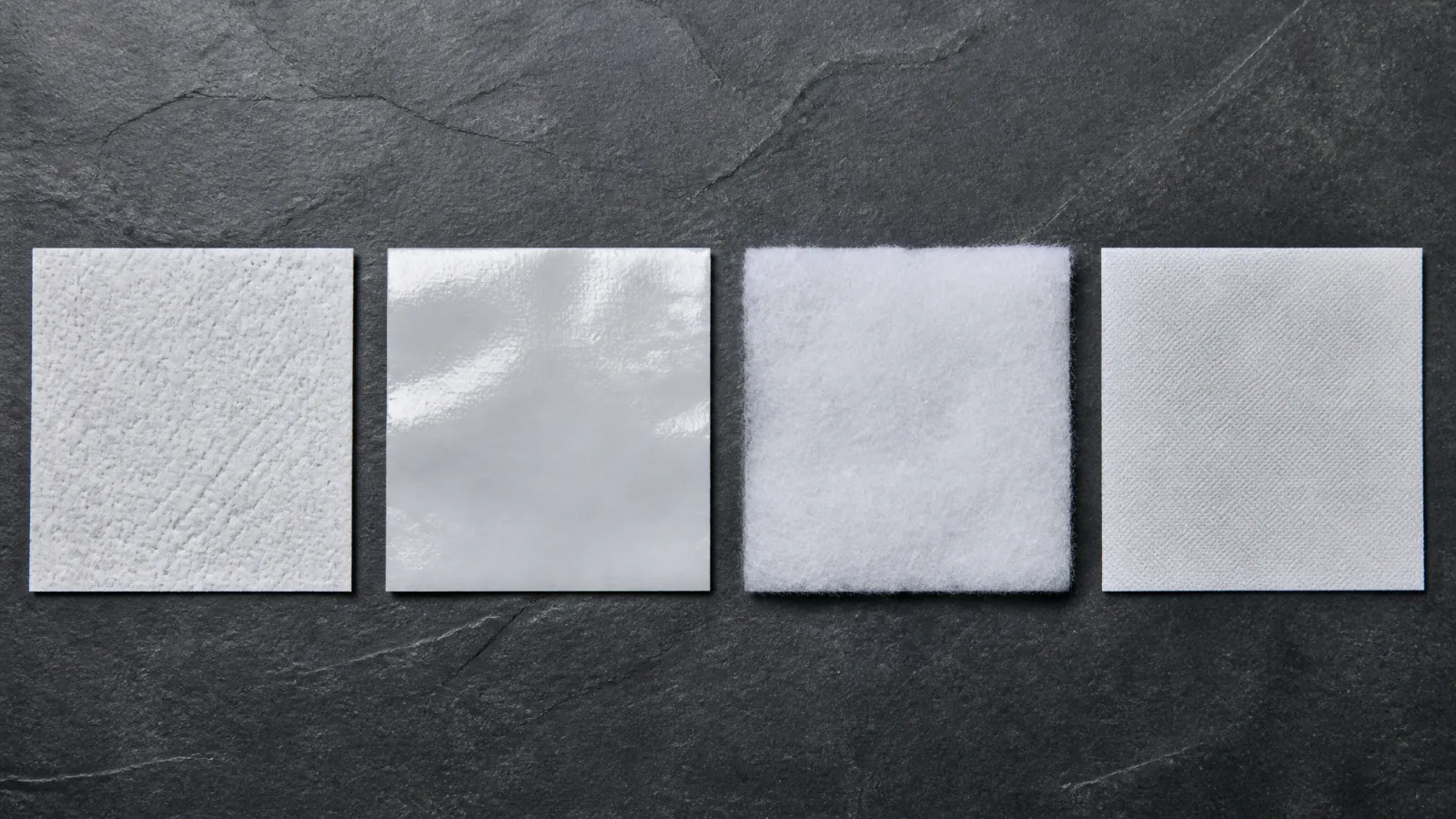
All three are non-wovens, but they are made differently and used for different jobs:
| Type | How the fibres are joined | Feel and strength | Where you see it |
|---|---|---|---|
| Spunbond PP | Continuous filaments, heat-pressed at points | Strong for its weight, slightly crisp | Shopping totes, promotional bags, garment covers |
| Laminated spunbond | Spunbond plus a bonded BOPP film | Stiffer, wipe-clean, photo-quality print | Full-colour retail bags, insulated non-woven bags |
| Meltblown PP | Very fine fibres blown with hot air | Soft and dense, weak on its own | Filter layers, absorbent pads. Not used for bag bodies. |
| Spunlace | Fibres tangled with high-pressure water jets | Soft, drapes like cloth | Wipes, soft pouch linings |
| rPET non-woven | Recycled PET fibres, bonded | Strong and stiff | Totes that need a recycled-content claim |
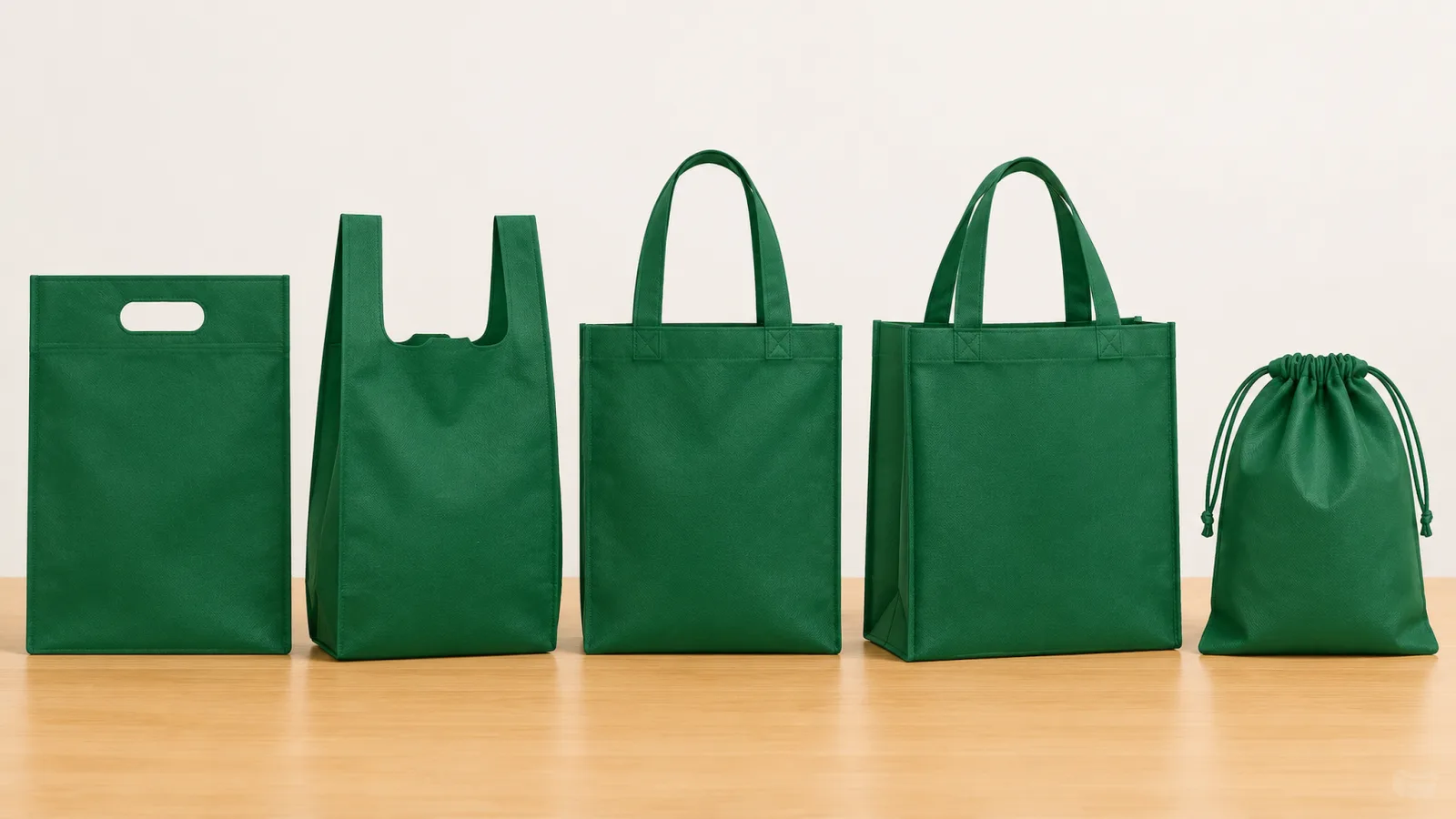
For bags, spunbond PP is the default. It runs well on bag-making machines, holds a print and costs the least for the strength you get. The other types are there when you need a specific finish or a recycled-content claim. For a side-by-side look at bag styles, see our guide to the types of non-woven bags.
How Do You Tell Virgin PP From Chalk-Filled Fabric?
Some low-price mills mix calcium carbonate (chalk) into the PP to save on resin. The fabric feels thicker and still reaches the quoted GSM, but it is weaker. Welds crack when folded and the bag wears out much faster. These three checks catch most problems:
- Float test: Clean PP floats. Chalk weighs 2.71 g/cm³, so once filler passes about 14% by weight the fabric sinks. Add a drop of dish soap and push the swatch under first. Otherwise, trapped air can keep a filled swatch floating.
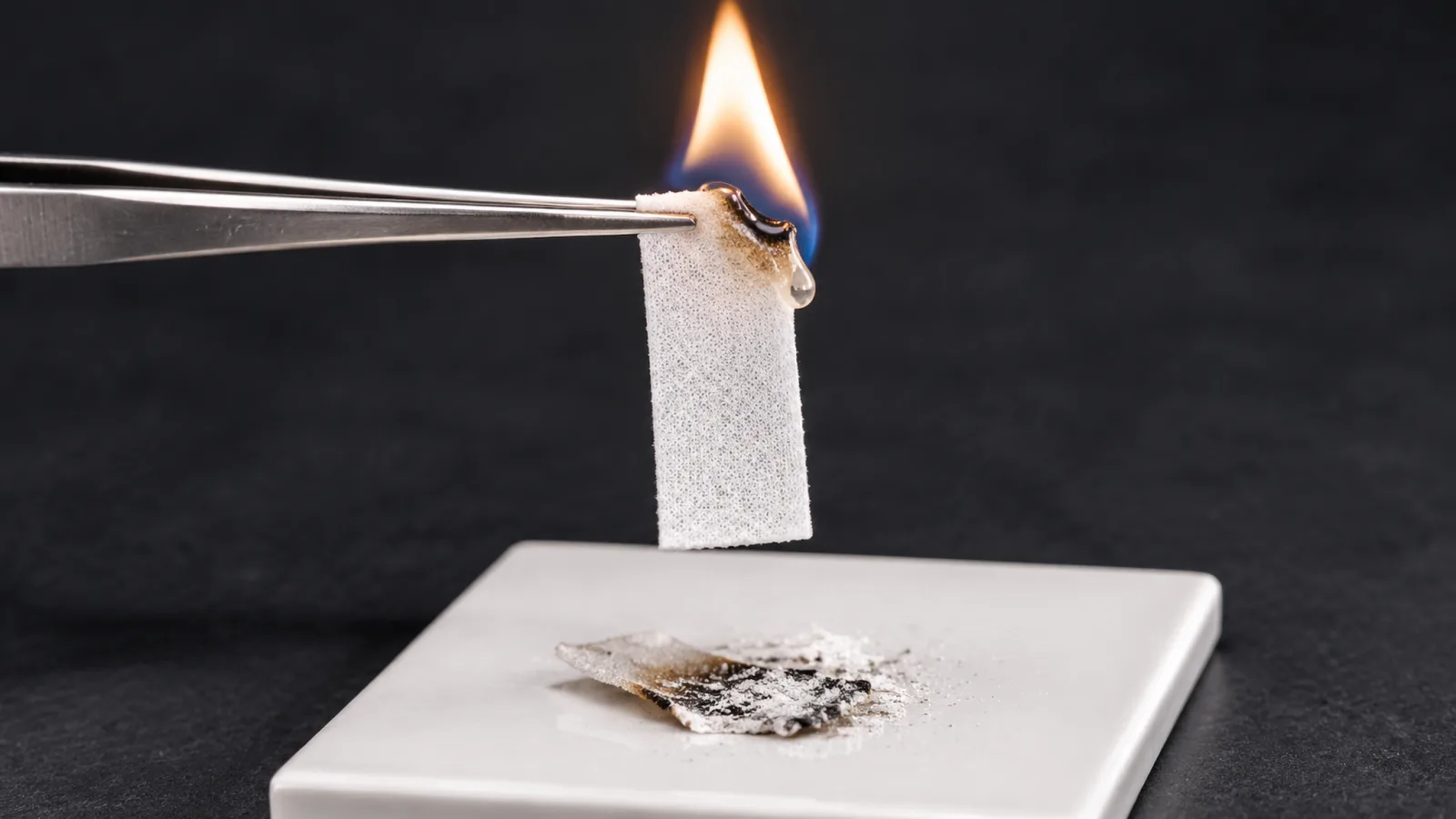
- Burn test: Hold a strip with tweezers over a tile. Clean PP melts and drips, smells like a blown-out candle and leaves a hard bead. Filled fabric leaves a grey-white crust that turns to powder when you rub it.
- Fold test: Fold a welded seam back and forth ten times. Clean PP bends without trouble. Filled fabric turns white along the fold and starts to crack.
These are quick screening checks, not lab results. For a contract, ask for an ash content test (ISO 3451-1) and write a maximum ash percentage into the purchase order. For the other problems to watch for in a shipment, read our guide to non-woven bag import defects.

Which Tests Should Be on a Non-Woven Fabric Spec Sheet?
GSM alone does not tell you much. Two fabrics with the same weight can differ a lot in strength. When you approve a fabric, ask for these results:
| What it checks | Test method | What to ask for |
|---|---|---|
| Weight (GSM) | ISO 9073-1 / ASTM D3776 | Target GSM and an agreed tolerance, measured across the roll width |
| Tensile strength and stretch | ISO 9073-3 / ASTM D5035 | Values in both directions, machine (MD) and cross (CD) |
| Tear strength | ISO 9073-4 / ASTM D5587 | Trapezoid tear in MD and CD |
| Filler content | ISO 3451-1 (ash content) | A maximum ash percentage written into the order |
| Handle strength | No single standard | A hang test on finished bags, with load and time agreed per order |
Always ask for MD and CD values separately. Spunbond is usually weaker across the roll than along it, and the cross direction is often where a bag fails.
Is Non-Woven Fabric Eco-Friendly and Recyclable?
Not in the way people often assume. Standard PP non-woven is not biodegradable, and it will not break down in a landfill. A "biodegradable" claim on a plain PP bag, with no test behind it, is greenwashing.
Where it does well is reuse. In the UK Environment Agency's study of carrier bags, a non-woven PP bag had to be used about 11 to 14 times to have a lower carbon footprint than a single-use plastic bag. A cotton bag needed 131 uses (Environment Agency, 2011). How green the bag is depends on how often it gets used.
At the end of its life, plain PP fabric can be recycled as #5 plastic where PP is collected. A laminated bag is still all PP, so it stays a single material. Insulated bags combine foil, foam and fabric, which makes them much harder to recycle.
Ordering Custom Non-Woven Bags
We make custom non-woven bags in 60 to 120 GSM spunbond PP for most styles. A few practical numbers:
- MOQ: 1,000 pcs for most styles. Ultrasonic bags start at 3,000 pcs (W-cut vest bags at 5,000 pcs) because the machines need setup.
- Samples: 5 to 7 days.
- Bulk production: 7 to 15 days after sample approval.
- Documents: Tell us your market and we will tell you which fabric and test documents we can supply.
Send your bag size, GSM and quantity below, or message us on WhatsApp (+86 155 2109 3069).
Sources
- EDANA, What are nonwovens?
- UK Environment Agency (2011), Life cycle assessment of supermarket carrier bags
- ASTM International, D5035 Breaking Force and Elongation of Textile Fabrics (Strip Method)
- ASTM International, D3776 Mass Per Unit Area of Fabric
- ISO 9073 series (Nonwovens — Test methods) and ISO 3451-1 (Plastics — Determination of ash)
Request a Quote and Samples
Tell us the bag style, size, GSM and quantity. We will reply with a quote and sample options.