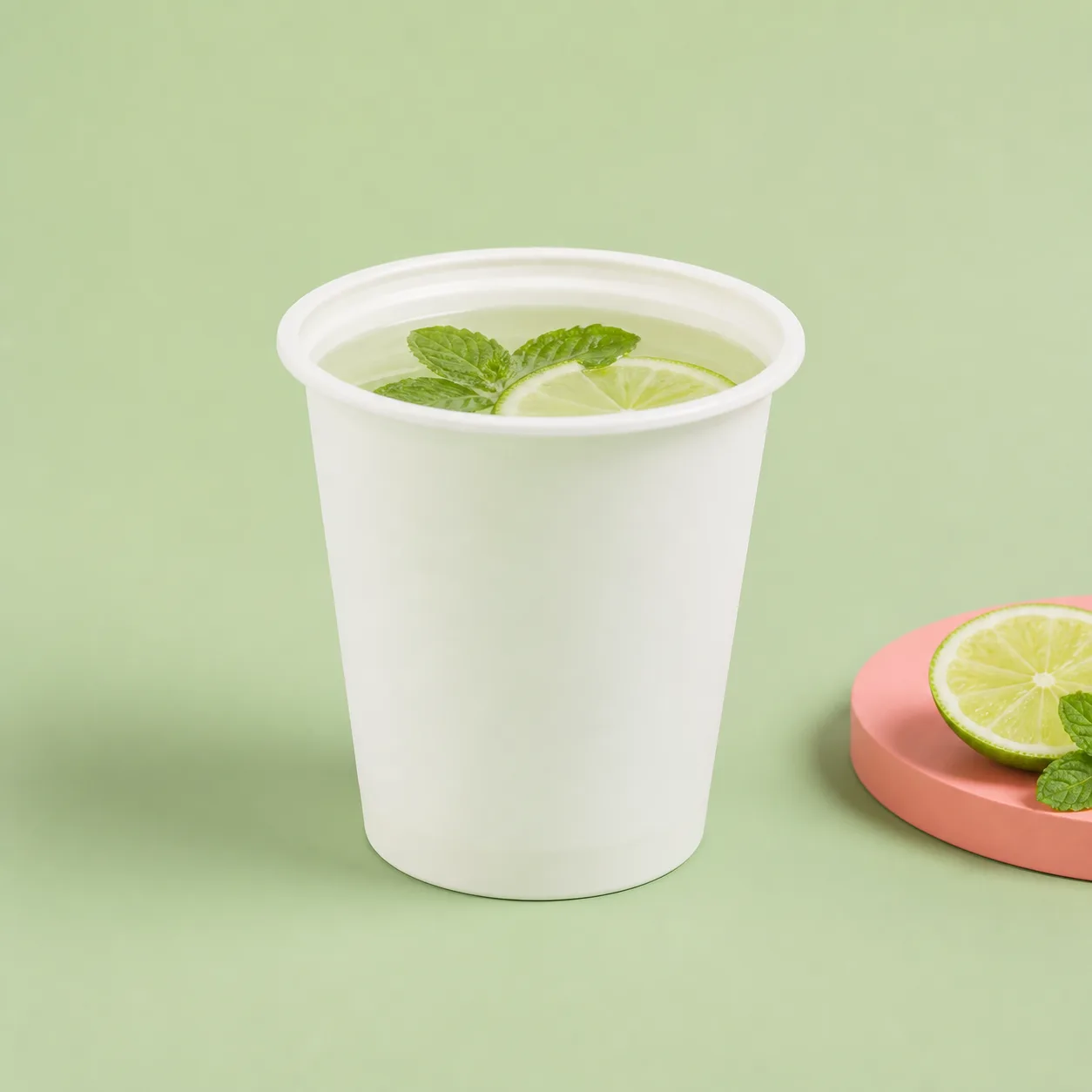
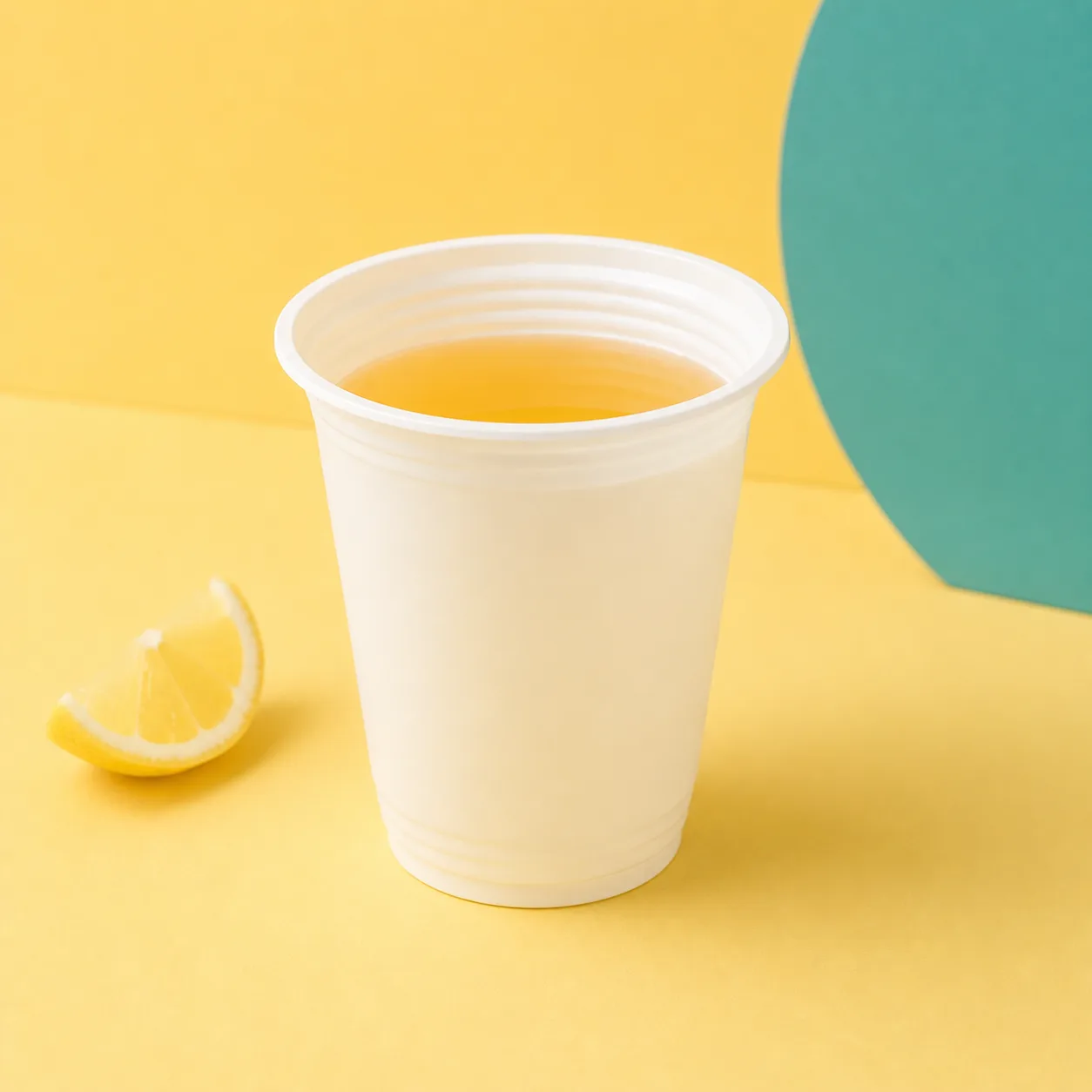
150 ml 6.5 oz
Suggested pour: 80-120 ml
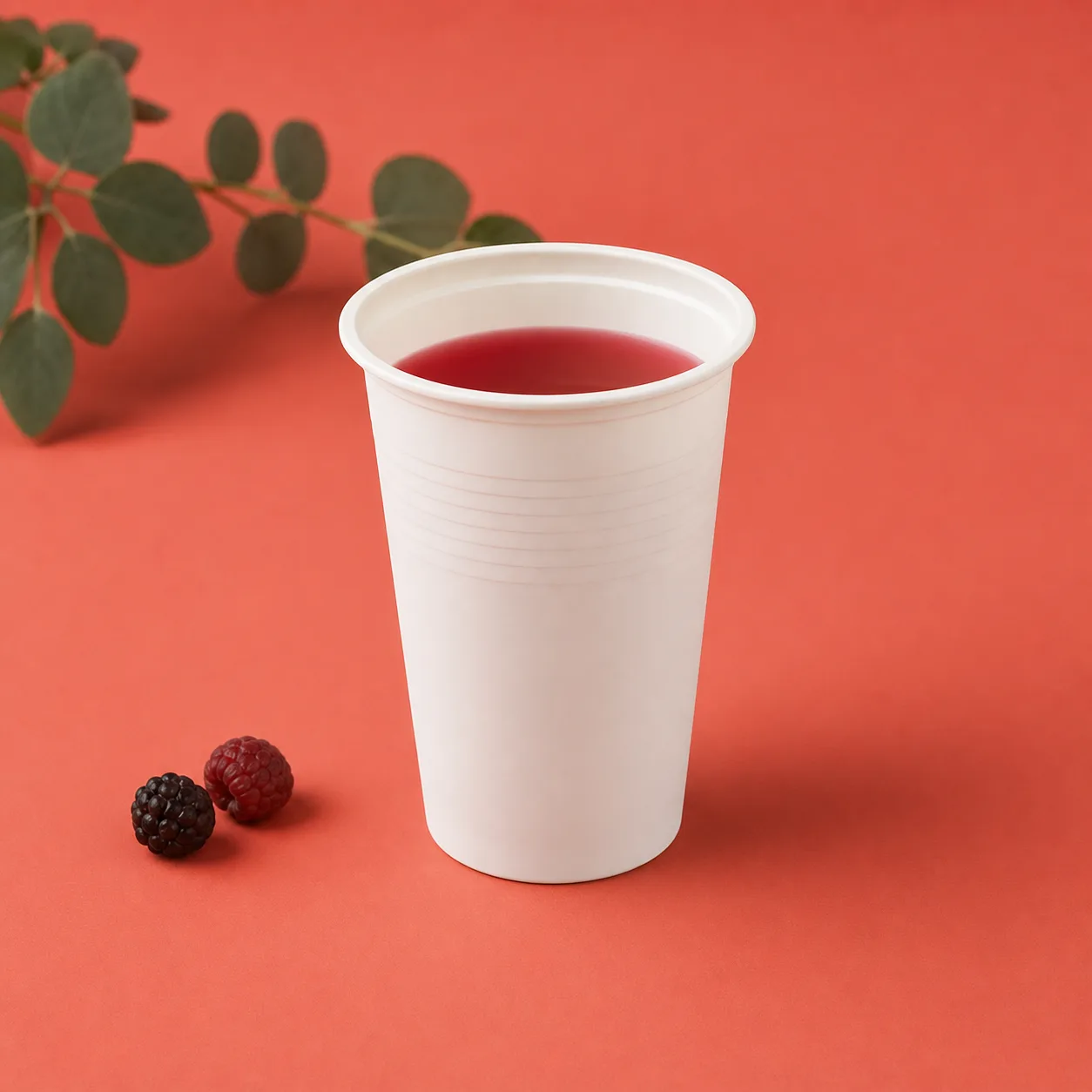
A compact option for tasting portions, product samples and water stations where the drink is intentionally limited.
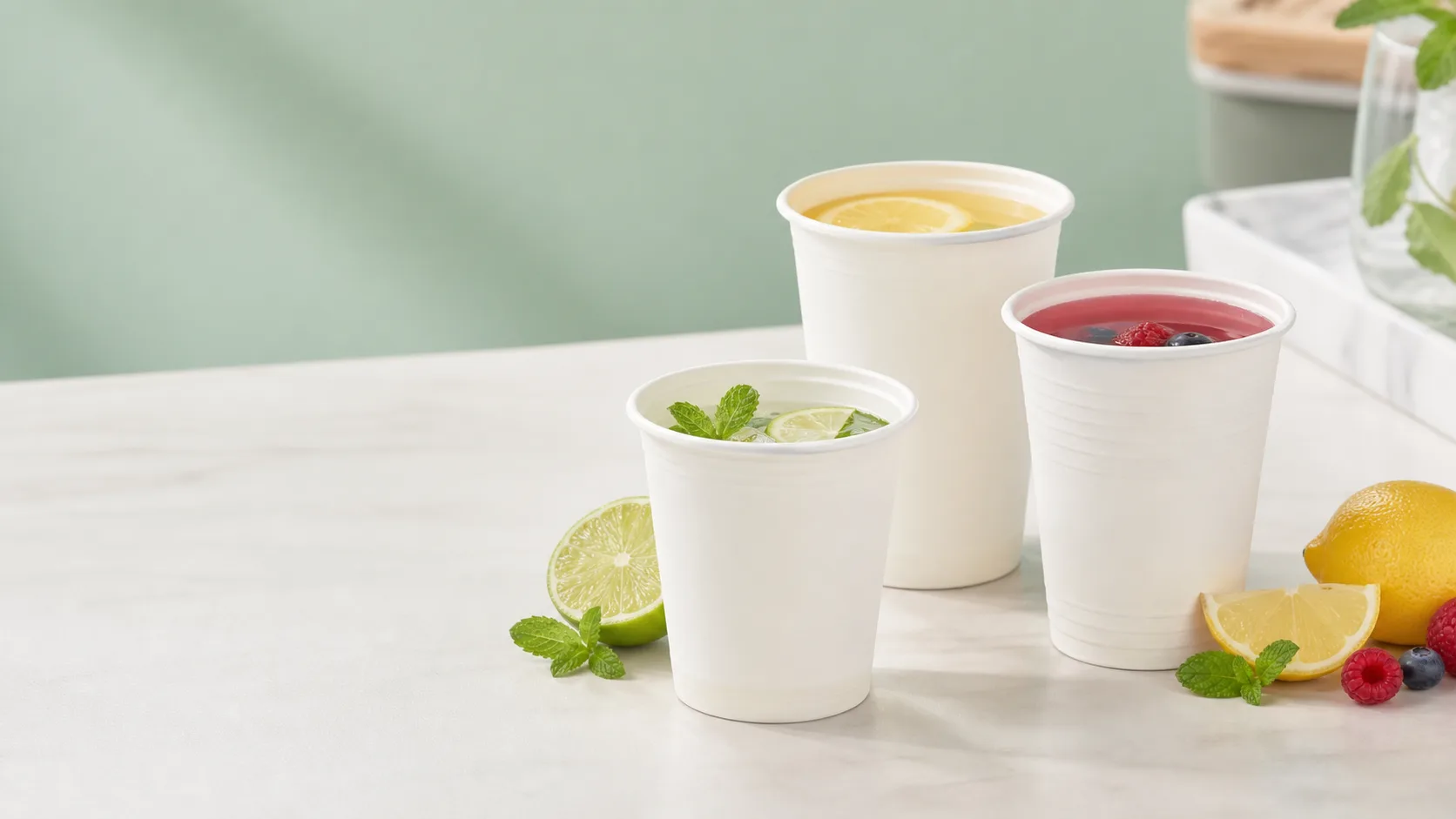
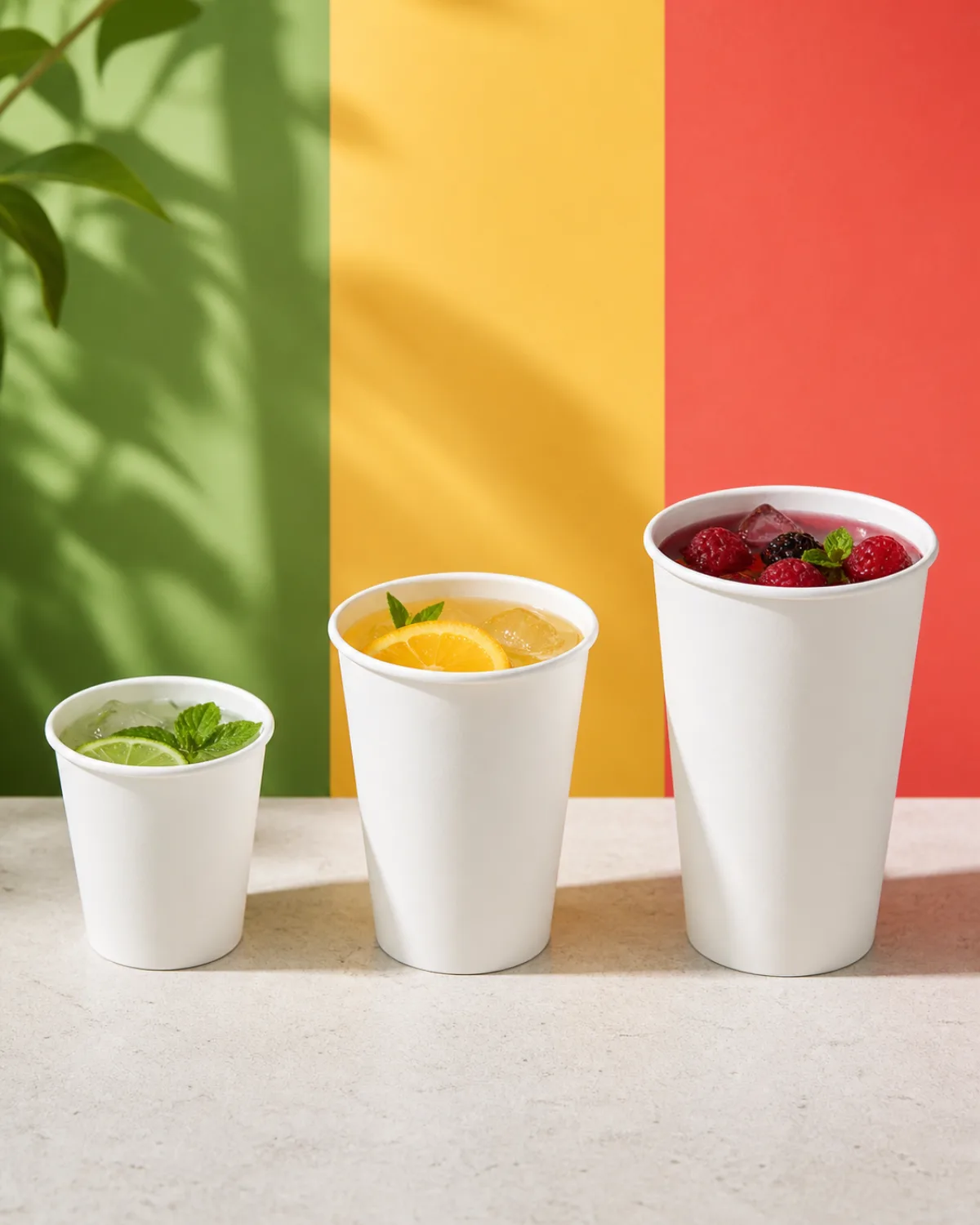
Ecoleaderpack supplies thermoformed cornstarch cups for water service, drink samples and measured beverage portions. The range covers three capacities with two rim diameters, allowing buyers to compare pour volume, cup height, grip, stacking and carton quantity before ordering.
Start with the volume served to the customer, then move up to the cup capacity that leaves working space below the rim.
This space helps during counter handoff, tray movement and lid application without making the cup look unnecessarily oversized.
These pour ranges are sample-planning references rather than guaranteed fill lines. Ecoleaderpack confirms the final cup with the actual beverage, serving temperature and lid before the specification is approved.
Diameter 75 x H80 mm | 6.5 +/- 1 g | 2,000 pcs/carton
Diameter 80 x H90 mm | 8 +/- 1 g | 2,000 pcs/carton
Diameter 80 x H108 mm | 11 +/- 1 g | 1,000 pcs/carton
| Capacity | Dimensions | Unit weight | Carton packing |
|---|---|---|---|
| 150 ml / 6.5 oz | Diameter 75 x H80 mm | 6.5 +/- 1 g | 2,000 pcs |
| 250 ml / 8 oz | Diameter 80 x H90 mm | 8 +/- 1 g | 2,000 pcs |
| 350 ml / 12 oz | Diameter 80 x H108 mm | 11 +/- 1 g | 1,000 pcs |
Final dimensions, weight tolerances and packing are confirmed on the quotation and approved sample.
The range uses two listed rim diameters. The 150 ml cup has a 75 mm rim and an 80 mm height. The 250 ml and 350 ml cups both have an 80 mm rim, but the 350 ml cup is 108 mm high, 18 mm taller than the 250 ml cup. This difference changes the filled cup's center of gravity, tray clearance and carton arrangement even when the nominal lid diameter is the same.
Ecoleaderpack matches a lid to the selected cup item rather than approving it from the 80 mm figure alone. The approval sample is checked for full-rim engagement, lifting retention and leakage when tilted with the intended beverage. The actual serving volume is also recorded on the sample so the remaining headspace can be confirmed separately for the 250 ml and 350 ml cups before the cup, lid and packing specification is released for quotation.
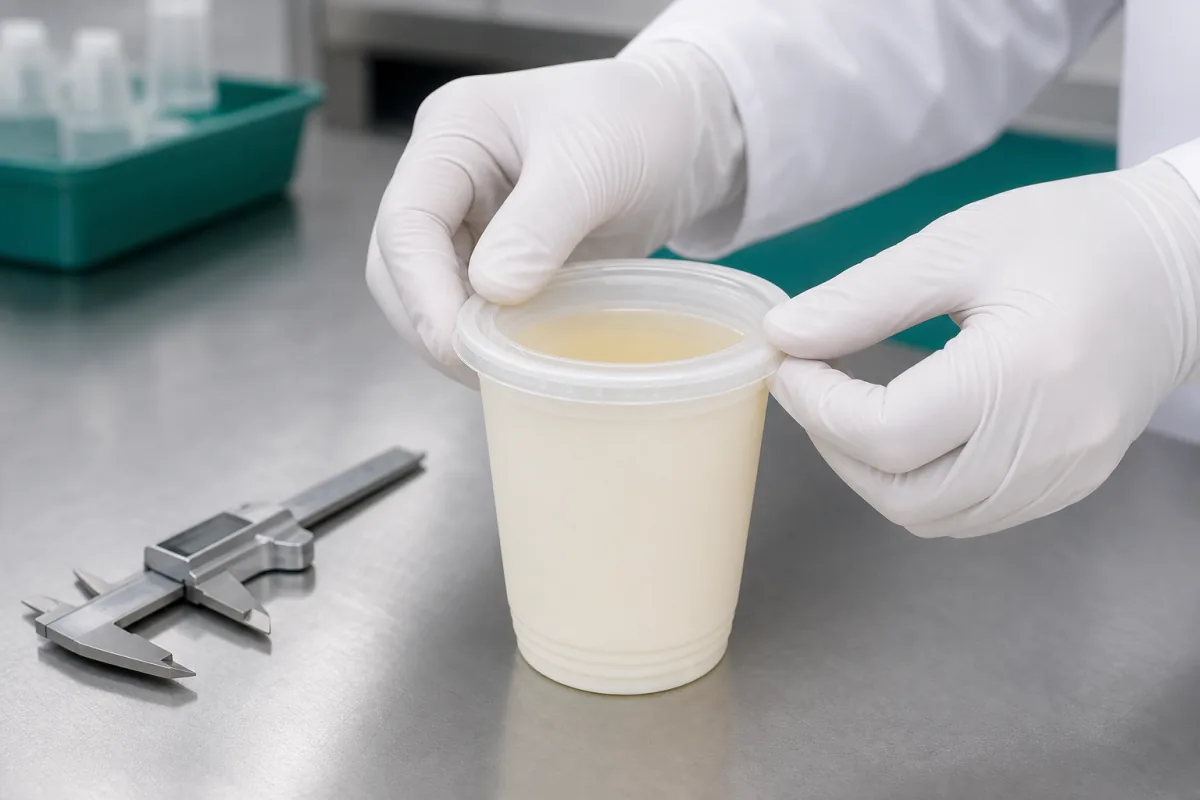
Cup performance changes after liquid is added. A useful approval test records beverage type, fill temperature, actual pour volume and holding time, then checks sidewall feel, base rocking, rim distortion, seepage, condensation handling and cup-to-cup separation from a nested stack.
Sugar, acidity, oil content and temperature can change the test condition. When the order is for juice, a formulated drink or another non-water beverage, use that beverage during approval and record the intended contact time.
The 350 ml cup is 18 mm taller than the 250 ml cup at the same listed diameter. Test it at the intended pour level for one-hand pickup, tray movement and tipping resistance instead of assuming the two 80 mm cups will handle identically.
If a lid is required, inspect snap engagement around the full rim, lifting force, leakage during tilting and separation after holding. Do not approve a lid from diameter alone or assume one lid fits both 80 mm cup formats without a physical fit test.
Do not infer hot-drink, boiling-water, microwave or freezer suitability from the material name. Send the filling temperature, beverage, contact time and use method so the selected cup and available supporting information can be reviewed.
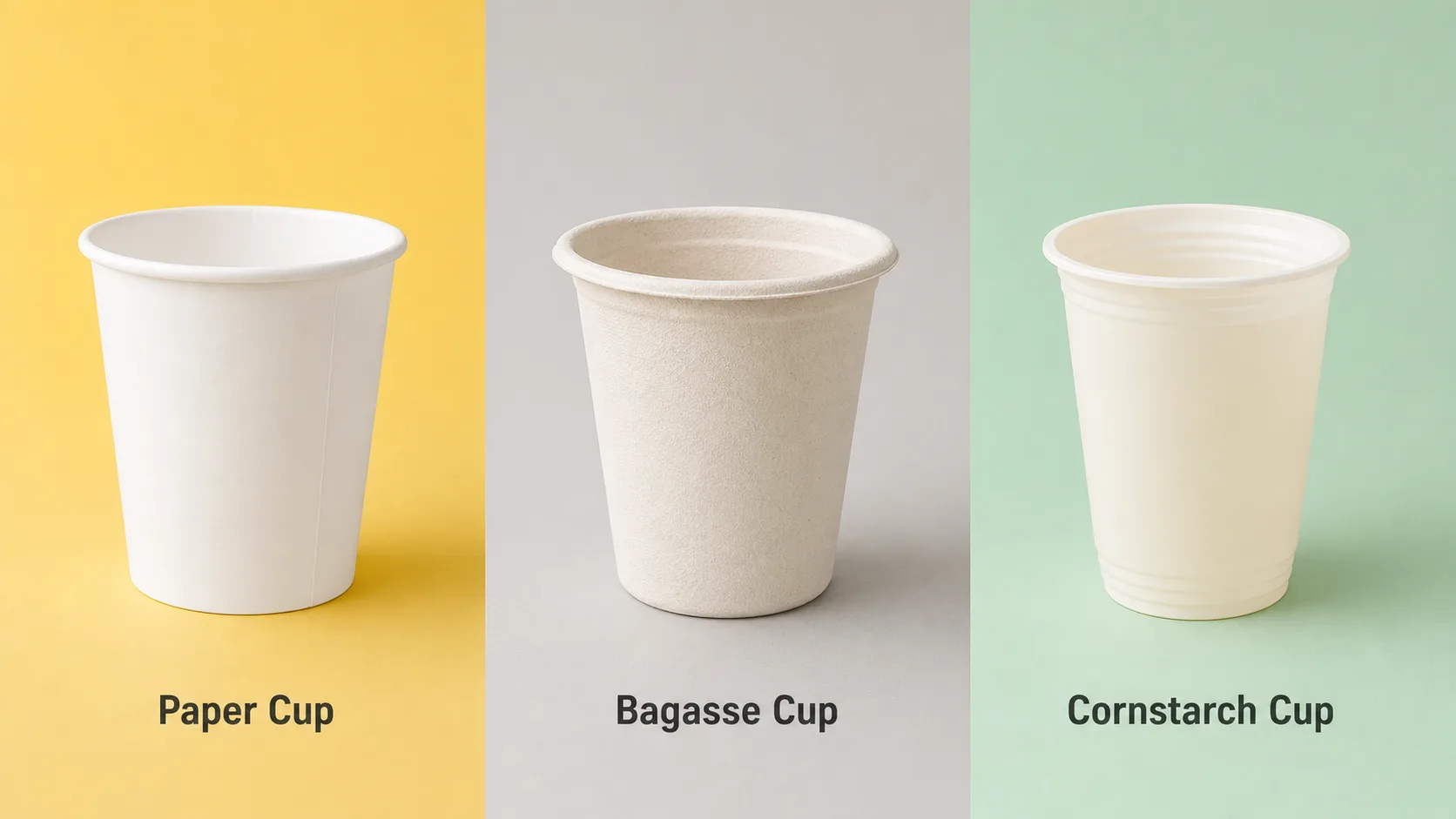
Cornstarch, paper and bagasse cups use different structures and should be compared against the actual drink rather than a broad material label. Cornstarch cups use a smooth thermoformed sheet; paper beverage cups depend on paperboard, seam construction and the selected barrier layer; molded bagasse cups have a fiber texture and require product-specific liquid and rim-fit evaluation.
| Comparison | Cornstarch-based cups | Paper cups | Bagasse cups |
|---|---|---|---|
| Rim and wall profile | Smooth thermoformed wall with a defined rim and formed base rings | Rolled paper rim, converted sidewall and visible side seam | Thicker molded rim with a natural sugarcane-fiber surface |
| Product structure | Thermoformed cornstarch-based sheet with formed sidewall, rim and base | Converted paperboard with a side seam and barrier system selected for the drink | Molded sugarcane-fiber structure with a natural fiber surface |
| Surface and appearance | Smooth molded surface and defined cup profile | Printable outer wall; finish depends on paper and printing process | Visible molded-fiber texture and softer natural appearance |
| Liquid-use decision | Confirm beverage, temperature, fill level and holding time by cup | Confirm barrier layer, seam, rim and beverage condition | Confirm fiber density, barrier treatment and holding condition by product |
| Lid matching | Physical fit test against rim diameter and profile | Match lid to rolled rim specification | Match lid to molded rim geometry and tolerance |
| Customization route | Product color, logo feasibility and packing review | High-area external printing, cup finish and packing options | Molded mark, color and packing reviewed by product design |
| Best-fit buying reason | Smooth molded cups coordinated with a cornstarch tableware program | Branded beverage programs requiring a printable cup wall | Programs seeking a molded-fiber cup appearance |
Cornstarch cups and PLA cups should also not be treated as interchangeable descriptions.
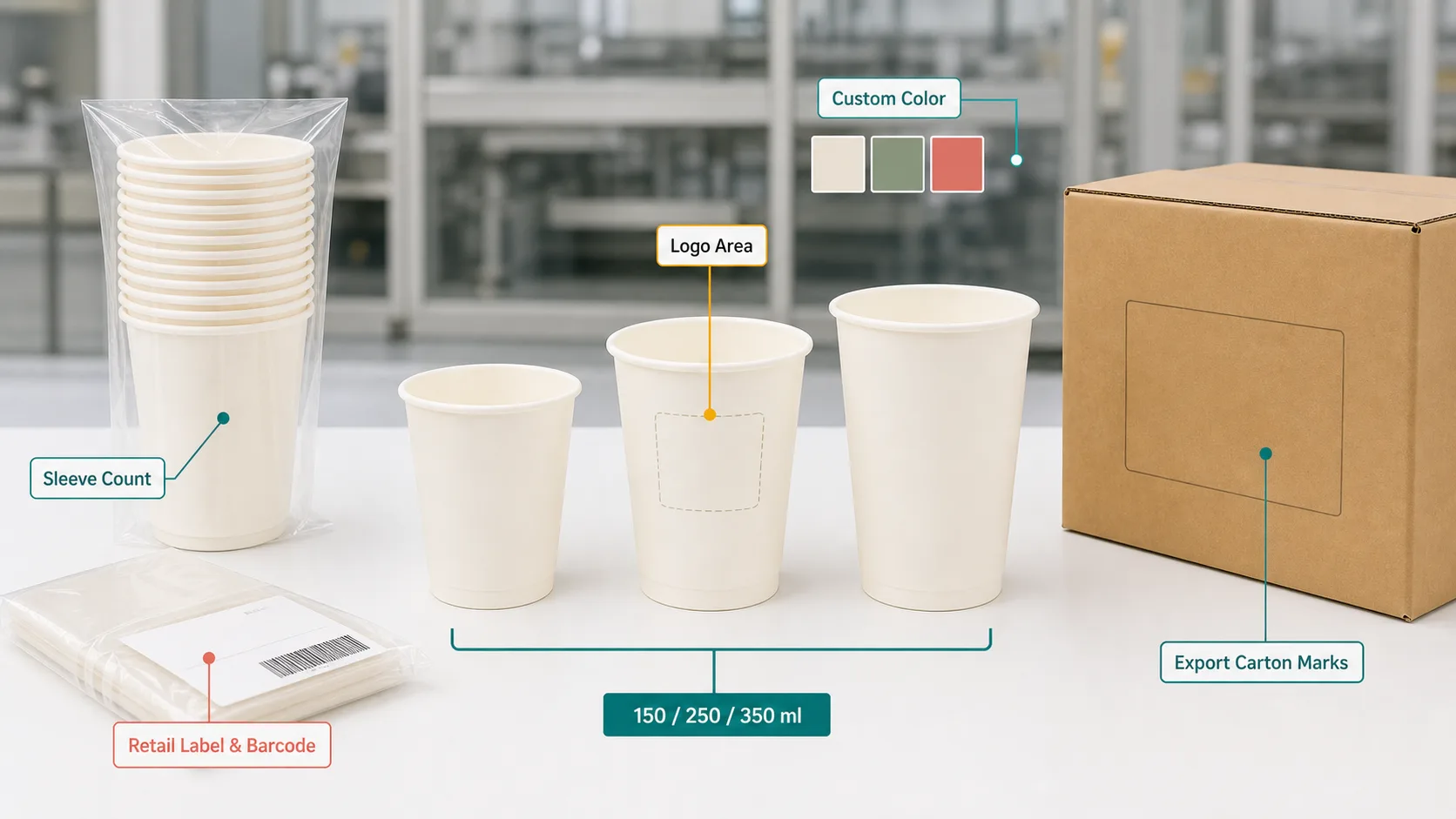
The standard range is defined by the three listed cup sizes. Project changes are reviewed against the cup mold, material, stacking behavior and packing method; a color or logo request must not interfere with rim fit, cup release or sleeve packing.
| Custom area | Cup-specific options |
|---|---|
| Product color | Standard color or project color matched to an approved sample |
| Logo or product mark | Position, size and forming feasibility reviewed against the cup wall and tooling |
| Inner packing | Sleeve count, bag format and label requirements |
| Retail packing | Pack quantity, barcode, market-language text and artwork |
| Export carton | Carton quantity, shipping marks, labels and stack protection |
| Multi-size program | Quantity and packing confirmed separately for 150, 250 and 350 ml cups |
Send the cup size, quantity by capacity, beverage application, packing format, destination and vector artwork. Ecoleaderpack will identify which requests use an existing item and which require product or tooling review before confirming the sample and quotation basis.
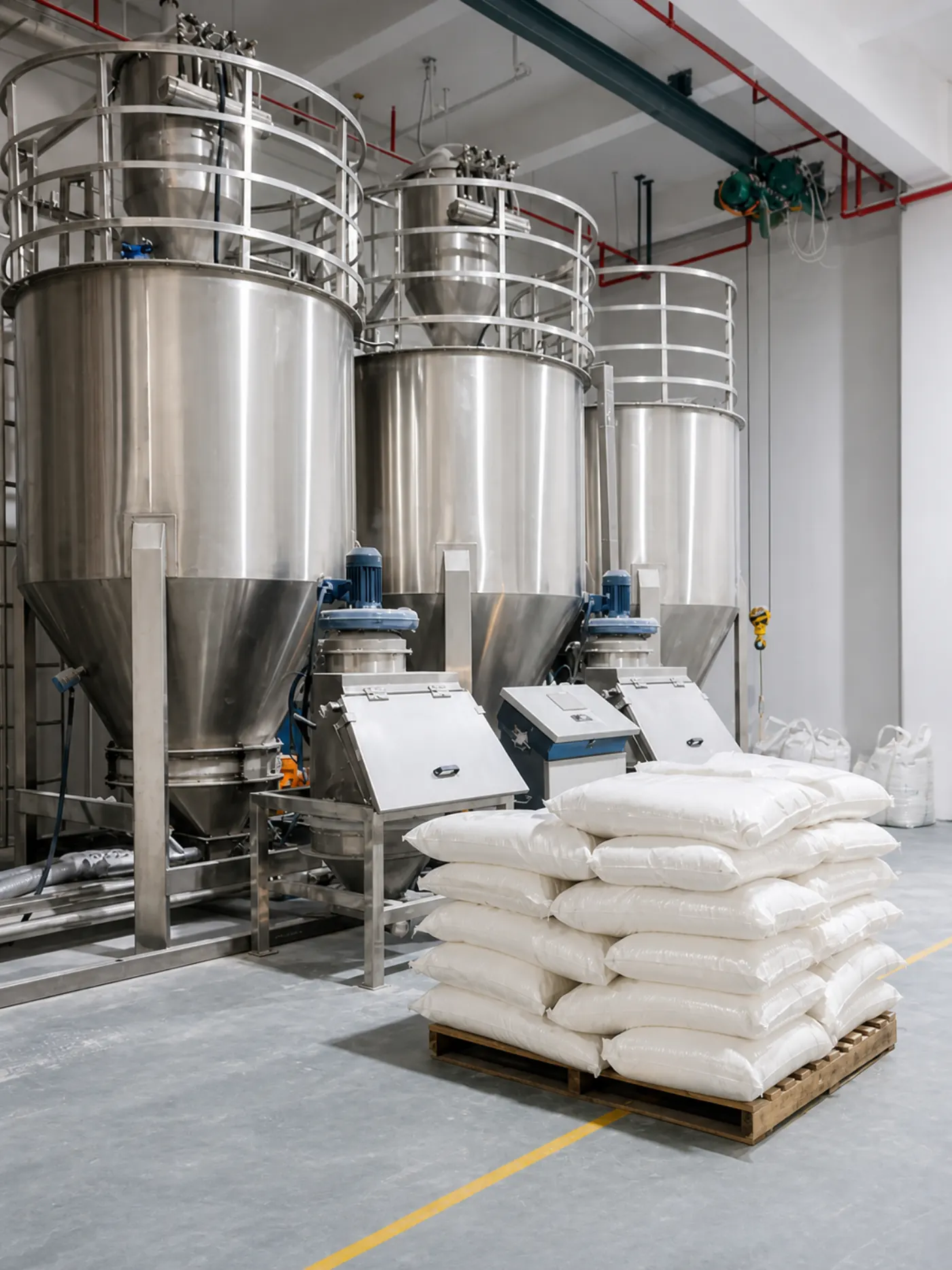
The cornstarch-based masterbatch is dried, blended and checked by material lot and color before sheet production.
Prepared material is extruded into sheet or roll stock. Gauge consistency matters because excessive variation can affect cup wall thickness, unit weight and forming stability.
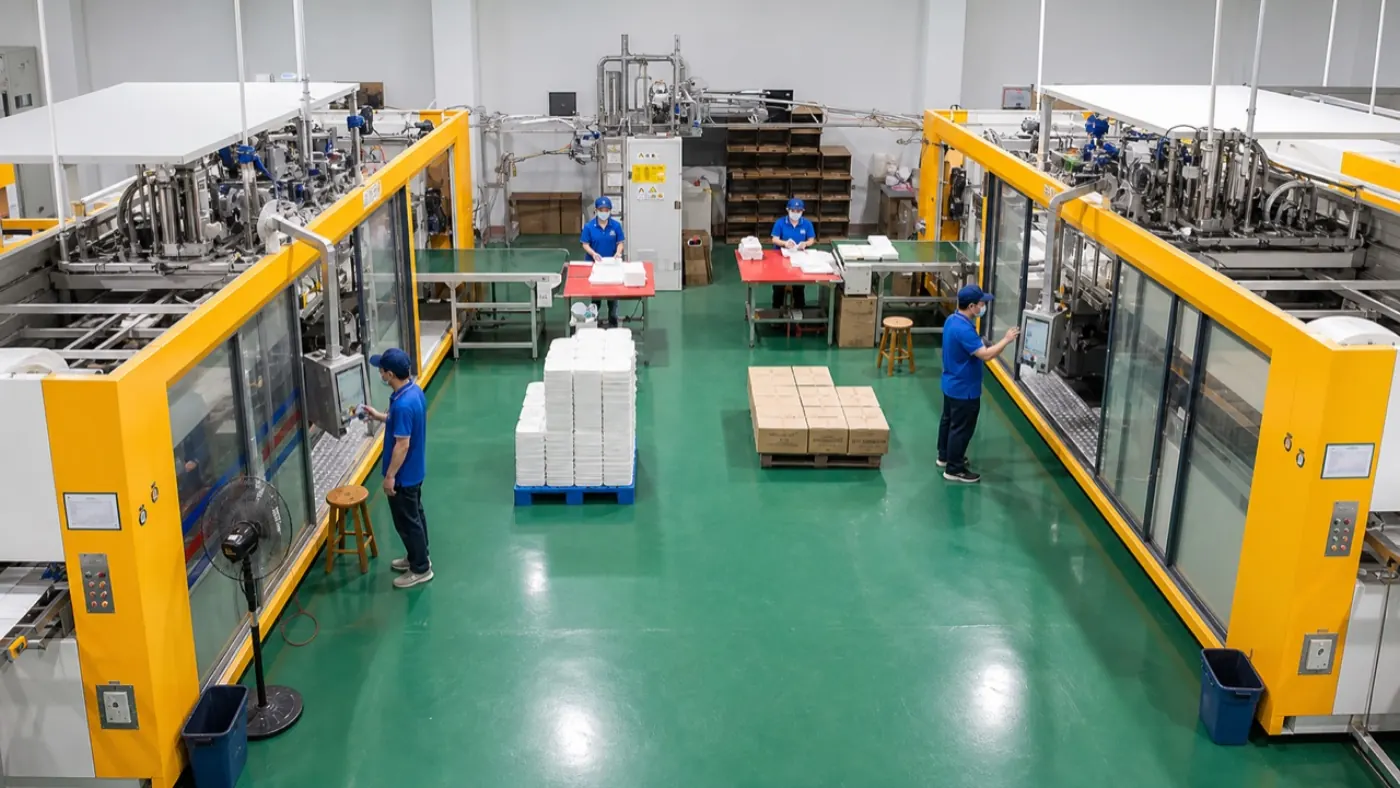
Heated sheet is drawn into the selected cup mold, then trimmed. Checks focus on capacity, sidewall distribution, rim profile, cup height and base formation.
Approved cups are inspected, counted, nested into sleeves and protected in export cartons. The pack is checked for cup separation, sleeve count, rim protection and carton quantity.
| Production stage | What happens | Cup control point |
|---|---|---|
| Material preparation | Approved compound is dried and prepared for extrusion | Material lot, moisture condition, color and formulation |
| Sheet extrusion | Material is converted into controlled sheet or roll stock | Gauge and surface consistency |
| Thermoforming | Heated sheet is drawn into the cup mold | Wall distribution, capacity, rim and base formation |
| Trimming and inspection | Formed cups are trimmed and checked | Rim finish, height, unit weight, nesting and separation |
| Packing | Cups are sleeved and packed into export cartons | Sleeve count, rim protection and carton quantity |
Clean edge trim, forming skeletons and rejected cups are collected separately for controlled reprocessing or qualified recycling where the approved formulation permits. Contaminated material is excluded from food-contact production and handled separately.
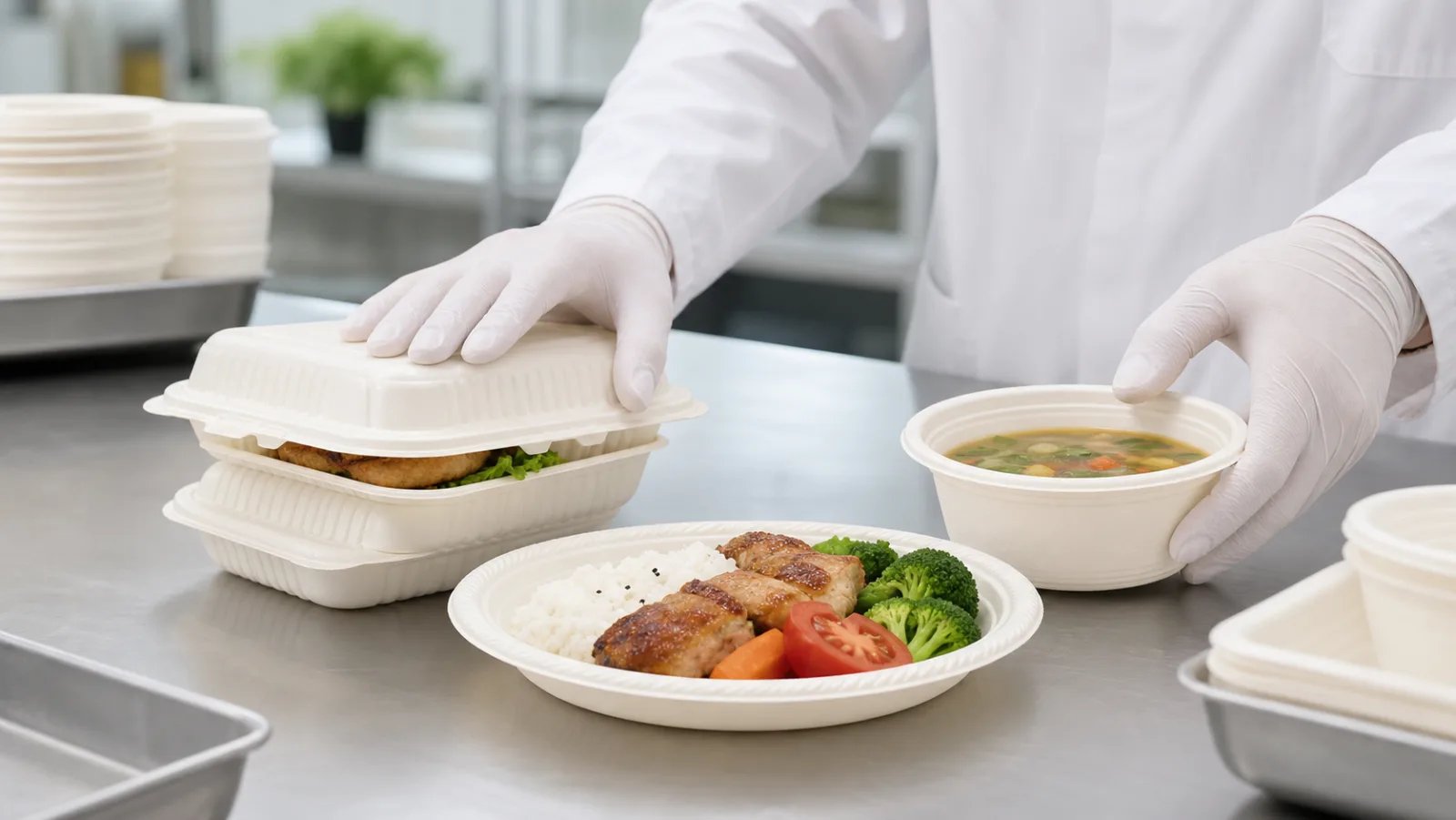
Inspectors compare production samples with the approved cup specification for rim diameter, overall height, unit weight, color and surface condition. The cup is placed on a flat surface to check base rocking, several cups are nested to check stack alignment and release, and the trimmed rim is examined for incomplete forming or sharp edges.
Representative cups are then filled with the agreed beverage or test liquid to the intended pour level. The check records holding time, sidewall deformation, rim condition, leakage or seepage and base stability. When a lid is part of the project, the assembled cup is checked around the full rim and tilted under the agreed test method before packing approval.
| Inspection step | Cup-specific method |
|---|---|
| 1. Dimensions and weight | Measure rim diameter and height; weigh sampled cups against tolerance |
| 2. Rim, wall and base | Inspect trim, sidewall formation and base contact on a flat surface |
| 3. Nesting and release | Build a sample stack and confirm alignment, separation and rim protection |
| 4. Filled-cup test | Fill to the agreed level and check grip, holding time, stability and leakage |
| 5. Lid-system check | Inspect full-rim engagement and agreed tilt performance when a lid is required |
| 6. Packing release | Verify sleeve count, bag seal, carton quantity and stack protection |
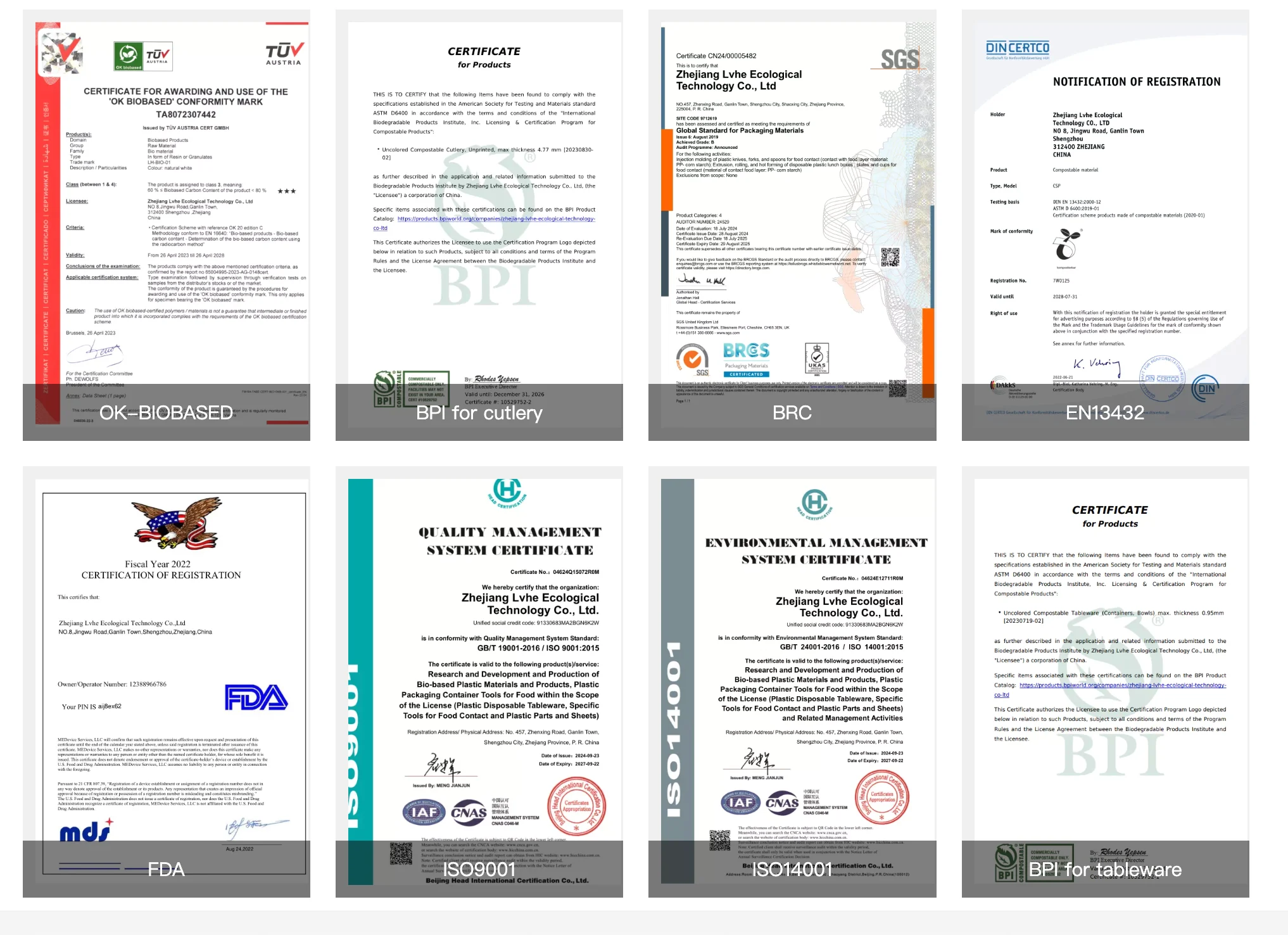
Ecoleaderpack provides a complete compliance file set for cornstarch cup programs. The documents cover food-contact use in major import markets, industrial compostability and the environmental management of the production facility, giving importers, distributors and private-label buyers a clear basis for product approval and customer audits.
The image shows representative company and product certificates. For each cornstarch cup order, Ecoleaderpack matches the document scope, product description and current validity to the selected cup specification before supplying the compliance file.
The 150 ml cup is the most compact option for measured drink samples and tasting portions. Buyers should confirm the pour level and one-hand pickup method used at the sampling counter.
The 250 ml cup provides a mid-size format for individual water and selected cold-drink service. Its 90 mm height should be checked against dispensers, catering trays and storage racks.
The 350 ml cup provides the largest listed capacity. Test the 108 mm-tall cup at its intended fill level for grip and tipping resistance during counter handoff and tray movement.
The three capacities can be quoted as separate items for wholesale or retail-pack projects. Quantity, sleeve count, label artwork and carton marks should be specified by cup size rather than combined into one generic cup requirement.
Wholesale cup programs
One cup specification connects beverage testing, forming checks, packing approval and compliance files.
Samples are checked with the actual pour, filling temperature, holding time and selected lid before approval.
Rim diameter, height, unit weight, sidewall, base and nested stacks are inspected before packing release.
Clean edge trim, forming skeletons and eligible rejects are separated for controlled reprocessing or qualified recycling.
FDA 21 CFR, EC 1935/2004, EU 10/2011, EN 13432, BPI, OK Compost Industrial and ISO 14001 files are matched to the selected cup.
The current range includes 150, 250 and 350 ml cups. Their listed dimensions are Diameter 75 x H80 mm, Diameter 80 x H90 mm and Diameter 80 x H108 mm respectively.
Send the required capacity, actual pour volume, beverage, filling temperature, holding time, lid requirement, quantity by size, packing format and destination. Ecoleaderpack will identify the closest listed cup and define the sample checks needed before quotation approval.